How long birds live depends on which number you ask for. The average wild lifespan of a Northern Cardinal is about 3 years. The oldest documented Cardinal lived over 15 years. Both numbers are real; they describe different things. This guide walks through the lifespan numbers for 12 common backyard species, why the gap between average and record is so large, and what backyard birders can actually do to help the birds at their feeders live longer.
Most lifespan articles online give one number per species and move on. The reality is messier. First-year mortality is brutal: 60 to 80 percent of songbird chicks die in their first 12 months. The birds that survive year one are the ones whose actual lifespans look long. We get into the data, the math, and the actions that move the needle.
TL;DR
Most wild songbirds live 2 to 5 years on average. Roughly 60 to 80 percent die in year one. Birds that survive their first year often live 5 to 10 years. Documented longevity records (the oldest known individual of a species) typically run 10 to 20 years for backyard songbirds. The four biggest controllable threats are outdoor cats, window strikes, dirty feeders, and pesticides. The oldest known wild bird is Wisdom the Laysan Albatross, over 73 years old as of 2025.
The two numbers that matter
Bird lifespan reporting confuses two different measurements. Both are useful, neither alone is “the answer.”
Average wild lifespan is the typical age at death across all individuals of a species. It is dragged down enormously by first-year mortality.
Longevity record is the oldest documented individual of a species, tracked through bird banding. The USGS Bird Banding Laboratory’s Longevity Records of North American Birds is the canonical database, updated annually, with banding-confirmed ages going back decades.
Why first-year mortality changes everything
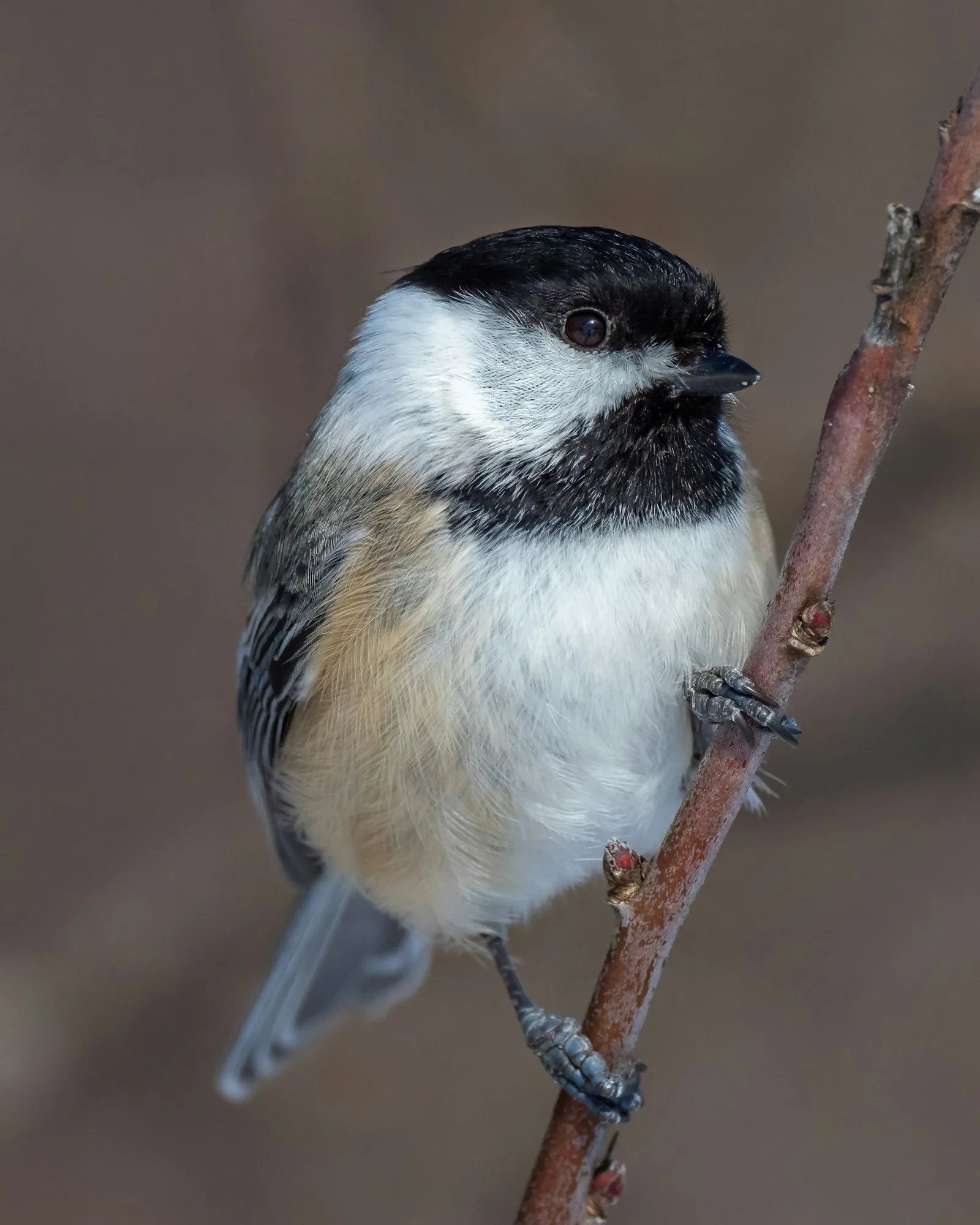
A Black-capped Chickadee that hatches in May has a roughly 20 to 40 percent chance of surviving to its first birthday. Predation by hawks, jays, snakes, and especially domestic cats accounts for most of the loss. Cold-snap mortality, food scarcity, and disease take the rest. Birds that survive year one have already passed through the highest-mortality window of their lives. The average chickadee lifespan reported as “2 to 4 years” reflects this brutal early filter.
The American Bird Conservancy’s Surprisingly Complex Science of Bird Longevity walks through the math: if the average wild Cardinal lives 3 years, that includes all the cardinals that died at 3 months and dragged down the mean. A cardinal that reaches age 1 has dramatically better odds.
Why the USGS Bird Banding Lab matters
Longevity records can only be measured by banding. Researchers attach a numbered aluminum band to a bird’s leg, release it, and wait. When the same bird is recaptured (or its band is reported by a finder) years later, the age is calculable. The USGS Bird Banding Laboratory has aggregated millions of these records since 1920 and maintains the canonical North American longevity database, Version 2025.1, updated annually.
Lifespan table for 12 backyard species
These are approximate average wild lifespan ranges for common backyard species. Documented longevity records (the oldest individual of each species) run substantially longer, typically 2 to 4 times the average.
| Species | Approximate average wild lifespan | Cluster guide |
|---|---|---|
| Ruby-throated Hummingbird | 3 to 5 years | hummingbird migration |
| Black-capped Chickadee | 2 to 4 years | covered in how to attract birds to a bird feeder |
| House Finch | 2 to 4 years | covered in feeder articles |
| American Goldfinch | 3 to 6 years | covered in attract guides |
| White-breasted Nuthatch | 2 to 5 years | covered in feeder articles |
| Tufted Titmouse | 2 to 5 years | covered in feeder articles |
| Northern Cardinal | 3 to 5 years | how to attract cardinals |
| Eastern Bluebird | 3 to 6 years | how to attract bluebirds |
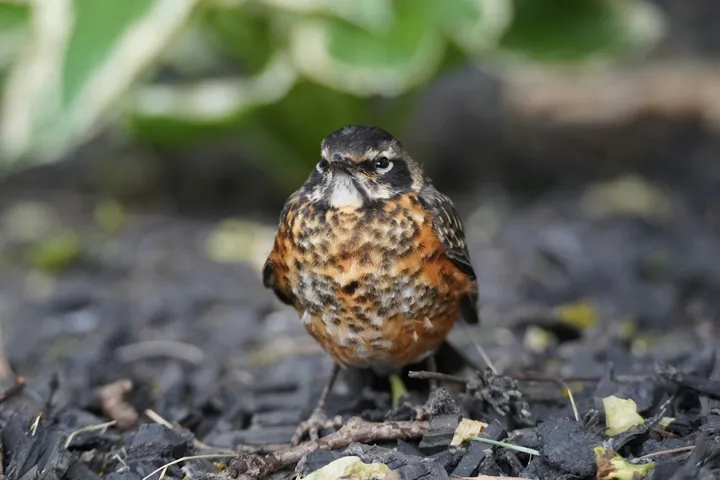
| American Robin | 2 to 6 years | covered in fledgling article |
| Mourning Dove | 1 to 5 years | (future species guide) |
| Downy Woodpecker | 4 to 7 years | covered in feeder articles |
| Blue Jay | 5 to 7 years | bird feeder for blue jays |
| Baltimore Oriole | 4 to 8 years | oriole feeder |
These ranges synthesize numbers commonly cited by Audubon, Cornell Lab All About Birds species pages, and the American Bird Conservancy. For the specific longevity record of any individual species, search that species at the USGS Bird Banding Lab database.
A note on hummingbirds: Cornell Lab’s Ruby-throated Hummingbird page documents that wild Ruby-throats often return to the same feeder for multiple years. The 3-to-5-year average reflects the toll of two Gulf-of-Mexico crossings per year, not a lack of inherent longevity.
Why birds live longer than mammals their size
A mouse weighing 20 grams lives about 1 to 2 years. A chickadee weighing 12 grams lives 2 to 4 years on average and can reach 10 to 12 years in the wild. Pound for pound, birds live two to three times as long as similarly-sized mammals despite having higher metabolic rates and higher body temperatures.
Audubon’s Why Birds Are Anti-Aging Superstars covers some of the research on why this is. Birds have several biological features that appear to slow cellular aging:
- Better DNA repair in the face of oxidative stress
- Lower production of reactive oxygen species per unit of energy expended
- Slower telomere shortening with age in many species
- Hollow bone structure that may reduce certain metabolic stresses
The American Bird Conservancy’s longevity science article goes deeper into the comparative-aging research. The practical takeaway for backyard birders is that the small birds at your feeder are not living on borrowed time biologically. They are dying young primarily because of external threats: predation, weather, disease, and habitat loss.
The threats that shorten wild bird lives
Four threats account for most controllable backyard bird mortality.
Outdoor and feral cats (the largest controllable threat)
Audubon’s Cats Pose an Even Bigger Threat to Birds than Previously Thought cites the landmark Loss, Will, and Marra study estimating that free-ranging domestic and feral cats kill 1.4 to 3.7 billion birds annually in the US lower 48 states. Two-thirds of those killed are native species. This is the single largest source of human-caused bird mortality in the United States.
The fix at the backyard level is straightforward: keep your own cats indoors, and discourage outdoor cats from your feeders. Bell collars do not work. Trap-Neuter-Return colonies near productive bird habitat are a measurable problem.
Window strikes (the second-largest)
Audubon’s Hundreds of Millions of Birds Are Killed Annually from Building Collisions covers the window-strike research. The bulk of strikes happen at residential homes, not at city skyscrapers. Backyards near large picture windows are especially deadly.
Treatments that work:
- Window decals with 2-inch spacing (anything wider lets birds try to fly through the gap)
- External screens or netting
- Translucent film (Feather Friendly, BirdShades) applied to the outside surface
- Tempera paint or soap markings on the outside (cheapest, ugly but effective)
Treatments that do not work as well: hawk silhouettes (decorative only), interior decals (birds see the reflected outdoor scene, not the indoor sticker), and most off-the-shelf “scare-eye” balloons.
Dirty feeders (disease transmission)
Project FeederWatch’s Sick Birds and Bird Diseases tracks recurring salmonellosis and conjunctivitis outbreaks at backyard feeders. Pine Siskins, American Goldfinches, and House Finches are especially vulnerable. A contaminated feeder can kill dozens of birds over the course of an outbreak.
The protocol: scrub feeders weekly with a 9:1 water-to-vinegar solution, escalate to 9:1 water-to-bleach (rinsed thoroughly, dried fully) after a sick-bird sighting or visible mold. Take feeders down for 2 weeks if you see multiple sick birds. Our keep squirrels out of bird feeders and how to attract birds to a bird feeder articles cover the feeder-hygiene math in more depth.
Pesticides and habitat loss
Yard pesticides kill insects birds need to feed nestlings. Neonicotinoid-treated seeds, soil drenches, and lawn applications also poison birds directly. Skip routine pesticide application; spot-treat specific pest problems instead. The broader habitat-loss issue (lawns replacing meadows, ornamental plants replacing natives) is outside the scope of one article but is the single biggest non-controllable factor in long-term bird population health.
Wild vs captive: the parrot exception
The lifespan of pet birds is dramatically different from wild birds and is the source of most online confusion about bird lifespan.
- Pet parrots: macaws and large cockatoos live 50 to 80 years in captivity. African Greys 40 to 60 years. Amazons 25 to 50 years.
- Pet songbirds: canaries 8 to 15 years; pet finches 5 to 10 years.
- Wild backyard songbirds in captivity: rare and usually illegal; not a useful comparison.
PetMD-style articles on “How Long Do Birds Live” typically address pet parrots and are the wrong reference for someone asking about the chickadee at their backyard feeder. The Cornell Lab All About Birds species pages and the USGS Bird Banding Lab longevity database are the right sources for wild lifespan questions.
The oldest known wild birds
Wisdom the Laysan Albatross
Wisdom is the oldest known wild bird on Earth. Banded in 1956 on Midway Atoll by Chandler Robbins, she is at least 73 years old as of 2025 and continues to breed. Audubon’s There’s No Stopping Wisdom chronicles her ongoing nesting record, including dozens of chicks raised over her lifetime. Because Laysan Albatross do not begin breeding until at least age 5, her actual hatch year cannot be later than 1951.
Documented longevity records for North American species
The USGS Bird Banding Lab database holds the records for North American species. Without inventing specific year-and-month values (the database changes annually as new banding recoveries come in, and we won’t quote a number we cannot verify directly), the pattern is consistent: most backyard songbird longevity records fall in the 10-to-20-year range, well above the average wild lifespan ranges in our table above. Cardinals, chickadees, and finches have documented individuals well into their teens. Larger backyard species (Blue Jays, woodpeckers) push into their 20s.
If you want the precise current record for a specific species, the USGS Bird Banding Lab maintains the searchable database.
What you can actually do to help backyard birds live longer
The list, in order of impact:
- Keep cats indoors. Single highest-impact action. Audubon’s data is unambiguous.
- Treat large windows. External decals, screens, or film. 2-inch spacing on patterns.
- Clean feeders weekly. 9:1 water-vinegar, escalate to bleach after sick-bird events.
- Provide a clean water source. Our how to attract birds to a bird bath guide walks through the setup.
- Plant native species. Native plants support 10 to 100 times more insect biomass than ornamentals; insects are what feed nestlings and produce the next generation.
- Skip routine pesticides. Spot-treat specific problems. Avoid neonicotinoids.
- Support fledglings the right way. Our what do fledgling birds eat article covers the welfare-first protocol when you find a baby bird.
Cumulative effect: a yard with indoor cats, treated windows, clean feeders, water, and native plants meaningfully extends the lifespans of the birds that visit. None of these are heroic interventions; they are basic adjustments to how a typical American yard operates.
FAQ
How long do backyard birds live on average? Most wild songbirds live 2 to 5 years on average, with 60 to 80 percent dying in their first year. Birds that survive year one live significantly longer: cardinals and chickadees often reach 5 to 7 years, blue jays and woodpeckers 7 to 10 years, and the documented longevity records run 10 to 20 years for many backyard species. The single most important number for understanding bird lifespan is the first-year survival rate, not the average.
What is the oldest wild bird ever recorded? Wisdom, a Laysan Albatross banded in 1956 on Midway Atoll, is the oldest known wild bird. She is over 73 years old as of 2025 and continues to nest and raise chicks. Audubon documents her ongoing breeding success. For non-seabirds, the documented longevity records for North American backyard species typically run from 10 to 20 years, maintained by the USGS Bird Banding Laboratory.
Do birds live longer in captivity? Yes, usually by a wide margin. Pet parrots can live 50 to 80 years, far longer than any wild bird of similar size. Even pet songbirds (canaries, finches) often live 8 to 15 years versus 2 to 5 in the wild. Captive birds avoid predation, weather, food scarcity, and disease, the four biggest causes of wild bird mortality. The captive lifespan numbers commonly cited in pet-care articles do not apply to the wild birds visiting your backyard feeders.
Why do small birds have shorter lifespans than larger birds? Small birds have higher predation risk, less fat reserve for harsh weather, and faster metabolisms. A chickadee weighing 12 grams cannot survive multiple days without food in winter; a 100-gram cardinal can. Larger birds also reach reproductive age more slowly, which correlates with longer lifespan across many animal groups. Audubon and the American Bird Conservancy both note that birds live unusually long for their size compared to mammals, but the small-vs-large relationship still holds within birds.
What’s the biggest cause of death for backyard birds? Predation, primarily by outdoor and feral cats. Audubon cites the Loss, Will, and Marra study estimating that cats kill 1.4 to 3.7 billion birds annually in the US lower 48 states. Window strikes kill hundreds of millions more. Together, those two human-caused mortality sources account for the largest portion of preventable backyard bird deaths. Keeping cats indoors and treating windows with decals or screens are the two highest-impact actions a backyard birder can take.
Do hummingbirds really only live a few years? Wild hummingbirds typically live 3 to 5 years on average, with documented longevity records around 9 to 12 years for some species. Their high metabolic rate and small body size correlate with shorter lifespans, but a hummingbird that survives its first migration often returns to the same yard for several breeding seasons. Our hummingbird migration guide covers the calorie math behind their seasonal movements.
What this means for your yard
The bird you watched at your feeder this morning has probably already beaten the odds. If it is older than 12 months, it has survived the dangerous period that kills most of its hatch-year cohort. The longer it visits your yard, the more its odds keep improving.
The actions that extend wild bird lifespans are the same actions that produce a more populated, more varied backyard. Indoor cats, treated windows, clean feeders, water, native plants. The same things that draw birds in are the things that let them live long enough to come back next year.
For our existing readers, this article ties together the species-specific work we’ve published. Every species in our feeder pillar, our cardinals guide, our bluebirds guide, our bird bath setup, and our hummingbird coverage is shaped by the lifespan math here. The yard that supports a cardinal for 5 years is a different yard than the one that loses it to a cat in month three.