Most yards that put up a bird feeder and see nothing for a month are not unlucky. They are doing one of four specific things wrong: the wrong feeder type for the bird they want, a seed mix that real birds reject, a placement that birds will not approach, or a discovery window that just has not closed yet. Each is fixable in a weekend. Here is how to attract birds to a bird feeder, ranked by leverage: feeder type first, then seed, then placement, then water, then patience.
Quick answer
To attract birds to a bird feeder: hang the right feeder type for the bird you want, fill it with black-oil sunflower seed, place it 4 to 5 feet off the ground within 10 feet of cover (shrubs or a low tree), and add a shallow water source nearby. Wait 1 to 3 weeks for the first visitors. Different birds prefer different feeders, so match the feeder type to the species. Clean the feeder every 2 weeks to prevent disease.
What you actually need, in order of leverage
The order matters. Get the first two right and you will get birds. Get them wrong and no amount of patience will save you.
The right feeder for the bird you want
The single most common mistake at backyard feeders is a feeder type that does not match the species the reader is trying to attract. A tube feeder full of black-oil sunflower will get a steady stream of chickadees and finches. A cardinal looking at that same feeder will fly past. We cover the matrix in the next section.
The right seed
Black-oil sunflower seed is the universal default and the seed every backyard birder should start with. Per a Project Wildbird study analyzing 1.2 million feeder visits across North America, summarized in Audubon’s “Who Likes What”, it attracts more species than any other single seed. Layer additional seeds (safflower, nyjer, peanuts, suet) into other feeders only after your goal species are visiting.
A good location
4 to 5 feet off the ground, within 10 feet of cover, partly shaded, away from large windows. Birds are prey animals. They will not feed in places where they cannot escape a hawk.
A water source
A shallow birdbath nearby is the single biggest non-food upgrade. Moving water (dripper, mister) is even better than still. In hard-winter regions, a heated bath in winter dramatically outperforms an unheated one because unfrozen water is harder to find than food at low temperatures.
Time
1 to 3 weeks is the typical discovery window. Sometimes a few days. Sometimes a month. The yard that has nothing on day 7 may have 20 visitors on day 21.
Match the feeder type to the species (this is the chart that wins)
Almost every backyard bird species has a feeder preference based on beak shape, body weight, and how it approaches food. The wrong feeder is a more common failure than the wrong seed.
Tube feeder: chickadees, finches, titmice, nuthatches
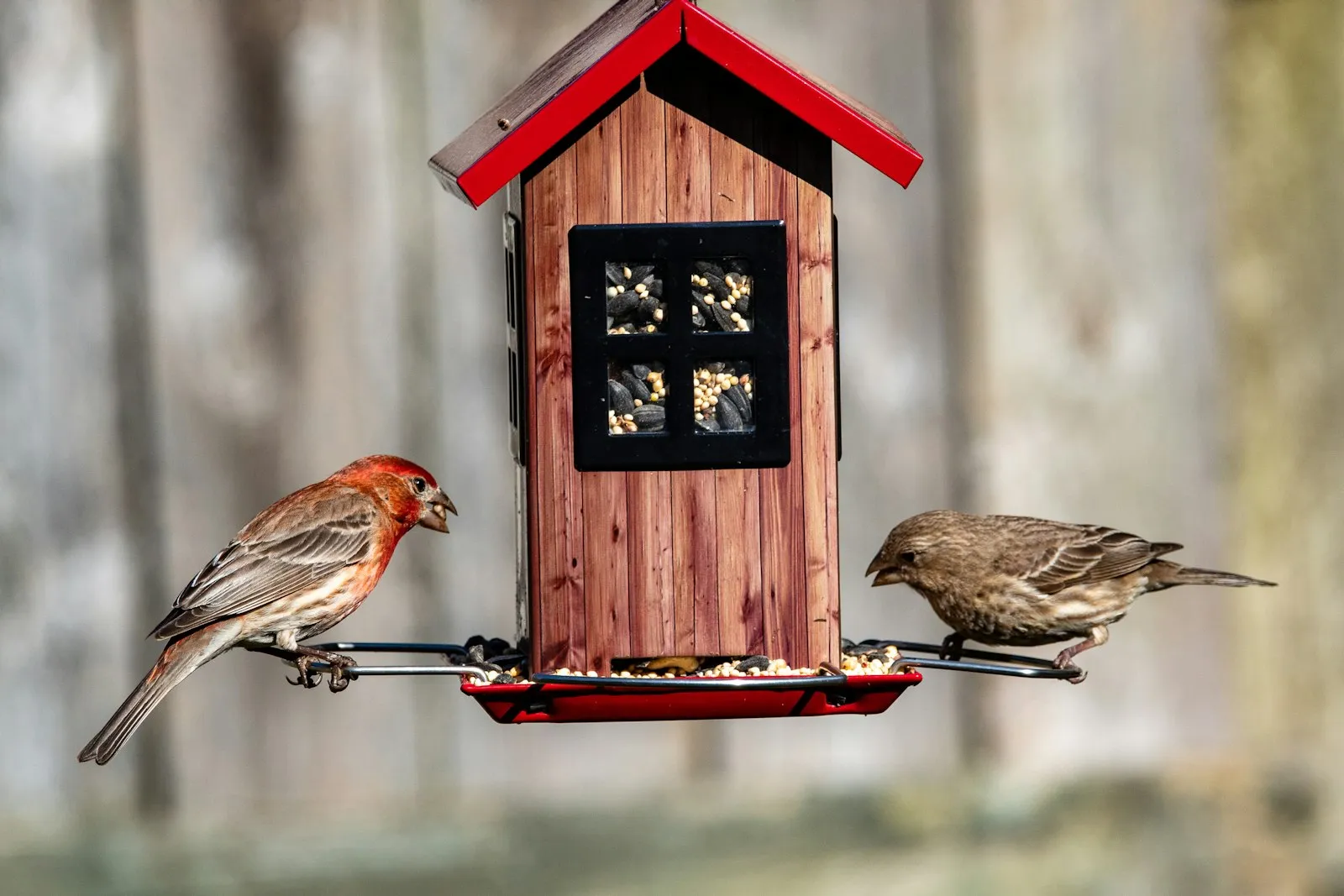
Small perches, narrow seed openings. The classic backyard feeder shape. Best for Black-capped Chickadees, House Finches, tufted titmice, and White-breasted Nuthatches. Heavier birds like cardinals cannot easily grip the small perches, which keeps the feeder small-bird-only by design.
Hopper feeder: cardinals, jays, sparrows, mourning doves
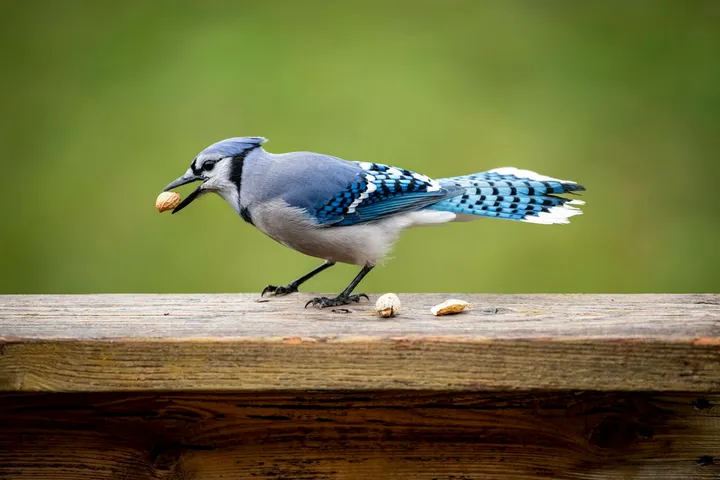
A covered box with seed dispensing onto a perch tray around the bottom. Wide perch surface, large capacity, weather-protected seed. Best for Northern Cardinals (covered in our attract cardinals guide), Blue Jays, white-throated sparrows, song sparrows, and Mourning Doves. The hopper is the second-most-versatile design after the platform, and the right choice for most yards that want a mix of common backyard species.
Platform feeder: ground feeders + the largest species
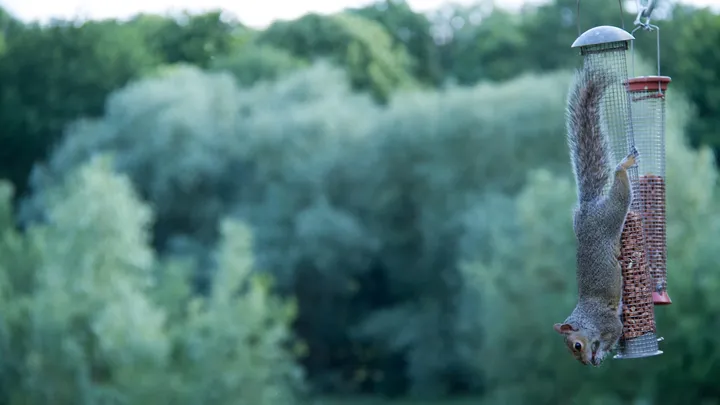
An open tray with raised edges, hung from a pole or placed on a deck. The widest perch surface and the only feeder design that accommodates birds too large for any other style: doves, jays, large sparrows. Also the design ground-feeders (juncos, white-throated sparrows in winter) will use if you place it low. The trade-off: it attracts everything, including squirrels and grackles, and seed gets wet faster than in a hopper. Best paired with our keep squirrels out of bird feeders article for the placement rules that keep squirrels off.
Suet cage: woodpeckers, nuthatches, chickadees
A wire mesh basket holding a block of rendered fat with seeds, fruit, or insects pressed in. The only feeder type that supports the vertical-clinging feeding posture woodpeckers prefer. Best for Downy Woodpeckers, hairy woodpeckers, red-bellied woodpeckers, and the smaller clinger species (nuthatches and chickadees, which also use it). In summer, use “no-melt” suet specifically rated for heat; standard suet liquefies above 80°F and goes rancid.
Nyjer (thistle) sock or thistle feeder: goldfinches, siskins
A fine mesh sock or a tube with very small ports. Nyjer is a tiny black seed that only small-billed birds can crack. The narrow apertures exclude almost everything else, which makes the nyjer feeder a single-species solution: American Goldfinches, pine siskins, common redpolls, and sometimes house finches. If you want a feeder that is overwhelmingly small-finch-only, this is the design.
Nectar feeder: hummingbirds
Glass or plastic, red-bodied, with small ports designed for hummingbird tongues. Filled with a 4:1 water-to-white-sugar solution, no red dye. We cover the full setup in our hummingbird nectar recipe and the feeder-tier picks in our best hummingbird feeder guide. Hummingbird feeders are functionally a separate ecosystem from seed feeders and bring entirely different species.
Seed by goal species
The seed-to-species mapping below summarizes the Geis (1980) and Horn Project Wildbird (2000s) studies, both detailed in Audubon’s “Who Likes What” piece on 1.2 million tracked feeder visits.
| Seed type | Top species attracted |
|---|---|
| Black-oil sunflower | Almost every backyard species. Universal default. |
| Safflower | Cardinals, chickadees, titmice, house finches, downy woodpeckers. Squirrels usually reject. |
| Nyjer (thistle) | American goldfinches, pine siskins, common redpolls, house finches |
| Striped sunflower | Cardinals, blue jays (their bills can crack the thicker shell; most smaller species cannot) |
| Peanuts (shelled) | Blue jays, woodpeckers, titmice, nuthatches, chickadees |
| Cracked corn | Mourning doves, sparrows, juncos, jays, blackbirds |
| Suet | Woodpeckers, nuthatches, chickadees, titmice |
| Mealworms | Bluebirds, robins, wrens, chickadees |
| White millet | Sparrows, juncos, mourning doves, native sparrows (ground-feeders) |
What this table makes clear: black-oil sunflower seed is the single-best Day 1 choice for any backyard with no specific species target. Switch or add a second seed once you know what you want.
The 4-5-10 placement rule
Three numbers, all true at the same time:
- 4 to 5 feet off the ground. Above ground predators (cats, raccoons), at a comfortable height for songbird approach.
- Within 10 feet of cover. Dense shrub, hedge, or low tree the bird can flee into. Birds that cannot see an escape route will not feed.
- 12+ feet from large windows (or under 3 feet, if a bird collides with a window in the under-3-feet range, it has not had room to build up enough speed to be fatal).
A feeder in the middle of a 30-foot expanse of open lawn is a feeder that does not get birds. Cover proximity is more important than reader intuition suggests; many failed-feeder yards have plenty of food and a placement nobody is willing to approach.
If you also have squirrels (most readers do), there is a complementary rule called the 5-7-9 rule for squirrel-deterrence: 5 feet up, 7 feet horizontal from any jumping surface, 9 feet below any drop point. The two rules are compatible; both can be met by a pole-mounted feeder in the middle of an open lawn 10+ feet from trees, with a small shrub planted within 10 feet for cover. Our keep squirrels out of bird feeders guide covers the 5-7-9 setup in detail.
Add water (often the single biggest upgrade)
Water draws birds that ignore feeders entirely. A shallow birdbath 1 to 2 inches deep at the edges, within 15 to 30 feet of the feeder, attracts robins, mockingbirds, thrushes, warblers, and dozens of other species that are not seed-eaters.
Three details worth getting right:
- Depth. Deeper than 2 inches and most songbirds will not bathe. They want to stand or wade, not swim.
- Movement. Moving water (a slow dripper, a small fountain, a leaking hose nozzle) is more attractive than still water at every measurable level. Birds find dripping water from 100+ feet away by sound alone.
- Winter. A heated birdbath, or a submersible de-icer in your existing bath, holds unfrozen water through hard freezes. In the Upper Midwest, New England, and the Mountain West, this is the single largest seasonal upgrade you can make to a yard’s bird count.
Be patient: new feeders take 1 to 3 weeks
If you have been at it less than 3 weeks and the feeder is empty, you are inside the normal discovery window. Birds find feeders by exploring along habitual flight paths and by following other birds. A single bird discovering your feeder is usually within hours of becoming three birds, and within days of becoming a regular pattern.
Things that slow discovery:
- Moving the feeder during the wait. Birds rely on spatial memory; relocation resets the clock. Pick a spot on day 1 and commit to it for at least 4 weeks.
- A feeder fully enclosed by overhead cover. Birds approach from above; a feeder under a deep porch ceiling is harder to spot.
- Sterile yards. No shrubs, no native plants, no nearby feeders in the neighborhood. Birds that pass through your yard need to see the feeder while doing something else.
Things that speed discovery:
- Native shrubs already in place. Bird-friendly yards get discovered faster.
- A neighbor with feeders within a few hundred yards. Birds visiting nearby feeders explore.
- Late winter and early spring. Most natural food sources are depleted, birds are scouting more aggressively, and a new feeder is more likely to be tried.
Per Project FeederWatch citizen-science data, the typical discovery window is 1 to 3 weeks if your target species lives in your area. Outside that window, work through the troubleshooting matrix below before adding more feeders.
Want a specific species? Start here
Different species need different setups. Once you have a general feeder going, here is where to go deep:
- Cardinals. Hopper or platform feeder, black-oil sunflower plus safflower, 4 to 5 feet up near dense shrubs. Full breakdown in our attract cardinals guide.
- Bluebirds. Skip the seed feeder; bluebirds are insectivores. Mealworm feeder + nest box in open habitat. Different setup entirely; see our attract bluebirds guide.
- Hummingbirds. Nectar feeder filled with 4:1 sugar water, red feeder body, no red dye. Cornerstone setup in our best hummingbird feeder guide, recipe in our hummingbird nectar recipe, and the full attract-them sequence in our how-to-attract-hummingbirds-to-feeder article.
- Chickadees, nuthatches, titmice. Tube feeder + black-oil sunflower + suet cage. Year-round residents through most of the U.S.; if you have trees, you have them.
- Woodpeckers. Suet cage. Optional: peanut feeder.
- Goldfinches and pine siskins. Nyjer sock. Especially active in summer for goldfinches; winter for siskins.
- Mourning doves, sparrows, juncos. Platform feeder + cracked corn or millet. These are ground-feeders; place the platform low (a ground-mounted platform 1 to 2 feet up works).
- Blue jays. Hopper or platform + whole peanuts. Loud, dominant; will scatter smaller species temporarily, but cardinals and chickadees come back.
Why aren’t birds coming? The troubleshooting matrix
If you are at week 3 with nothing, work through this in order. The first check that fails is almost always the problem.
- Are birds currently active in your area? Walk around the block. Check telephone wires. Look for movement in shrubs. If you see no birds anywhere within a half-mile, your area may genuinely be low-density (new construction subdivision, scorched habitat, heavily-paved urban core).
- Is the seed wrong for the bird you want? Cheap seed mixes are mostly milo and cracked corn. Most species reject milo. Switch to 100% black-oil sunflower in at least one feeder.
- Is the feeder type wrong? A tube feeder will not get cardinals. A nyjer sock will not get jays. Match the table above.
- Is the feeder too exposed? Walk to the feeder from the nearest shrub. If that distance is more than 10 feet, move the feeder closer to cover.
- Is the seed fermented, moldy, or stuck? Stale seed actively repels birds. Empty the feeder, scrub it, refill with fresh seed.
- Are you in your goal species’ range? Cornell Lab range maps (each species page has one) tell you whether you can attract a given species at all. A reader in Seattle is not going to attract Northern Cardinals; they are not in the range.
- Is the feeder swinging in the wind? Some birds avoid feeders that move noticeably. Stabilize the pole or hang the feeder on a shorter chain.
- Is your yard sterile? No shrubs within 30 feet, no trees, no native plants? Even a great feeder cannot overcome a hostile yard. Add cover. See the Audubon Native Plants tool for species native to your ZIP code.
Keep birds coming back: cleaning cadence and welfare
Bird feeders concentrate animals and food in one spot. That helps birds; it also helps pathogens spread. Project FeederWatch documents recurring outbreaks of salmonellosis in pine siskins, common redpolls, and American goldfinches specifically tied to contaminated feeders.
The welfare-critical cleaning cadence:
- Every 2 weeks in cool weather (under 70°F).
- Weekly in heat or during wet weather (mold grows fast).
- Disassemble and deep-clean monthly: scrub all surfaces with hot water (vinegar rinse is helpful; avoid soap residue which can be toxic at concentration), dry fully, then refill.
- Take feeders down entirely for 2 weeks if you see sick or dying birds in your yard. Fluffed-up posture, swollen eyes, lethargy near the feeder are warning signs. Stopping feeding briefly disperses the flock and breaks the transmission chain.
Skip soap; rinse residue is harmful to birds in concentration. Hot water and physical scrubbing do the work.
For hummingbird-specific cleaning (more frequent, because nectar ferments faster than seed), see our keep ants and bees out of hummingbird feeders article, which covers the welfare reason for the 2-3-day hummingbird cadence.
How to attract birds in winter specifically
Winter is when feeders matter most. Natural food sources are at their lowest, many species (cardinals, chickadees, juncos, woodpeckers, finches) are year-round residents who rely on feeders heavily, and the contrast of bright birds against snow makes winter the visually rewarding season for backyard birding.
The winter playbook:
- Suet. Calorie-dense, especially valuable below 30°F. Woodpeckers, nuthatches, chickadees all benefit.
- Heated water. Often more impactful than additional food. Birds need to drink even in hard freezes; unfrozen water is rarer than food in most winter yards.
- Keep feeders full before storms. Birds feed heavily before a front comes through. A full feeder on a snowy morning is a packed feeder.
- Dense conifers for shelter. Eastern red cedar, juniper, spruce. Birds roost in conifers overnight; a yard with no roosting cover loses winter visits to nearby properties.
- Don’t stop in March. Late winter and early spring is when adult birds are scouting summer nesting territories. A yard that is reliably feeding in March is a yard that has breeding birds in May.
For native winter food sources, Audubon’s native plants guide covers the plants that hold berries through winter (juniper, holly, sumac, viburnum, eastern red cedar) in detail.
What to skip
- Cheap mixed seed. Most “mixed wild bird seed” is heavy on milo and cracked corn that most species reject. The birds pick out the sunflower and toss the rest, wasting most of the bag. Buy 100% black-oil sunflower instead.
- Red dye in seed or water. Irrelevant for non-hummingbird species. (And not recommended for hummingbirds either, per our nectar recipe article.)
- Fake bird decoys. No evidence they help attract live birds. Some readers think a plastic cardinal will draw real ones; it doesn’t.
- Moving the feeder daily. Resets the discovery clock. Pick a spot, commit for 4 weeks minimum.
- Coffee grounds, aluminum foil, potatoes, slinkys. All folk remedies, none with good evidence. (PAA explicitly asks; the answer is the same regardless of which one.)
- Giving up after week 1. The discovery window is 1 to 3 weeks. Week 1 is normal.
- Pesticide-treated lawns. Insects are 30 to 40 percent of many backyard species’ diets in summer. Pesticides reduce the insect supply and the bird supply with it.
FAQ
How can I make birds come to my bird feeder?
Three things, in order: the right feeder type for the bird you want, black-oil sunflower seed (or the seed that matches your target species), and a sheltered location 4 to 5 feet off the ground within 10 feet of cover. Add a water source for a roughly 2x boost in species variety. Then wait 1 to 3 weeks. Most yards that don’t get birds are doing something wrong with one of those four elements; the most common mistake is a tube feeder full of cheap millet-heavy seed mix placed in the middle of an open lawn.
What is the 5-7-9 rule for bird feeders?
The 5-7-9 rule is a feeder placement guideline focused on excluding squirrels: 5 feet off the ground, 7 feet of horizontal distance from any surface a squirrel could jump from (tree trunk, fence, deck rail), and 9 feet below any overhead drop point (branch, eave, roof). Gray squirrels can vertical-jump about 4 feet from a standstill and horizontal-jump 9 to 10 feet from a branch, so the 5-7-9 numbers put the feeder just outside their normal envelope. We cover the full setup in our keep-squirrels-out-of-bird-feeders article.
How long before birds come to a new feeder?
Typically 1 to 3 weeks for the first birds to find a new feeder in an area where your target species already lives. Some yards see visitors within a few days, especially during fall and winter when natural food is scarcer and birds scout more aggressively. Others take a full month. Do not move the feeder during the wait; birds rely on spatial memory of food locations, and relocation resets the timer.
Why should I sprinkle coffee grounds around my bird feeder?
You shouldn’t, at least not for any backyard-birding reason. The claim circulates as a squirrel deterrent, but it does not hold up: urban squirrels live around coffee grounds in trash cans and ignore them. Coffee grounds also lower the soil pH under the feeder, which affects what grows there over time. No major bird authority (Cornell Lab, Audubon, Project FeederWatch) recommends coffee grounds. Mechanical squirrel defenses (baffles, weight-sensitive feeders, the 5-7-9 placement rule) work; folk remedies don’t.
Why put a potato in your bird feeder?
You shouldn’t. The “potato in the bird feeder” tip is folk advice with several inconsistent versions (a baked potato to keep seed warm, a raw potato to keep water from freezing) and no support from Cornell Lab, Audubon, or Project FeederWatch. To prevent water freezing in winter, use a heated birdbath or a submersible de-icer designed for the purpose. To attract birds, focus on the food, feeder type, and placement; the potato is internet noise.
Do I need to feed birds year-round, or just in winter?
Year-round is better, but winter and the late-winter pre-breeding window are the highest-leverage months. Winter is when natural food is scarcest and many backyard species (cardinals, chickadees, finches, nuthatches, woodpeckers) rely on feeders most heavily. Spring is when adult birds are scouting nest territories and judging which yards have reliable food, so spring feeding correlates with summer breeding visits. Summer feeding is fine; some readers worry feeders make birds “dependent,” but Cornell Lab and Audubon research shows feeders supplement natural foraging without replacing it.
What you can do this weekend
Buy a 10-pound bag of black-oil sunflower seed and a single hopper feeder if you don’t already own one. Pick the feeder location by walking your yard and finding a spot 4 to 5 feet off the ground, within 10 feet of your densest shrub or hedge, partly shaded, more than 12 feet from any large window. Fill it, hang it, and walk away. Add a shallow birdbath within 15 to 30 feet if you can. Expect 1 to 3 weeks for the first birds. Once you have a regular flow of generalist visitors, layer in additional feeders and seed types matched to specific species you want: cardinals, hummingbirds, bluebirds, or woodpeckers all have their own setups in our species guides.
Sources
- Audubon: 11 Tips for Feeding Backyard Birds (general attract guide)
- Audubon: Who Likes What, The Favorite Birdseed of Feeder Regulars and Rarities (Horn Project Wildbird 1.2M-visit study, Spring 2023)
- Audubon: Grow These Native Plants So Your Backyard Birds Can Feast (native plants for backyard birds)
- Audubon Native Plants Database (regional plant recommendations by ZIP code)
- Project FeederWatch (Cornell Lab) (citizen-science backyard observations on feeder visitation patterns)
- Project FeederWatch: Sick Birds and Bird Diseases (salmonellosis, conjunctivitis, cleaning cadence rationale)
- Cornell Lab of Ornithology, All About Birds: Black-capped Chickadee, House Finch, American Goldfinch, Downy Woodpecker, White-breasted Nuthatch, Mourning Dove, Blue Jay, Northern Cardinal