Bluebirds are the second-most-aspirational backyard bird in North America after cardinals, and they are also harder to attract. The reason is biology, not luck: bluebirds are cavity-nesting insectivores that prefer open habitat, and most suburban yards have none of those three things by default. The trick is supplying what they actually need, a properly-sized nest box, mealworms (not seed), and an open sight line. Here is how to attract bluebirds: the three species, the nest box specifications that matter, the mealworm operational details, and the House Sparrow problem nobody else makes explicit.
Quick answer
To attract bluebirds: install a nest box with a 1.5-inch entry hole (1 9/16-inch for Mountain Bluebird) mounted 4 to 6 feet up in open habitat, facing east or southeast. Offer live or dried mealworms in a specialized bluebird feeder. Add a shallow water source and native berry-producing shrubs for winter food. Bluebirds prefer fields, meadows, and large yards with scattered trees over dense suburban woods.
Which bluebird species lives in your area?
Before you buy a nest box or order mealworms, confirm which of the three North American bluebird species lives in your region. They overlap geographically less than most people assume.
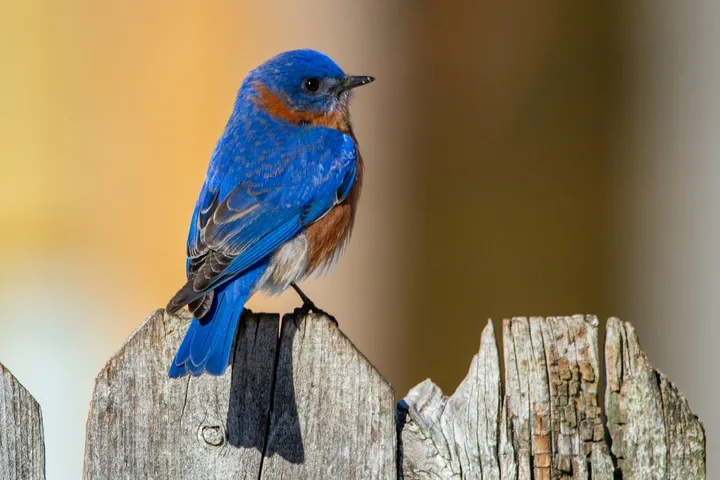
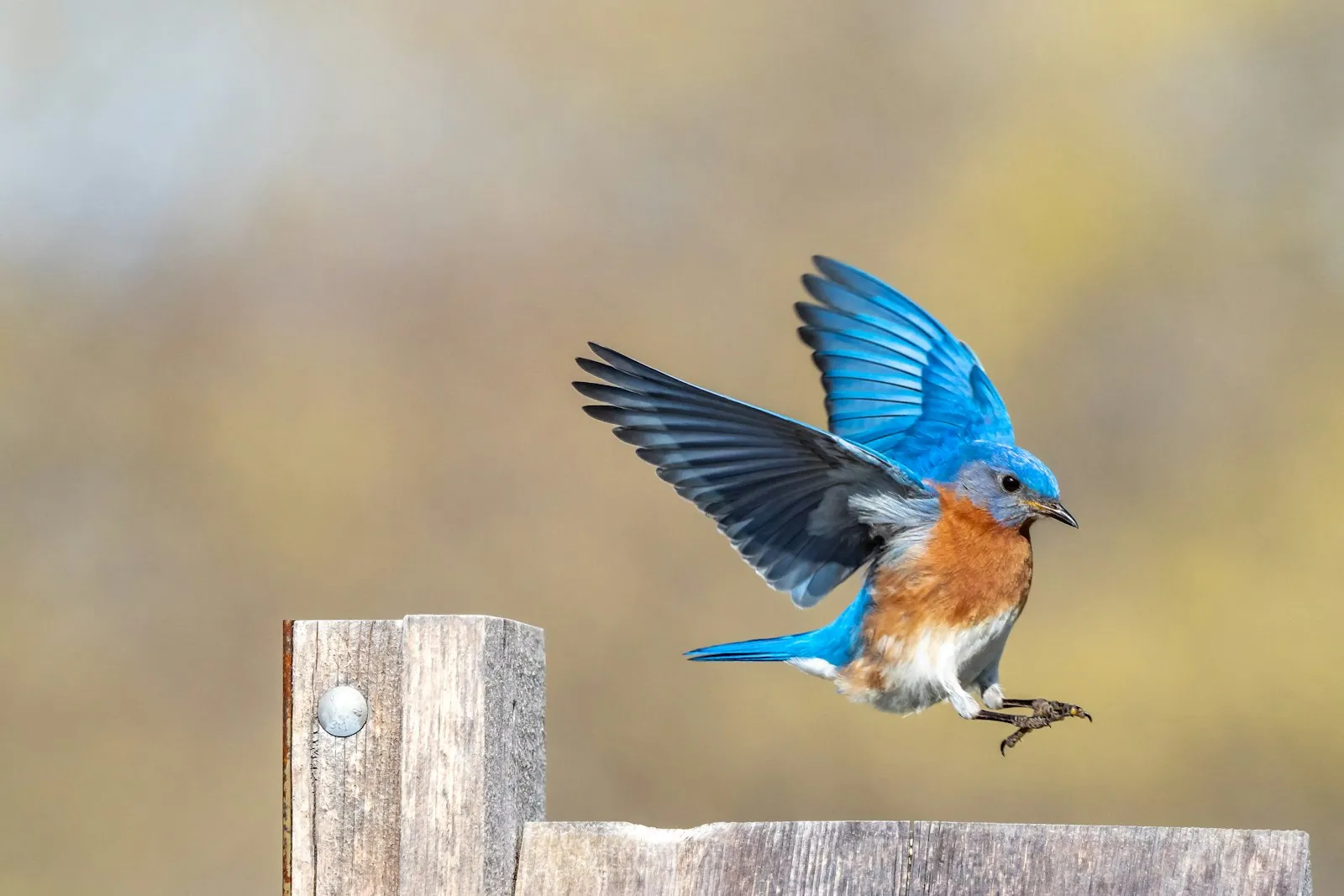
Eastern Bluebird (east of the Rockies)
The most common and most-recognized bluebird. Range covers nearly all of the eastern half of the United States, plus the eastern fringe of the Great Plains, and as far south as Central America. The bright royal-blue back and rusty-orange chest of the male is the species most people picture when they hear “bluebird.” Per the Cornell Lab All About Birds Eastern Bluebird range map, Eastern Bluebirds are year-round residents through most of their range, with some northern populations moving short distances south in winter.
Western Bluebird (Pacific Coast and the Southwest)
Found from the Pacific coast east through the Sierra Nevada and Cascades, and through the mountainous Southwest. The male’s blue is darker and more violet than the Eastern, and the rusty color extends across the upper back rather than only on the chest. Cornell Lab: Western Bluebird covers the range and habitat.
Mountain Bluebird (Rocky Mountains and Great Basin)
The most strikingly blue species: males are pure sky-blue with no rusty markings. Range covers the Rocky Mountains, the Great Basin, and high-elevation grasslands from Alaska south to Mexico. They prefer higher and more open habitat than the other two species and are summer-only over most of their range, migrating to the southwestern U.S. and Mexico for winter. (Cornell Lab: Mountain Bluebird)
If you live in the Eastern half of the U.S., you have Eastern Bluebirds. Pacific Coast or Southwest mountains: Western. Rocky Mountain or Great Basin states: Mountain Bluebird. There’s overlap in some Western states (Western and Mountain) and in some Southwestern areas (Western and possibly Eastern at the edge of range), but for most readers one species dominates.
What bluebirds actually eat (it’s mostly insects, not seed)
The biggest misconception about attracting bluebirds is that they will visit a seed feeder like cardinals and finches. They generally won’t. Bluebirds are primarily insectivores: roughly 70 percent of their summer diet is insects, spiders, and other small invertebrates, with the remainder being fruit and berries. In winter, when insects are scarce, the ratio inverts and bluebirds eat mostly berries.
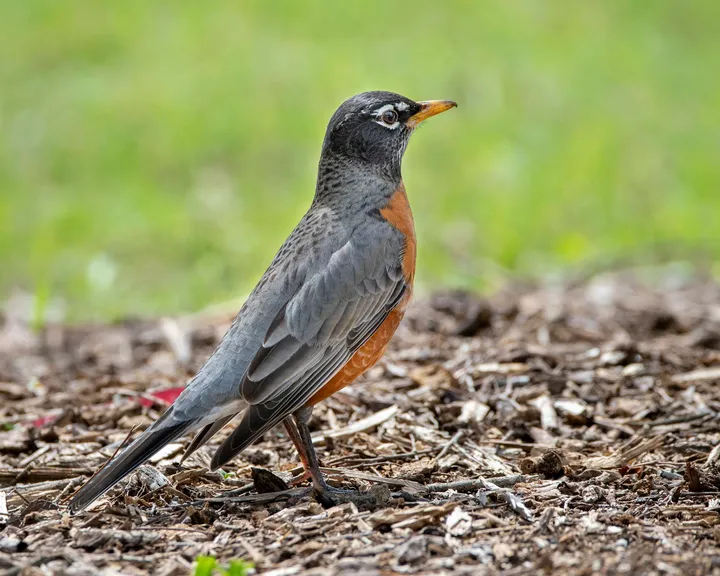
This is why mealworms work so well and seed feeders alone often don’t. Mealworms (the larval stage of darkling beetles) are essentially a delivery format for the protein and fat bluebirds get from wild insects. For the full picture of the bluebird diet by season, including the winter switch to fruit and berries, see our guide to what bluebirds eat. The same is true of the American Robin, another thrush that ignores seed; our guide to what robins eat covers the parallel mealworm-and-fruit approach.
Mealworms: the operational guide
If you only do one thing to attract bluebirds, offer mealworms. This is the single most reliable bluebird-specific attractant.
Live vs dried mealworms
Live mealworms are more attractive to bluebirds. They move, they smell right, and bluebirds find them faster than dried. The trade-off is storage: live mealworms need refrigeration and have a shelf life of 2 to 3 weeks.
Dried mealworms are nearly as good once bluebirds know the feeder. They store at room temperature indefinitely, cost less per ounce, and don’t require keeping a tub of insects in your kitchen fridge. Most readers settle on dried mealworms once their bluebirds are established. Many bluebird feeders work for either type.
Where to buy
Dried mealworms are widely available; a 5-pound bag (~$25-35) lasts a typical yard 2 to 3 months. For live, specialty bird-supply stores or farm-supply retailers stock them in pint containers; some Tractor Supply locations carry them seasonally.
How to offer them
A specialized bluebird mealworm feeder is the operational difference between “I put mealworms out and starlings ate them all” and “the bluebirds come every morning at 7:15.” Look for designs with: a recessed feeding area that smaller birds enter through a side opening but starlings cannot navigate, a clear dome over the food, or both. Mount it 4 to 6 feet up, in sight of the nest box and water source. If you would rather build than buy, our DIY bluebird feeder guide walks through a starling-resistant box you can make in an afternoon.
How many per day
Start with about 50 mealworms per day, offered at the same time (most readers settle on early morning, around 7-8 AM). Watch the feeder. If the bluebirds eat all 50 within an hour, increase to 75 or 100. If they leave some behind, decrease. The goal is a quantity the pair can finish but not so much that it sits out and spoils.
Bluebirds learn the schedule. Within about 10 to 14 days of starting a regular feeding routine, the pair will be at the feeder within minutes of when you typically put the food out.
The bluebird nest box: specifications that actually matter
A nest box is not optional for serious bluebird attraction in most yards. Bluebirds are cavity nesters who originally used old woodpecker holes in dead trees, and suburban yards almost never have those. The nest box is the human-supplied replacement.
Entry hole size by species
This is the single most important spec because it’s what excludes invasive European Starlings (which are large enough to crowd into a too-big hole and kill bluebird nestlings).
- Eastern Bluebird: 1.5 inches (1 1/2”) exactly.
- Western Bluebird: 1.5 inches.
- Mountain Bluebird: 1 9/16 inches (slightly larger; the species is bigger).
The 1.5-inch hole is calibrated: any smaller and bluebirds can’t get in; any larger and starlings can. Don’t compromise on this.
Box dimensions
Per Cornell Lab’s NestWatch program guidelines for Eastern Bluebird, the right box has:
- Floor: 5 x 5 inches
- Interior height: about 8 inches (8 to 12 acceptable)
- Entry hole positioned: about 6 inches above the floor
- NO perch on the front. A perch on the outside gives starlings, House Sparrows, and predators a foothold. Bluebirds don’t need or use a perch; they grip the rough wood beside the entrance and pop in. Modern bluebird boxes designed correctly omit the perch entirely.
Mounting
- Height: 4 to 6 feet off the ground.
- Material: smooth metal pole (like the squirrel-baffle setup in our keep squirrels out of bird feeders article). Wood poles are climbable by snakes and raccoons.
- Predator baffle: a cone-style or wraparound baffle below the box is essential where snakes, raccoons, or domestic cats are present (so: everywhere).
Direction
Face the entrance east or southeast. Morning sun, afternoon shade, away from prevailing wind and rain in most of North America. The entrance should look out over at least 50 feet of open ground (no shrubs or brush within 10 feet of the entrance, bluebirds approach in a low arc and need clearance).
Habitat: bluebirds want open ground, not woods
This is the harshest truth about bluebird attraction. Dense suburban yards with mature trees usually do not get bluebirds, period. Bluebirds evolved in open habitat (savannah, pasture, prairie edges) and they hunt by perching on a low branch or fence post and dropping to the ground to grab insects. A yard without open grass within sight gives them nowhere to hunt.
What works:
- Suburban yards with large open lawn and only scattered trees around the perimeter
- Rural yards bordering a pasture, meadow, or large field
- Golf-course-adjacent yards (bluebirds love golf courses)
- Cemeteries, parks, and farms within sight
What doesn’t:
- Densely planted suburban yards with mature canopy trees and shrub understory
- Deep-forest yards
- Apartments and condos without a yard of any kind
If you don’t have the habitat, no nest box and no quantity of mealworms will bring bluebirds. The species selects for the environment, not the feeder.
Water sources bluebirds visit
Bluebirds drink and bathe frequently and respond especially well to moving water: a dripper, mister, small fountain, or even a slow-leaking hose. A shallow birdbath (1 to 2 inches deep at the edges) within 30 feet of the nest box, with a dripper attachment, is one of the strongest non-food attractants for bluebirds.
In winter, a heated birdbath makes a real difference in zones with hard freezes. Eastern Bluebirds remain in most of their range through winter, and unfrozen water is harder to find than food.
Native plants for bluebirds (especially winter food)
In winter, bluebirds shift to a fruit and berry diet because insects are scarce. Native berry-producing plants worth planting (or keeping if already present):
- Eastern red cedar (Juniperus virginiana), bluebirds eat the small blue berries through winter
- Dogwood (Cornus florida and others)
- Sumac (Rhus species)
- Viburnum (multiple species)
- Serviceberry (Amelanchier)
- Holly (Ilex species, winterberry is excellent)
- Juniper (general, same berries as red cedar)
A yard with mature native berry shrubs holds bluebirds year-round in much of the Eastern Bluebird’s range. The plant list also doubles as cover from predators.
House Sparrows and starlings: the bluebird’s biggest threat
This is the welfare-critical section. House Sparrows (Passer domesticus) are an invasive species in North America, and they will kill adult bluebirds inside nest boxes. The behavior is well-documented and not rare. A House Sparrow that finds a bluebird box during nesting will enter, peck the bluebird parent to death, destroy the eggs or nestlings, and take over the box.
The 1.5-inch hole excludes European Starlings (an even larger invasive) but does NOT exclude House Sparrows. Sparrows are bluebird-sized.
What to do:
- Monitor the box weekly during nesting season. If you see sparrow activity (browns birds entering, a messy nest of grass and trash rather than a neat woven cup), act immediately.
- Evict sparrow nests aggressively. House Sparrows are not protected under U.S. law (they’re non-native). Removing their nests is legal and recommended by bluebird conservation groups.
- Use sparrow-resistant box designs if you have ongoing sparrow pressure. The North American Bluebird Society (NABS) maintains lists of approved sparrow-resistant designs (the Gilbertson PVC box and the slot-entry box are two common ones).
- Consider trapping in heavy sparrow-pressure yards. House Sparrow traps are sold by bluebird supply retailers. This is a serious commitment; check local regulations.
The Audubon: Welcome Bluebirds With Nestboxes guide covers the welfare dimension of bluebird-sparrow conflict in more detail.
This is the part of bluebird management that “10 tips to attract bluebirds” articles skip. It’s the part that matters.
How to attract bluebirds in winter specifically
Eastern Bluebirds do not fully migrate. Most stay in their breeding range through winter, with some northern populations moving short distances south. The Western and Mountain Bluebirds migrate more substantially. For Eastern Bluebird readers (most of you), winter feeding is high-impact:
- Keep the nest box up year-round. Bluebirds will roost in nest boxes on cold nights, sometimes a dozen birds packed into a single box for warmth.
- Mealworms in winter matter even more than in summer. Wild insect availability drops to near zero in hard freezes.
- Heated water is the single best winter upgrade (per the cardinal article, this applies to most year-round species).
- Native berry shrubs that retain fruit through winter (juniper, holly, sumac, eastern red cedar) are critical natural food.
What to skip
- Plain seed feeders alone. Black-oil sunflower brings cardinals; it doesn’t reliably bring bluebirds. Without mealworms or fruit, a seed-only yard usually doesn’t get bluebirds.
- Bluebird houses with a perch on the front. Predator and competitor aid. Remove the perch or buy a no-perch box.
- Wrong hole size. Anything other than 1.5 inches (Eastern/Western) or 1 9/16 inches (Mountain). Too small excludes bluebirds; too large lets in starlings.
- Letting House Sparrows nest in your bluebird box. This is the bluebird-welfare failure mode. Evict sparrow nests immediately.
- Suburban yards without open ground. No amount of feeder or box will work if the habitat is wrong.
- Putting up a box and never monitoring it. Bluebird nest boxes are management commitments, not set-and-forget yard decor. Weekly checks during nesting season are the practice.
- The tuna-can-and-nail method as your primary feeder. Acceptable starter; a proper bluebird feeder is meaningfully better.
- A “potato in the bird feeder.” Same folk myth we addressed in our cardinal article. Not recommended.
FAQ
What can I put out to attract bluebirds?
A nest box with the right hole size (1.5 inches for Eastern or Western, 1 9/16 inches for Mountain Bluebird) mounted in open habitat, a mealworm feeder with live or dried mealworms, a shallow water source (ideally moving water), and native berry-producing shrubs (dogwood, holly, sumac, viburnum, serviceberry). Bluebirds rarely visit seed feeders, so plain sunflower or mixed seed alone won’t bring them. The mealworms and the nest box together are the operational difference between a yard that gets bluebirds and one that doesn’t.
Which way do you face a bluebird house?
East or southeast. The reasoning: the entrance gets morning sun (which warms the box on cold mornings during early nesting) plus afternoon shade (which prevents overheating in summer), and it faces away from prevailing wind and rain in most of North America. If your local prevailing wind comes from the east, adjust to south or southwest. The entrance should face an open area with at least 50 feet of clear ground in front, since bluebirds approach the box in a low arc rather than dropping straight down.
Are bluebirds hard to attract?
Harder than cardinals or chickadees, easier than rare or specialized species. Bluebirds require three things that many backyards don’t have: a cavity nest site (the nest box solves this), open habitat with low perches (a small dense suburban yard won’t work no matter the feeder), and insects or mealworms in the diet (seed feeders alone don’t reliably bring bluebirds). Once those three are in place, bluebirds typically discover a new setup within 2 to 6 weeks in their range, especially in spring when males scout for nest sites.
How to attract bluebirds with a tuna can and a nail?
The “tuna can and a nail” is folk DIY: nail an empty tuna can to a tree or fence post and use it as a small mealworm tray. It works for offering small amounts of mealworms as a starter setup. Limitations: the can holds very few mealworms, isn’t starling-resistant, and rusts in weather. A proper bluebird feeder with a recessed or dome-covered feeding area is a better long-term solution, but the tuna can is a fine way to test whether bluebirds are within range of your yard before you invest in a feeder.
What time of year should I put out bluebird feeders?
Year-round, with the highest impact in late winter (February to early March) and during nesting season (March to August in most of the Eastern Bluebird range). Late winter is when adult bluebirds are scouting nest sites and natural food is scarcest; a mealworm feeder put out then is the single highest-leverage moment to attract a nesting pair. Most Eastern Bluebirds do not migrate fully south, so winter mealworm feeding is genuinely useful where they remain.
Why aren’t bluebirds coming to my bluebird house?
Most common reasons: (1) wrong habitat (suburban yard with mature trees and no open ground); (2) wrong hole size (anything other than 1.5 inches for Eastern or Western, 1 9/16 for Mountain Bluebird); (3) front perch on the box (predator aid; remove or buy a no-perch box); (4) facing the wrong direction (entrance into prevailing wind); (5) House Sparrows have taken the box; (6) you’re outside the species’ range. Check the Cornell Lab range map first; if your range is correct, walk back through habitat, box specs, and predator/competitor pressure.
What you can do this weekend
If you have the right habitat (open ground within sight of the nest box site): buy a 1.5-inch-hole bluebird nest box, mount it 4 to 6 feet up on a smooth metal pole with a predator baffle, face it east or southeast, and order a bag of dried mealworms. Add a shallow birdbath with a dripper if you don’t already have one. If your habitat is wrong (dense suburban yard, no open ground), bluebirds aren’t going to come; focus on cardinals via our attract cardinals guide instead, which works in those yards. If you also want hummingbirds, the best hummingbird feeder guide covers the parallel setup for them. And because a male bluebird’s color really is best appreciated up close, a good pair of binoculars is worth having; our guide to 8x42 vs 10x42 binoculars explains which to choose for watching backyard birds.
Sources
- Cornell Lab of Ornithology, All About Birds: Eastern Bluebird, Western Bluebird, Mountain Bluebird (range, biology, diet)
- Audubon: Welcome Bluebirds With Nestboxes (nest box conservation context)
- Audubon Field Guide: Eastern Bluebird (Audubon’s canonical species page)
- NestWatch (Cornell Lab): Eastern Bluebird nest box specifications (the authoritative nest-box specs)
- North American Bluebird Society (NABS) (sparrow-resistant box designs, conservation guidance)
- Project FeederWatch (Cornell Lab) (citizen-science backyard observations)