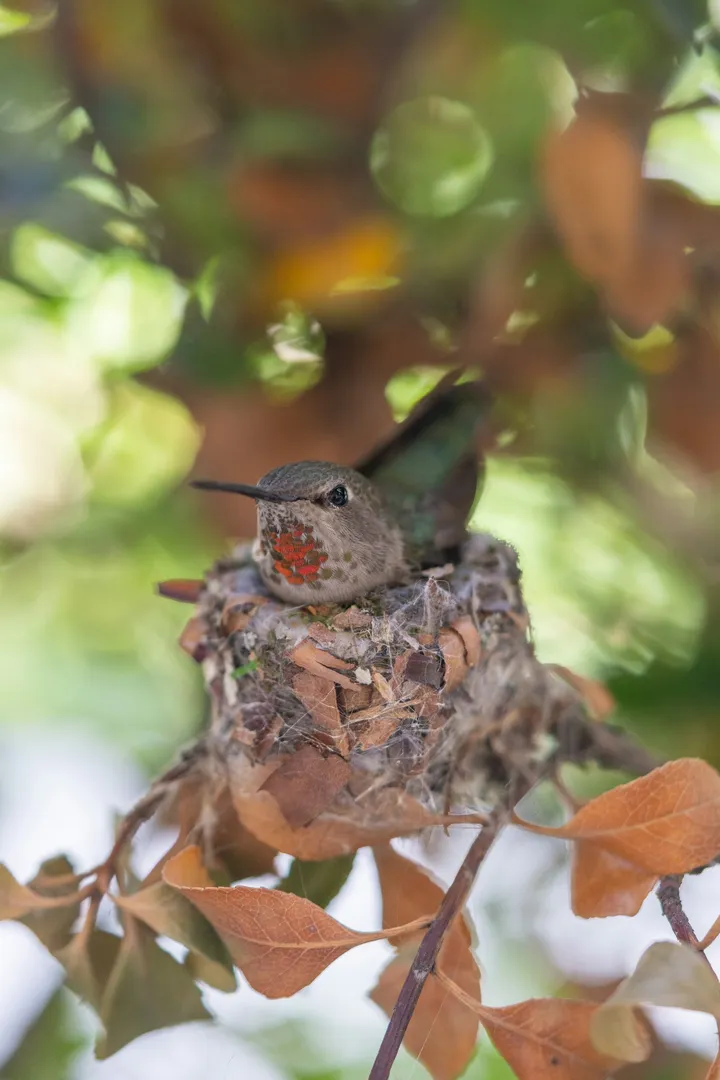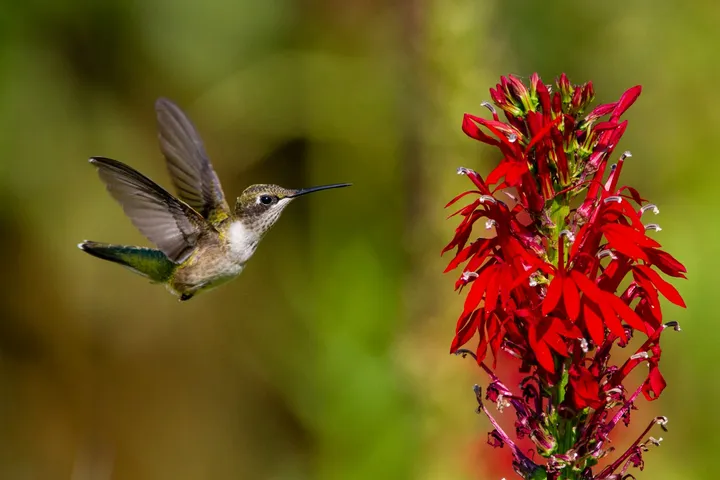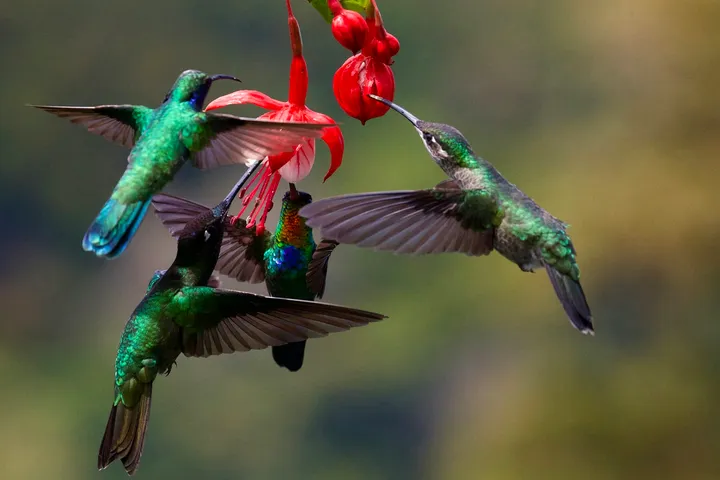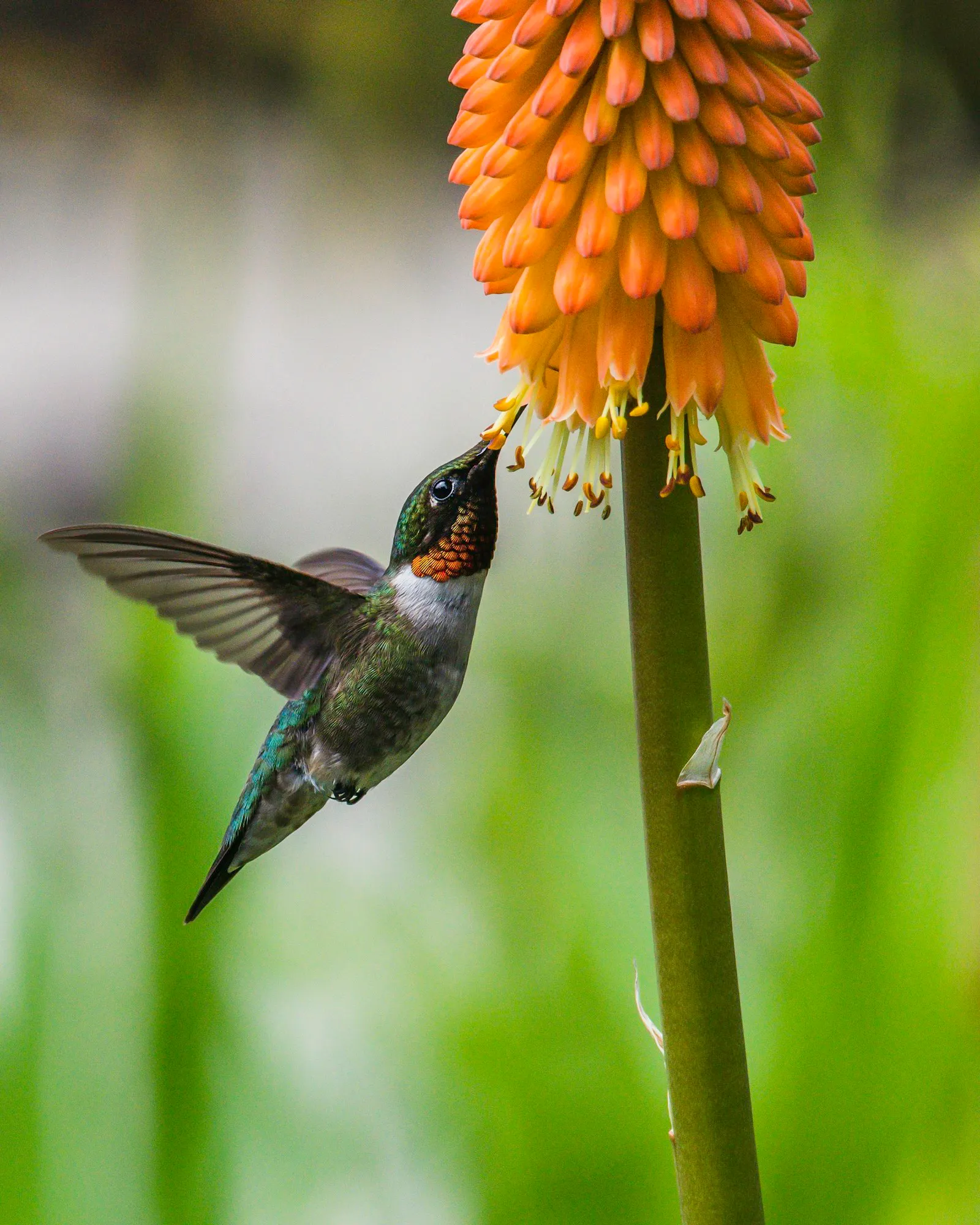
The best hummingbird feeder for your yard depends on whether you have ants, whether you have bees, whether you live somewhere that hits 100 F in summer, whether you want to mount one on a window, and how many hummingbirds you actually get. There is no single best feeder for everyone. There is a best feeder for each of those use cases, and a few feeders that consistently come out ahead across all of them.
This guide tiers the picks honestly. We’ll tell you what to buy at every price level and what to skip. The cheap red-plastic feeder sold at every big-box store is the most-purchased hummingbird feeder in the country and is also one of the worst, and we’ll explain why.
Quick answer
For most backyards: the Aspects HummZinger Excel (saucer-style, ~$28). Easy to clean, built-in ant moat, bee-resistant feeding ports, holds 16 oz.
If you need maximum heat tolerance: the Best-1 8oz glass feeder (~$15). Glass body tolerates direct sun and Arizona heat better than plastic. The classic small-yard pick.
If you’re starting on a budget: the First Nature 3055 (~$10, 16 oz). Not the best, but the most-bought entry-level hummingbird feeder. It works; it just needs more frequent cleaning.
The rest of this guide breaks the picks down by specific use case: ant-proof, bee-proof, window-mount, high-capacity, splurge. Skip to the section that matches your yard.
How we picked
A good hummingbird feeder does five things:
- Cleans easily. This matters more than every other criterion combined. A feeder that’s hard to clean leads to lazy cleaning, which leads to nectar mold and bacterial contamination, which causes fatal tongue infections in hummingbirds. The single most important review criterion. Our guide to cleaning a hummingbird feeder covers the method, the no-soap rule, and how often to clean by temperature.
- Resists ants and bees. Some feeders have built-in ant moats and bee-proof port designs. The ones without often become bee magnets within a week.
- Tolerates real outdoor conditions. UV, heat, freeze-thaw, weather, knocks from squirrels. Plastic gets brittle, dye fades, gaskets harden. Glass is more durable but heavier.
- Holds the right amount of nectar for your yard. A 32 oz feeder in a small yard means you’re dumping unused nectar every few days. A 4 oz feeder in a yard with regular traffic means refilling daily.
- Doesn’t drip. Saucer-style feeders rarely drip. Bottle-style feeders drip if installed wrong or in hot weather (air expansion pushes nectar out the ports). Drips attract bees and ants.
Brand recognition and feeder color matter less than reviewer-marketing implies. Red anywhere on the feeder is enough; the nectar inside doesn’t need red dye.
We pull our hummingbird species and behavior facts from the Cornell Lab of Ornithology’s All About Birds database and Audubon field guides. We tested most of the recommendations in a small backyard over multiple seasons.
Best overall: Aspects HummZinger Excel
The Aspects HummZinger Excel is the consistent recommendation across birding communities, the Cornell Lab discussion threads, and small-site bird-feeder reviews. It wins on the criteria that matter most.
- Saucer-style design with 4 raised feeding ports
- Built-in ant moat in the hanger above the saucer (fill with plain water; ants drown trying to cross)
- Bee-resistant ports sized so honeybees can’t reach the nectar (most won’t bother once they’ve tried)
- Top-fill design: opens completely so you can scrub every interior surface with a bottle brush
- 16 oz capacity: right size for a busy small-to-medium yard
- Made in USA, lifetime guarantee (Aspects’ warranty is genuine; they replace defective feeders)
Price: typically $25-30. Two of these in different spots beat one of anything else for a yard with regular hummingbird traffic, because hummingbirds are territorial and one dominant bird will defend a single feeder.
The “Excel” model is the 16 oz version. The HummZinger Ultra is the 12 oz version. The HummZinger Excel Plus is the 16 oz with a brass hanger. Any of the three is a good buy.
Best ant-proof / built-in ant moat: Aspects HummZinger (any model)
Same recommendation as above. The HummZinger line is the only major hummingbird-feeder brand with an integrated ant moat as a standard feature.
If you already have a feeder you like and just need ant protection, buy an add-on ant moat separately ($5-8) and hang the feeder from it. The Perky-Pet ant moat is the standard add-on. Fill with plain water; refill every few days as it evaporates.
Don’t use insecticide, oil, or sticky substances on hangers; some kill hummingbirds when they preen feet that have walked through it. Water is the only safe ant deterrent.
Best for hot weather / glass body: Best-1 8oz
The Best-1 8oz is the classic glass-body hummingbird feeder. It’s been made in Texas since the 1980s and is what the National Park Service uses at many sites.
- Glass bottle (not plastic, so no UV degradation or heat warping)
- Bottle-style bottom-fill design: simple, durable
- Bee-proof yellow feeding ports
- Inexpensive ($12-18 depending on retailer)
- No ant moat built in; pair with an add-on
The downside: it’s a bottle-style feeder, so it can drip more than a saucer-style in extreme heat, and the metal base can rust over many years. The upside: it lasts a long time, glass cleans completely (no scratched plastic where bacteria hide), and it’s cheap enough to keep several around.
If you live in Arizona, southern California, Texas, or anywhere that regularly hits 95 F in summer, the Best-1 is the better choice than a plastic saucer feeder.
Best window-mount: Aspects Jewel Box
The Aspects Jewel Box is the window-mount version of the HummZinger design. Three suction cups anchor it to a window; the saucer-style design holds 8 oz. You watch hummingbirds at arm’s length, which is genuinely magical the first dozen times.
Use cases:
- Renters who can’t install hanging hardware
- Anyone with a kitchen window facing a planted area where hummingbirds already feed
- Households with young kids (the close-range view is the gateway drug to backyard birding)
The downsides: suction cups can fail in extreme heat or cold (re-mount once a season), and the close range can cause window-strike concerns for songbirds passing the window. Hummingbirds themselves rarely strike windows.
If you want a window feeder for a yard that already has hummingbirds, this works. If you have no hummingbirds yet, start with a hanging feeder first; window feeders are less visible to passing birds.
Best high-capacity (for busy backyards): Aspects HummBlossom 12oz or two HummZinger Excels
If your yard supports a real swarm of hummingbirds (10+ regular visitors, common in the south during fall migration), you have two options: a bigger feeder or multiple smaller feeders.
Multiple smaller feeders is the better answer. Two or three HummZinger Excels in different spots outperform one big feeder because:
- Hummingbirds are territorial; one dominant bird will defend a single feeder and chase others away
- Multiple feeders dilute the territorial behavior so more birds feed
- Easier to clean (more frequent, smaller batches)
If you must use one big feeder, the Aspects HummBlossom 12oz is the same saucer-style design at higher capacity. Just don’t go to 32 oz; the nectar spoils before that volume gets consumed even in a busy yard.
Best budget: First Nature 3055
The First Nature 3055 16oz hummingbird feeder is the $10 hummingbird feeder you see everywhere. It works. It’s a bottle-style with a red plastic base, four feeding ports, and that’s it.
- Cheap ($8-12 depending on retailer)
- Easy to fill (unscrew the bottle, fill, screw back)
- Bee-resistant ports (small, yellow caps over the feeding holes)
- No ant moat: pair with an add-on
- No glass option: all plastic, can degrade in UV over 2-3 years
This is the right pick for: a first hummingbird feeder, a backup feeder, kids’ rooms, or anyone who wants to test if hummingbirds visit before investing in a $30 setup. Just clean it on schedule (every 3-5 days in moderate weather, every 2 in hot weather) and it’ll do the job for years.
The First Nature 3055 outperforms most “premium” $40+ decorative feeders that prioritize aesthetics over cleanability.
Best splurge: HummZinger Excel (yes, same one) or Schrodt’s hand-blown glass
We’ve now mentioned the HummZinger Excel three times. That’s because for most backyards there is no real splurge tier above it. A $50 feeder doesn’t bring more hummingbirds than a $28 HummZinger does. The diminishing returns kick in fast.
If you specifically want a beautiful decorative feeder (the aesthetic matters and you’ll keep the feeder long-term), the Schrodt Designs hand-blown glass feeders are the upgrade tier. Hand-blown glass in colors that don’t fade. $40-80 depending on size and design. They are gift-grade.
Just know: a Schrodt won’t attract more hummingbirds than a HummZinger. It will look nicer hanging from your porch.
What to skip
A few things you’ll see widely and shouldn’t buy:
The cheap Perky-Pet red plastic bottle-style feeders ($5-8) sold at most big-box stores. The most-bought hummingbird feeder in the country and one of the worst. The feeding ports are not bee-resistant (yellow plastic flowers that bees can fit into), the plastic base has crevices that are nearly impossible to scrub clean, and the design drips in heat. They work; they just require obsessive cleaning to be safe for hummingbirds, which most owners don’t do. Pay the extra $15 for a HummZinger.
“Smart” hummingbird feeders with cameras (the Birdkiss, NETVUE, Bird Buddy hummingbird version). Interesting category but most are still working out manufacturing and cleaning issues. The Bird Buddy hummingbird feeder is the most-evolved but is still effectively a beta product compared to mainstream feeders. Wait a year or two for the category to mature unless you’re an early adopter.
Hummingbird feeders sold with red dye nectar concentrate. The dye is unnecessary, may harm hummingbirds in long-term exposure, and is not recommended by the Cornell Lab or Audubon. Buy the feeder, not the kit. Make 4:1 sugar water at home.
Anything labeled “best hummingbird feeder of 2026” by a site that doesn’t disclose how they tested. Most “best of” lists are affiliate-driven roundups of whatever Amazon has paid placement for. We test what we recommend. Several of the feeders above we have used for multiple seasons.
Nectar concentrate from the grocery store. Plain white sugar is the right ingredient. The concentrate is just sugar with red dye and a higher per-ounce price. Don’t pay for sugar.
How to choose
Match the feeder to your yard:
- No hummingbirds yet, want to start: First Nature 3055 ($10). See if anyone shows up over a season. Upgrade after if you’re hooked.
- A few hummingbirds already, moderate traffic: Aspects HummZinger Excel ($28).
- Lots of hummingbirds, fall migration peak: Two HummZinger Excels in different spots, or one HummBlossom 12oz.
- Hot summer climate (over 90 F regularly): Best-1 8oz glass body.
- Kitchen window with a planted bed below: Aspects Jewel Box window-mount.
- Apartment balcony with limited mounting: Aspects Jewel Box window-mount, or hang First Nature 3055 from a balcony rail.
For specific advice on when to put your feeder out by region, see our guide on when to put out hummingbird feeders, which lines up with the timing in our hummingbird migration guide. Rule of thumb: put feeders out 2 weeks before the first sighting in your zone last year. Take them down 2 weeks after the last sighting.
Cleaning and nectar (the bird-welfare part competitors skip)
The feeder is half the equation. How you maintain it is the other half. This part is short but it matters more than your feeder choice.
Cleaning frequency:
- Under 80 F: every 3 to 5 days
- 80 to 90 F: every 2 to 3 days
- Over 90 F: every 1 to 2 days
When you clean, take the feeder fully apart, scrub all interior surfaces with a bottle brush, rinse with hot water, refill with fresh nectar. Never use soap, vinegar, or bleach on a hummingbird feeder unless you rinse extremely thoroughly; residue is harmful.
Nectar recipe: 1 part plain white sugar to 4 parts water. Dissolve by stirring (no need to boil unless making large batches). Refrigerate any extra. No honey (ferments quickly and causes fatal fungal infections), no brown sugar (iron content toxic in volume), no red dye, no nectar concentrate.
For the full breakdown of the nectar recipe (4:1 ratio, the boil question, storage and shelf life), see our hummingbird nectar recipe guide. For now: 1 part sugar, 4 parts water, no other ingredients. That’s the formula the Cornell Lab and Audubon both recommend.
Why cleanliness matters more than the feeder: mold and bacteria in old nectar cause hummingbird tongue infections (specifically a fungal infection that swells the tongue), which prevents feeding and is usually fatal. A clean cheap feeder is safer than a dirty premium feeder. Cleanliness is non-negotiable.
FAQ
Which feeder attracts the most hummingbirds? Saucer-style feeders (flat dish design with feeding ports on top) attract the most hummingbirds in most yards because the design is bee-proof, ant-resistant, and easy to clean. The Aspects HummZinger Excel is the consistent top recommendation.
What is the highest rated hummingbird feeder? The Aspects HummZinger Excel and the Best-1 8oz are the two highest-rated hummingbird feeders by customer reviews and birding-community recommendations. HummZinger wins on cleanability; Best-1 wins on heat tolerance.
How often should I clean my hummingbird feeder? Every 3 to 5 days in moderate weather, every 2 days when temperatures are above 80 F. This is the single most important thing you do for hummingbird welfare.
Do I need to boil the nectar? No. Plain white sugar in cold or warm tap water at 4:1 is fine. Boiling is unnecessary if you make small batches and refrigerate extras. No red dye, no honey, no brown sugar.
What size feeder should I buy? Start small (4 to 8 oz). Two small feeders in different spots beat one big feeder. Nectar spoils fast in heat and a half-empty 32 oz feeder forces you to dump unused nectar.
Does feeder color matter? Red on the feeder body helps, but you do not need red dye in the nectar. Hummingbirds learn feeder locations after the first visit; once they’ve found you, the color matters less.
Are saucer feeders better than bottle feeders? Generally yes. Saucer feeders rarely drip, are easier to clean fully, and are typically more bee-resistant. Bottle feeders hold more nectar per refill but drip in heat and have port designs bees can sometimes exploit.
Sources and further reading
- Cornell Lab of Ornithology: All About Birds, Ruby-throated Hummingbird
- Cornell Lab of Ornithology: Project FeederWatch hummingbird feeding research
- Audubon: Designing a Hummingbird Garden
- Hummingbird Central: Migration maps by region
If you’re new to backyard hummingbird feeding, the basic setup is one feeder, fresh nectar at 4:1, cleaning every 3-5 days, and patience for 1-3 weeks while hummingbirds find you. The right feeder makes maintenance easier and the bird-welfare math better; it does not, by itself, attract more birds. Patience does.
Once your feeder is up, our 7-day plan for attracting hummingbirds covers what to do next, keeping ants and bees out of the nectar handles the summer pests that find every feeder, and our guide to hummingbird nests covers what happens once the females you have attracted start raising young nearby.