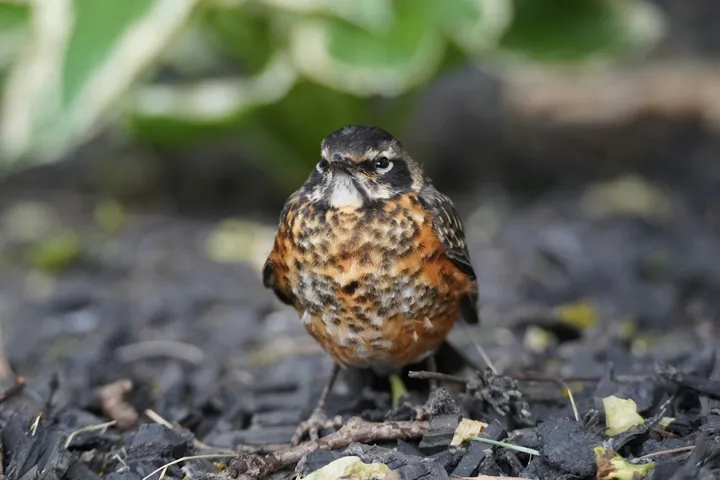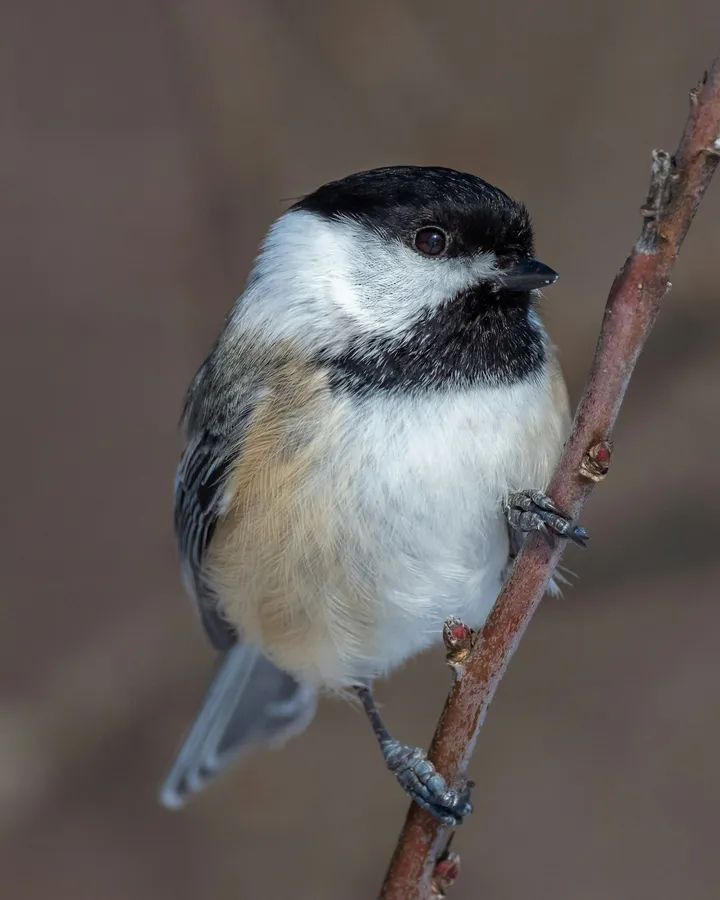
Can birds eat bread? Technically yes, but that is the wrong question. If you grew up tossing bread to birds at the park, the habit feels harmless, and it mostly is not. Bread will not instantly poison a bird, but it is junk food: empty calories that fill birds up without feeding them, and a real problem for chicks and waterfowl. This guide gives you the honest answer on whether birds can eat bread, a quick-reference table for other human foods birds can and cannot eat, and what to put out instead.
TL;DR
- Bread is not toxic, but it is junk food. It is mostly empty calories with little protein or fat, so it fills birds up without nourishing them.
- A little plain bread on rare occasion will not kill a healthy adult bird, but bread should never be a regular food.
- It is worst for chicks (malnutrition, choking) and waterfowl (linked to “angel wing”), and moldy bread can cause a fatal lung infection.
- Winter is the worst time for bread, not the best: birds need high-fat fuel then, not empty calories.
- Feed black-oil sunflower seed, suet, mealworms, nyjer, and fruit instead. See the food-safety table below for the full “can birds eat X” rundown.
Is bread bad for birds? The honest answer
Bread is not poisonous, and that is where most scare-pages overstate it. A healthy adult sparrow or pigeon that eats a few crumbs is not going to drop dead. But “not poisonous” is a low bar, and it is the wrong question.
The right question is whether bread is good food, and it is not. As Audubon puts it, bread and crackers are “just a source of empty calories” that do not deliver the nutrients birds need. Bread has almost none of the protein and fat that birds rely on, so it works like filler: a bird that eats its fill of bread has less appetite and less room for the insects, seeds, and fruit that actually keep it alive. Make bread a regular handout and you are quietly starving the birds you think you are helping. That holds even for bold yard omnivores like crows, which will happily take bread but are far better served by unsalted peanuts or eggs, as we explain in what crows eat.
So the honest answer is: you can give birds a little plain bread, but you should not make it a habit, and there are a few situations where even a little is genuinely risky.
Why bread harms birds
Empty calories and malnutrition
Birds have fast metabolisms and tight energy budgets. Every mouthful needs to earn its place. Bread is carbohydrate with little else, so it crowds out real nutrition. This matters most for young birds: a chick fed bread by well-meaning people (or by a parent that carried bread back to the nest) can fail to develop properly because it is missing the protein that builds muscle and feathers.
Mold, spoilage, and a fatal lung infection
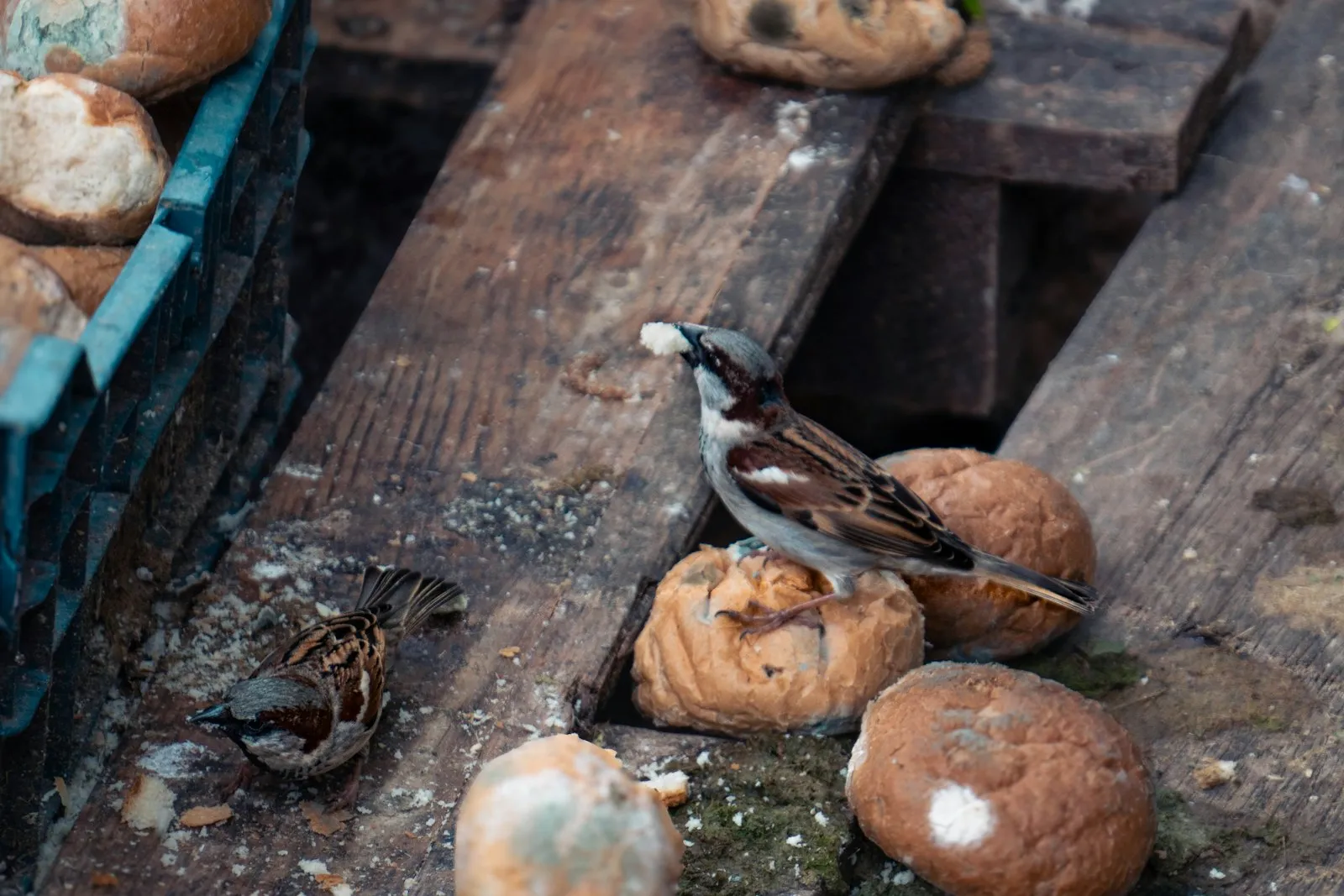
Bread left outside molds fast, especially in damp weather. Moldy bread is not just unappetizing; the fungus can cause aspergillosis, a serious and often fatal respiratory infection in birds. Audubon’s rule of thumb is simple: if something is too old for you to eat, it is too old for birds. The sparrows in the photo at the top of this page are picking through bread rolls that are already going moldy, which is exactly the scenario to avoid.
Pests, mess, and fouled water
Bread that birds do not finish does not just disappear. It draws rats and mice (the same reason our guide to keeping squirrels and rodents away from feeders matters), it cakes onto feeders and railings, and when it ends up in ponds and baths it rots, fouls the water, and feeds algae. Clean water is part of good bird care; our guide to attracting birds to a bird bath covers keeping it fresh. A feeding habit that attracts rodents and dirties the water is working against the birds, not for them.
Bread and waterfowl (the park-duck habit)
Ducks and geese are the classic victims of the bread habit. Audubon advises against feeding them bread directly: beyond the empty-calorie problem, a diet heavy in bread is associated with “angel wing,” a wing deformity in young waterfowl that can leave them unable to fly. Add in the crowding, dependence, and water pollution that come with regular bread-feeding at a pond, and the kindest thing you can do for park ducks is to stop bringing the bread bag.
Can birds eat bread in winter?
This is the most common myth worth correcting: people assume birds “need the carbs” in winter. The opposite is true. In cold weather birds burn enormous energy just staying warm, and they need dense, high-fat, high-protein food to do it: suet, black-oil sunflower, peanuts. Bread fills their stomachs with empty calories at the exact moment they can least afford to waste a meal. If you want to help birds through a cold snap, put out suet and oil-rich seed, not bread.
Can birds eat other human foods? A quick-reference guide
“Can birds eat bread” is usually the first of a dozen kitchen questions. Here is the honest rundown. “In moderation” means an occasional scrap alongside real food, never a staple.
| Food | Safe for birds? | Notes |
|---|---|---|
| Bread, crackers, chips | Avoid | Empty calories; chips add harmful salt |
| Cooked or uncooked rice | Yes | The “uncooked rice kills birds” claim is a myth; birds eat grain in fields |
| Plain oats (uncooked) | Yes | Project FeederWatch lists oats as a bird food; never use sugary instant oats |
| Plain popcorn (air-popped) | In moderation | No butter, no salt |
| Grapes and raisins | Yes | A favorite of fruit-eating birds (no preservative-soaked raisins) |
| Apples | Yes | Remove the seeds, which contain cyanide compounds |
| Banana | In moderation | Soft, easy to eat; offer small pieces |
| Unsalted peanuts | Yes | Plain, unsalted, unflavored; a FeederWatch-listed bird food |
| Cheese and dairy | Avoid | Birds digest dairy poorly; skip it |
| Chocolate | Never (toxic) | Contains theobromine and caffeine, toxic to birds |
| Avocado | Never (toxic) | Contains persin, dangerous to birds |
| Anything salty, caffeinated, alcoholic, or moldy | Never | All harmful to birds |
Foods that are toxic to birds
A few foods are not just low-value but genuinely dangerous, and they are worth memorizing: chocolate (theobromine and caffeine), avocado (persin), caffeine, alcohol, very salty foods, onions and garlic, and anything moldy. With fruit, the flesh is fine but remove apple seeds and the pits of cherries, peaches, and apricots, which contain cyanide compounds. The same plain-is-best rule applies at the nectar feeder: our hummingbird nectar recipe explains why honey and red dye are off the menu there too.
What to feed birds instead of bread
The goal of feeding is to supplement what birds find in nature, not replace it, so the best feeder foods mirror what they already eat. Project FeederWatch’s food-type guidance points to the reliable staples:
- Black-oil sunflower seed, the single most popular feeder food, eaten by cardinals, chickadees, finches, and more.
- Suet, especially in cold weather, for woodpeckers, nuthatches, and chickadees.
- Mealworms, a high-protein food that reliably draws bluebirds, wrens, and chickadees.
- Nyjer (thistle) for finches, and cracked corn for ground feeders like doves and sparrows.
- Fruit, such as orange halves for orioles and grapes for fruit-eaters.
For the full setup, our guide on how to attract birds to a bird feeder covers matching food to the birds you want, and our species diet guides (like what robins eat and what mourning doves eat) show how different birds need different foods. If you are caring for a baby bird, our guide to what fledgling birds eat explains why bread is especially dangerous for them.
What to skip
- Bread as a regular food. An occasional crumb is not a crisis, but a steady diet of it is. Skip the habit.
- Any moldy food. Mold can be fatal. If it is fuzzy, bin it.
- The white-versus-brown bread debate. Both are junk food for birds. Brown is marginally less empty, but neither belongs in a feeder.
- Feeding ducks bread. Bring cracked corn, oats, peas, or chopped lettuce to the pond instead, in small amounts, or just enjoy watching them.
- Salty, sugary, or flavored human snacks. Chips, sweetened cereal, and flavored popcorn all do more harm than good.
FAQ
Is bread bad for birds? Bread is not poisonous to birds, but it is junk food. It is mostly empty calories with little of the protein and fat birds need, so it fills them up without nourishing them. A small amount of plain bread on occasion will not kill a healthy adult bird, but bread should never be a regular food, and it is especially risky for growing chicks, who can be malnourished or choke on it.
Can birds eat bread in winter? Winter is the worst time to feed bread, not the best. In cold weather birds burn huge amounts of energy staying warm and need high-fat, high-protein foods like suet, black-oil sunflower seed, and peanuts. Bread fills their stomachs with empty calories right when they most need real fuel, so it can leave them worse off. Offer suet and oil-rich seed instead.
What bread is safe for birds? No bread is a genuinely good food for birds, but if you ever offer a little, plain (unmoldy) bread torn into tiny crumbs is the least bad option, and brown or whole-grain has marginally more value than white. Never offer moldy bread, which can cause a fatal lung infection (aspergillosis), and never offer bread with salt, butter, or spreads. Treat it as a rare scrap, not a meal.
What is the most toxic food for birds? Chocolate is among the most dangerous: it contains theobromine and caffeine, which are toxic to birds. Other foods to never offer include avocado (which contains persin), caffeine, alcohol, anything salty, onions and garlic, and any moldy food. Fruit is fine, but remove apple seeds and fruit pits, which contain cyanide compounds.
Can baby birds eat bread? No. Nestlings and fledglings need high-protein insect food to grow, and bread can be deadly to them. Dry bread can choke a chick, and a baby bird raised on bread will not develop properly. If you find a baby bird and think it needs help, do not feed it bread or anything else; contact a licensed wildlife rehabilitator.
Is it OK to feed ducks bread? No. Audubon advises against feeding bread to ducks and geese: it is empty calories, and a diet heavy in bread is associated with “angel wing,” a wing deformity in young waterfowl. Leftover bread also fouls the water and draws rats. If you want to feed park ducks, bring cracked corn, oats, chopped lettuce, peas, or birdseed instead, in small amounts.
What to do this week
If feeding birds is the goal, swap the bread bag for a small sack of black-oil sunflower seed and, in cold weather, a suet cake. You will draw a wider range of birds, you will not be filling them with empty calories, and you will not be attracting rats or fouling the water. If you keep a feeder, scrub it out a few times a year and keep the seed dry. And the next time you are at the pond, skip the bread: the ducks will be healthier for it, and so will the water they live in.
Sources
- Project FeederWatch (Cornell Lab of Ornithology): Food Types (what to feed birds, including seed, suet, mealworms, and fruit)
- Audubon: Bad Idea: Feeding Bread to Ducks and Other Birds (empty calories, angel wing, moldy food)