A baby bird is on your lawn. Your instinct is to feed it. Almost every time, that instinct is wrong. This guide walks through what fledglings actually eat, why feeding them is usually a mistake, how to tell a healthy fledgling from a bird that genuinely needs help, and how to find a licensed wildlife rehabilitator in the next hour.
This is written for the worst-case scenario: a panicked person who just found a baby bird and needs to make the right call quickly. Read the first three sections before doing anything.
TL;DR
If the bird has feathers and is hopping or standing, it is a fledgling and it is supposed to be there. Step back 30 feet and watch from a window for an hour. Parents typically return every 15 to 30 minutes; they will not come close while you are nearby. If parents are confirmed dead or injured, or the bird has visible injuries, a cat caught it, or it is cold and lethargic, find a licensed wildlife rehabilitator at Animal Help Now or your state wildlife agency. Do not feed bread, milk, sugar water, seeds, or worms from your yard. Do not give water by dropper. Under the US Migratory Bird Treaty Act, it is illegal for an unlicensed person to keep most native wild birds.
First, identify what you found
The single most important question is whether you found a nestling or a fledgling. They look different, they need different help, and “rescue” is almost always wrong for one of them.
Nestling: pink skin, eyes closed, no feathers
A nestling is a young bird that should still be in the nest. Pink or pale skin, eyes closed or just recently opened, sparse downy fluff but no real feathers, and it cannot stand or hop. If you can find the nest within 10 feet, gently place the nestling back in it. Birds have a poor sense of smell and will not abandon a baby because you touched it; this is one of the most widespread myths about baby birds, and Audubon’s What to Do With a Baby Bird page explicitly debunks it.
If the nest is destroyed or unreachable, this is the one scenario where you should immediately contact a wildlife rehabber. A nestling on the ground for more than a few hours will die from exposure, predation, or starvation.
Fledgling: feathered, hopping, can’t yet fly
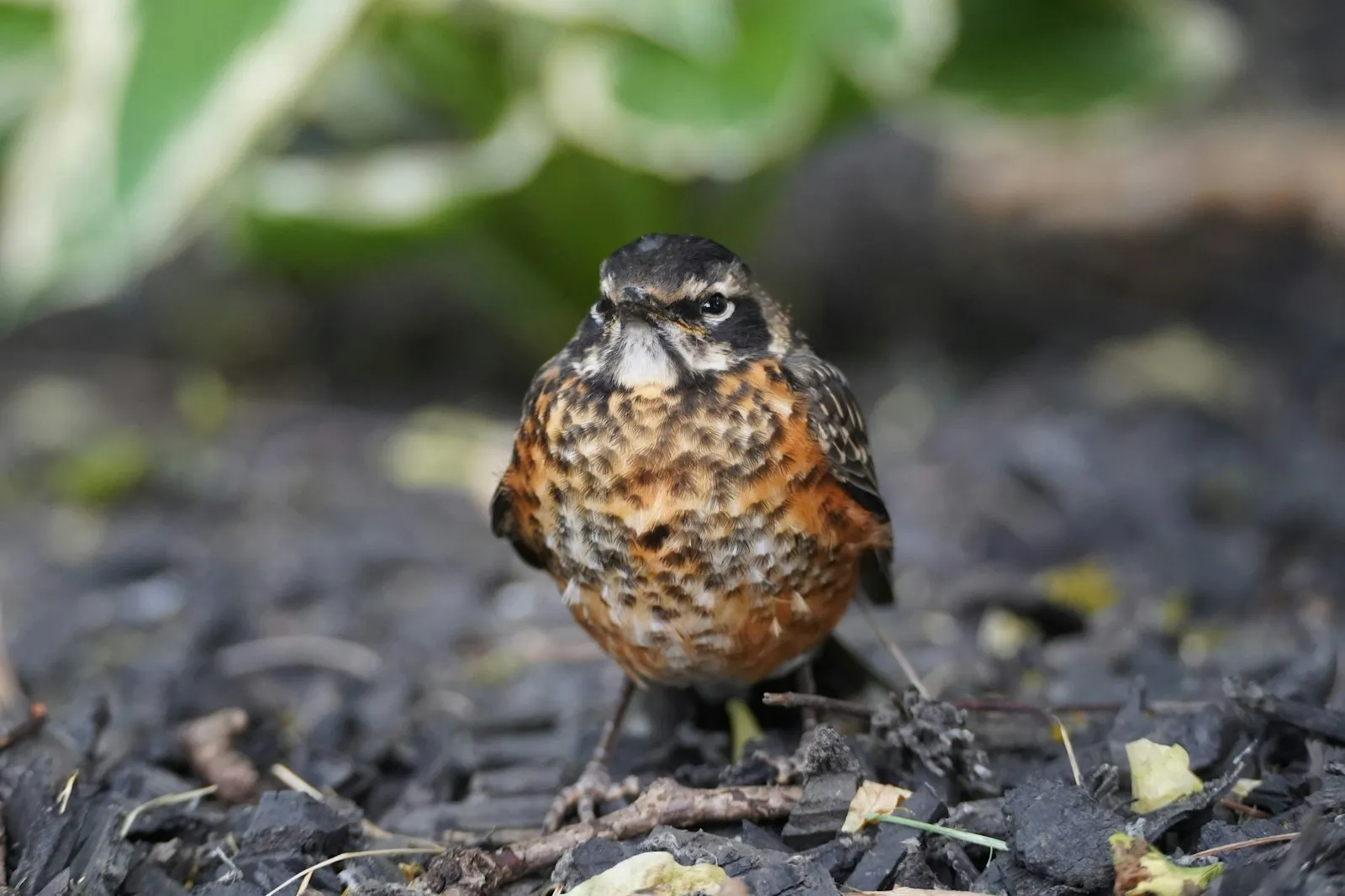
A fledgling is a young bird that has left the nest on purpose and is in the most awkward 2 to 5 days of its life: it has feathers, can hop and stand, but cannot yet fly well. Audubon’s Find a Baby Bird Out of the Nest? Here’s What to Do describes it well: fledglings have entered an “awkward teenagerdom” stage where they still mooch off their parents but spend most of their time on the ground.
This is normal, healthy bird development. Almost every “rescued” baby bird brought to a wildlife center is a healthy fledgling whose well-meaning rescuer separated it from parents that were 30 feet away in a tree.
The 30-second test
- Does it have feathers? If yes, it is a fledgling.
- Can it stand on its own? If yes, it is a fledgling.
- Are its eyes open and alert? If yes, it is almost certainly a fledgling.
- Does it have pink skin and closed eyes with sparse fluff? Then it is a nestling that needs the nest.
The 1-hour rule (and why feeding is usually wrong)
If you found a fledgling, the protocol is to back off and watch.
What the parents are actually doing
Parent birds visit fledglings every 15 to 30 minutes from sunrise to sunset to deliver food. They are wary of humans and will not approach the fledgling while you are within 20 to 30 feet. From a window, with binoculars, or from across the yard, you can usually see a parent arrive within an hour. Audubon’s When You Should and Should Not Rescue Baby Birds and Cornell Lab’s I found a baby bird. What do I do? both confirm: watch for an hour before doing anything.
Why aspiration pneumonia kills “rescued” baby birds
The single most common cause of death in well-intentioned baby-bird rescues is aspiration pneumonia. Tiny amounts of food or water enter the lungs (not the esophagus) during feeding, and bacterial pneumonia sets in within hours. Unlicensed rescuers, even careful ones, cause this regularly because they cannot see the glottis (the airway opening) at the base of a baby bird’s tongue and cannot time the feeding to the swallow reflex. Wildlife rehabilitators train for this. Most first-time rescuers do not.
Signs of aspiration during a feeding attempt: the bird gasps, throws its head back violently, leaks fluid from its beak, or goes quiet and lethargic shortly after. These are emergency signs. The bird needs a rehabber immediately, not more food.
The legal reality (Migratory Bird Treaty Act)
Under the US Migratory Bird Treaty Act of 1918, it is illegal for an unlicensed person to keep most native wild birds, even temporarily, even with the best intentions. This is not a technicality. Federal and state wildlife agencies enforce it, and “I was just trying to help” is not a defense. The legal route is to transfer the bird to a licensed wildlife rehabilitator as soon as possible.
The Migratory Bird Treaty Act covers nearly every native songbird in North America, plus raptors, waterfowl, shorebirds, and most other wild birds. Exceptions are limited (some invasive species like House Sparrows, European Starlings, and Rock Pigeons), and even those are subject to state and local rules.
When to intervene (the welfare decision tree)
Intervention is justified in a small set of specific circumstances. In every other case, watch and wait.
Nestling on the ground
Search for the nest. If you find it within 10 feet, place the nestling back in it. If the nest is destroyed or unreachable, contact a wildlife rehabber immediately.
Visible injury or bleeding
Wing dragging on the ground, visible wound, blood on feathers, an obviously broken leg, or a deformed beak. Get the bird to a rehabber as fast as possible. Keep it warm and dark in transit.
Cat or dog has caught it
This is one of the absolute red flags. Cat saliva contains Pasteurella multocida, a bacterium fatal to birds typically within 24 to 48 hours of contact even if there is no visible injury. The bird needs antibiotic treatment from a rehabber or vet within the next few hours, period. Audubon Rockies’ Dos and Don’ts of Helping Baby and Injured Birds covers the Pasteurella protocol.
Confirmed dead parents
If you have actually witnessed the parents die (window strike, vehicle, predator) or found dead adults near a nest, the fledglings will not survive without intervention. Contact a rehabber.
Cold and lethargic with no parent visits after 2 hours
After 2 hours of watching, if no parent has appeared at all and the fledgling is not moving much or feels cold to the touch, it likely is orphaned or injured internally. Contact a rehabber.
How to find a wildlife rehabber (right now)
The 30-second action: open Animal Help Now (ahnow.org) on your phone, enter your ZIP code, and call the first listing.
Animal Help Now (US)
Animal Help Now is a free emergency-resource tool maintained by a nonprofit. It lists licensed wildlife rehabilitators by ZIP code with phone numbers and the species they handle. This is the fastest tool, period.
State wildlife agency directory
Every US state wildlife agency maintains a list of licensed rehabbers. Search “[your state] wildlife rehabilitator” on Google. The state Department of Natural Resources, Fish and Wildlife, or Department of Fish and Game site will have it.
Local raptor centers and veterinarians
Local raptor centers and Audubon nature centers can often accept songbirds or refer you to who can. Many veterinarians, even those that do not normally treat wildlife, can stabilize a bird and direct you to a rehabber. Call ahead so the front desk knows you are bringing a wild bird.
After-hours and weekends
If everyone is closed, keep the bird warm (small ventilated box with a heating pad on low under one half), dark, and quiet. Do not feed and do not water. Most rehabbers return weekend voicemails within a few hours. The single best thing you can do for a baby bird in your care is keep it warm and quiet until a professional takes over.
If you must feed (and only if): what fledglings actually eat
This section is the answer to the keyword you searched for. Read the preceding sections first. Feeding without rehabber guidance is the leading cause of death in baby-bird rescues; this section is a last-resort stopgap of a few hours at most, with full awareness of the risks.
Insectivores (robins, bluebirds, warblers, swallows)
Insectivore fledglings eat soft-bodied protein. Adults catch caterpillars, mealworms, beetles, and earthworms; fledglings eat the same food in smaller pieces, regurgitated. The Cornell Lab American Robin overview documents this, robin parents return to the nest 100 to 150 times a day with insects and worms. Stopgap: a small piece of moistened high-quality kitten or puppy food (the size of a grain of rice or smaller), no fillers, given by soft plastic dropper or thin chopstick.
Granivores and omnivores (sparrows, finches, jays, cardinals)
Even seed-eating species feed their fledglings primarily insects for the first 1 to 3 weeks because seeds do not provide enough protein for rapid growth. Do not offer seeds, even crushed, to a fledgling. Stopgap is the same: small pieces of moistened high-quality kitten or puppy food. The Cornell Lab page for House Finch and other granivores notes the parental switch from insects to seeds happens after fledging, not during.
Fruit-eaters (orioles, waxwings, thrushes)
Fruit-eating species also feed insects to their fledglings; fruit comes later. If you’ve been reading our oriole feeder article, the adult oriole eats jelly and orange halves but their chicks eat caterpillars and beetles. Same stopgap as above: tiny moistened kitten food.
Stopgap foods that are safe for a few hours
Only as a bridge until a rehabber takes over (typically less than 4 hours):
- Moistened high-quality dry kitten or puppy food. Royal Canin, Purina Pro Plan, Hill’s Science Diet. Soften with warm (not hot) water to a thick paste. Pieces no larger than a grain of rice.
- Moistened mealworms (dried mealworms reconstituted in warm water for 10 minutes). Insectivore fledglings only.
That is the entire safe stopgap list. Everything else is more likely to harm than help.
What never to feed a baby bird
Bread, crackers, sugar water
No protein, no minerals, fills the crop without nutrition, and can ferment into a crop-impaction risk. Sugar water specifically is a marketing trick from old “rescue advice”: baby birds need protein, not calories from sugar.
Milk and dairy
Fatal. Birds are not mammals and cannot digest lactose. Crop crystals and acute toxicity follow within hours.
Worms or insects from your yard
Earthworms and insects from your yard carry parasites: Capillaria, Syngamus trachea (gapeworm), and tapeworm species that kill baby birds in days. Wild adult birds have immune resistance and gut flora that fledglings have not yet developed. Wait for rehabber-sourced mealworms or rehabber-approved alternatives.
Whole seeds and dry pellets
A fledgling’s crop and gizzard cannot process whole seeds. They impact and obstruct. Even crushed seeds are wrong for an insectivore fledgling and inadequate for a seed-eater fledgling that still needs protein.
Cat food or dog food (uncooked, low-quality)
The stopgap mentioned above is high-quality dry kitten or puppy food, moistened. Wet food (canned), low-grade dry food with fillers, and human-grade meat are all wrong. The fat and salt content of human meat and the fillers in low-grade kibble both cause problems.
How often to feed (if a rehabber confirmed you should)
If a rehabber has actually instructed you to feed during transit or overnight care, the schedule is roughly:
- Every 15 to 30 minutes from sunrise to sunset. Yes, that often.
- No feeding overnight for fledglings (they roost and digest).
- Stop feeding when the bird turns its head away or refuses. Overfeeding causes crop impaction.
- Watch the crop. A small bulge on the front of the throat below the beak is normal after feeding; if it stays distended past 30 minutes, do not feed again.
Stop feeding immediately and contact the rehabber if the bird gasps, throws its head back, leaks fluid from its beak, or goes quiet and lethargic. These are signs of aspiration.
Do baby birds drink water?
No, and offering water with a dropper is one of the most common ways well-intentioned rescuers kill baby birds.
Baby birds get all their water from food (insects and regurgitated meals are 70 to 90 percent water). A dropper of water aspirated into the lungs causes bacterial pneumonia within hours. Cornell Lab’s baby-bird FAQ explicitly warns against this.
If the bird looks dehydrated (sunken eyes, tacky beak), this is a sign it needs a rehabber, not a home-administered fluid. Subcutaneous fluids from a vet or rehabber are the correct intervention, not eyedropper water.
For adult birds that visit your yard, providing fresh water is a great idea, see our bird bath guide for the right setup. But baby birds in your care need rehabber-level intervention, not home hydration.
Common mistakes that kill baby birds
Touching the nest is fine, contrary to old wives’ tales. Birds have a poor sense of smell and will not abandon young because you touched them. This myth is responsible for thousands of unnecessary “rescues” every year.
Forced feeding by squeezing the beak open. This is what aspiration looks like. Wait for the bird to gape (open its beak voluntarily) or stop trying.
Releasing prematurely. A fledgling raised by humans for even a few days loses the parent-learned skills of foraging, predator avoidance, and species-specific call recognition. Premature release without rehabber-supervised soft-release is a death sentence. This is one reason rehab takes weeks, not days.
Keeping it as a pet. Illegal under the Migratory Bird Treaty Act, ethically wrong, and damaging to the bird. Wild birds in captivity develop stress disorders, feather pluck, and rarely live more than a year or two. Audubon’s Birdist Rule #57 covers the broader summer-juvenile context: most baby birds you see are fine and belong outside.
Putting it back in the wrong nest. Returning a nestling to a nest with a different species or different stage of development is fatal. Only return a nestling to a nest you are 100 percent sure is its own (and from which it has just fallen).
Project FeederWatch’s Sick Birds and Bird Diseases page covers the related question of disease transmission between wild and captive birds, which is another reason to keep handling to a minimum.
FAQ
What can I feed a baby bird I found? Almost certainly nothing, and almost certainly not what you’re about to feed it. The right answer for 90 percent of cases is watch for an hour to confirm parents are returning, and if they are, leave the bird alone. If parents are confirmed dead or injured, contact a licensed wildlife rehabilitator immediately via Animal Help Now (ahnow.org) or your state’s wildlife agency. If a rehabber is unreachable for a few hours and feeding is the only option, a tiny amount of moistened high-quality kitten or puppy food is a safer stopgap than bread, milk, seeds, or worms from the yard.
Should I feed a baby bird at all? Usually no. Aspiration pneumonia from improper feeding is the leading cause of death in “rescued” baby birds. Wild fledglings need species-appropriate protein delivered at specific intervals; the wrong food or the wrong technique kills them. It is also illegal for an unlicensed person to keep most native US wild birds under the Migratory Bird Treaty Act. The right move is to watch first, then call a licensed wildlife rehabber. Audubon and Cornell Lab both make this point: feeding is almost never the correct first response.
Can baby birds eat bread, crackers, or milk? No. Bread and crackers fill a baby bird’s crop without providing the protein and minerals it needs, and the crop can become impacted. Milk is fatal: birds are not mammals and cannot digest lactose. Sugar water is also harmful: it provides zero protein for a growing bird and can cause crop fermentation. Worms from your yard often carry parasites (capillaria, syngamus) that kill baby birds in days. Skip all of these. If you must feed before a rehabber arrives, use a tiny amount of moistened high-quality kitten or puppy food.
Do baby birds drink water? Baby birds get all their water from food and almost never need separate water. Giving a baby bird water with a dropper is one of the most common ways well-intentioned rescuers kill them: a few drops aspirated into the lungs cause pneumonia within hours. The signs of aspiration are gasping, head-throwing, and fluid leaking from the beak. Never offer water by dropper. If you find a dehydrated bird, get it to a rehabber; do not attempt to hydrate it yourself.
How often do fledglings need to eat? Wild fledglings eat every 15 to 30 minutes from sunrise to sunset, with the exact interval depending on species. Insectivorous fledglings (robins, warblers, bluebirds) eat more frequently than seed-eating fledglings (sparrows, finches). Hummingbird fledglings eat every 20 minutes at minimum. This is one of many reasons hand-rearing a wild bird is a full-time job that requires a rehabber: the time commitment alone breaks most first-time rescuers, and missed feedings cause rapid decline.
How do I find a wildlife rehabber near me? Animal Help Now (ahnow.org) is the fastest tool: enter your ZIP code and it lists licensed wildlife rehabilitators near you with phone numbers. Your state’s wildlife agency website also maintains a rehabber list. Local veterinarians often know who to call even if they do not handle wildlife themselves. Audubon centers, nature centers, and raptor rescue organizations can sometimes accept songbirds or refer you to who can. If no one answers on a weekend, leave voicemails everywhere and keep the bird warm, dark, and quiet until you reach someone.
What to do this hour
If you have a baby bird in your yard right now:
- Identify nestling vs fledgling using the 30-second test above.
- If fledgling, step back 30 feet and watch from a window for 60 minutes.
- If parents return at all, leave the bird alone and walk away.
- If parents do not return after 2 hours, or if injury / cat-contact / nestling-on-ground / cold-lethargic conditions apply, open Animal Help Now and call the closest rehabber.
- While waiting: keep the bird warm (heating pad on low under half of a ventilated box), dark, quiet, away from pets and children. No food. No water by dropper.
- Transport to the rehabber as soon as they can take the bird.
If you’ve already been feeding a baby bird and it is now showing aspiration signs (gasping, head-throwing, fluid from beak), stop feeding immediately and get it to a rehabber today, not tomorrow.
The hard truth most “rescue advice” pages skip: the kindest thing you can do for a wild fledgling is usually nothing. Watch, wait, and call a professional if the situation actually warrants it. Once you understand the biology of fledging, the answer to “what do fledgling birds eat” stops being a recipe you give them and starts being a routine their parents handle very well without your help.
For the bigger picture of supporting birds in your yard the right way, our bird bath guide, bird feeder guide, and species-specific guides on cardinals and bluebirds cover the habitat work that makes wild birds’ lives easier without any direct intervention.