A bird bath out-attracts a feeder some days. We have published articles on the right hummingbird feeder and how to attract birds to a feeder, and the same reader email keeps landing: I put up a bath, nothing happened, what did I do wrong. Almost always the answer is one of four things. This guide walks through every one of them with the specific fix.
TL;DR
Choose a basin no more than 2 inches deep with a rough surface. Place it within 10 feet of cover but not directly under it, in morning sun and afternoon shade. Add water movement (a $20 dripper works as well as a $200 fountain). Refresh the water every 2 to 3 days and scrub the basin weekly with 9:1 water-vinegar. Have a winter plan (warm-water refills in mild climates, a heated bath in zones 3 to 6). Match the bath style to the species you want. Then wait 2 to 3 weeks for the first regular visitor.
Why water out-attracts seed some days
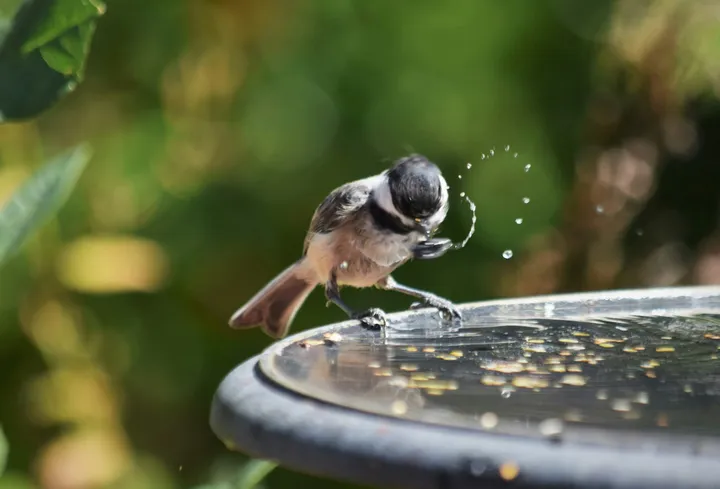
Birds need water for two things: drinking and bathing. Drinking is obvious. Bathing matters because feathers only insulate and shed water properly when they are clean. A bird that cannot bathe gets parasites, holds on to old preen oil that loses its waterproofing, and overheats in summer when evaporative cooling from wet plumage is the main thermoregulation tool. Audubon’s How to Make a Birdbath explains the bathing biology: birds rely on water for drinking, grooming, and staying cool, and during hot summers and droughts the bath in your yard can be one of the only reliable sources for miles.
This is also why a bath sometimes pulls in species your feeder never does. Insectivores like warblers, vireos, and gnatcatchers will not touch a seed feeder but they will use a bath, especially one with moving water. So will robins, which mostly forage on lawns for worms and ignore feeders entirely. Audubon’s How to Capture the Splash Effect at Your Bird Bath or Fountain writeup notes that finches, warblers, thrushes, and hummingbirds are all drawn in by the sound and motion of dripping water in a way they will not be drawn by a still dish.
Step 1: Choose a 1 to 2 inch depth with a rough surface
The single most common bath problem is water that is too deep. Most backyard songbirds weigh 10 to 30 grams. A wet bird that loses its footing in 4 inches of water can drown in a bath the way a toddler can drown in a bucket. Audubon’s birdbath guide specifies an inch of water for small birds and recommends pebbles in the center as a standing platform. RSPB and Cornell Lab’s Attract Birds With Birdbaths guidance is identical: shallow, with a gradual slope so a bird can walk in from the edge.
A practical depth checklist:
- Edges: the bird should be able to stand in 0.5 to 1 inch of water with its feet on the bottom.
- Center: no more than 2 inches at the deepest point.
- Slope: gradual, not a step. A right-angle drop from dry rim to 2 inches of water is the same as no slope at all.
Surface texture matters as much as depth. Glazed ceramic, smooth plastic, and polished stone are slippery, especially when wet. Birds that cannot get a foothold either leave or get stuck and panic. Concrete, terra cotta, natural unpolished stone, and the inside of a textured cast resin all give grip.
If your existing bath is too deep or too slippery, you do not need to buy a new one. Add a flat rock in the center to create a shallow island, and lay smaller pebbles around the edges to roughen the standing area. This is the cheapest fix in the entire guide and it works.
Step 2: Place the bath within 10 feet of cover (but not under it)
Wet feathers add weight and reduce lift. A bathing bird is one of the most vulnerable creatures in your yard. They need cover they can flush into within a 10-foot dash: a dense shrub, a low tree branch, a hedge, a trellis with vines. Anything farther than that and your bath becomes a cat buffet.
But not directly overhead. A bath placed under a tree gets fouled by falling leaves, sap, bird droppings from perching birds above, and squirrel debris. It also gives ambush predators a launch platform. The right placement is 8 to 10 feet from the cover, on the side where the bird’s normal flight path runs.
A few more placement specifics:
- Sun exposure: morning sun, afternoon shade. Direct summer sun heats the water past what birds tolerate and accelerates algae bloom by 3 to 5x. Deep shade is also wrong; birds need to see predators approaching.
- Distance from feeders: 15 to 30 feet. Close enough that feeder-using birds discover the bath, far enough that fallen seed does not contaminate the water.
- Distance from windows: at least 10 feet, or under 3 feet. Wet birds startled into flight can hit windows at fatal speed in the 10 to 30 foot range.
- Height: ground-level baths get robins, jays, doves, grackles, and towhees. Pedestal baths at 30 to 36 inches get most songbirds. Hanging baths are limited to lightweight species like chickadees and small finches; bigger birds tip them.
The 10-foot rule comes from observation work documented at Cornell Lab’s Safe Feeding Environment page for feeders, but the same physics applies to baths: birds will not use a water source they cannot escape from.
Step 3: Add water movement
If you take one piece of advice from this article, take this one: add water movement. A still bath attracts a small subset of yard birds. A bath with even minimal motion attracts twice as many species in our experience and the experience of the Audubon and Cornell Lab writeups linked throughout.
The mechanism is sound and visual. Birds hear drip-drip-drip from much farther away than they would notice a still dish, and the visual flicker of moving water is a strong attractor signal. Audubon’s How to Capture the Splash Effect at Your Bird Bath or Fountain documents species you rarely see at still baths (orioles, warblers, hummingbirds) showing up at moving-water features.
What to use, by budget:
- $20 to $40: gravity-feed dripper. A small reservoir hangs above the bath and drips one drop per second onto the surface. No electricity needed. This is the highest-leverage upgrade for the price.
- $30 to $80: solar mister or fountain. A solar panel powers a small pump that creates a fine spray or surface fountain. Works in full-sun yards; quits in shade or under heavy cloud.
- $50 to $150: plug-in recirculating fountain. A submersible pump cycles water through a small spout. Most reliable across weather but needs an outdoor outlet within reach.
- $200+: dedicated bird-bath fountain unit. Decorative and effective, but no more bird-attractive than a $30 dripper. Buy the look, not the function.
For hummingbirds and orioles specifically, a mister beats every other type. Both species drink dew and rain off leaves in the wild and respond strongly to fine spray. We cover this in detail in our hummingbird feeder guide and how to attract hummingbirds article.
Step 4: Keep the water clean
A dirty bath is worse than no bath. Standing water breeds mosquitoes, which are the primary vector for West Nile virus. Per Audubon’s coverage, West Nile has been detected in more than 250 North American bird species since 2000, and stagnant containers are the main mosquito breeding source backyard owners control. Dirty bath surfaces also spread salmonellosis and avian conjunctivitis among songbirds. Project FeederWatch’s Preventing Disease guide covers the same disease ecology for feeders, and birdbaths sit on the same risk curve.
A maintenance schedule that actually works:
- Every 2 to 3 days (every day in summer heat): dump the water, wipe out any visible debris with a paper towel, refill with cool tap water.
- Weekly: scrub the basin with a stiff brush and a 9:1 water-to-vinegar solution. Rinse, refill.
- After visible algae or a sick bird: scrub with a 9:1 water-to-bleach solution, rinse thoroughly (residual bleach is toxic to birds), let dry in the sun for 30 minutes, refill.
- In a salmonellosis outbreak: take the bath down for 2 weeks along with feeders. Project FeederWatch tracks outbreaks at their Sick Birds and Bird Diseases page; check before assuming the local birds are fine.
Do not use soap residue, which strips preen oil from feathers when birds bathe. Vinegar and bleach (rinsed) are the safe cleaners. For the full step-by-step method, the by-material details (concrete, ceramic, plastic, copper), and the natural algae controls, see our dedicated guide on how to clean a bird bath.
Step 5: Have a winter plan
In a hard freeze, open water is harder for birds to find than food. Insects are gone, berries are mostly gone, but birds still need to drink and bathe (yes, in winter, even sub-freezing) because feather hygiene is what keeps them alive overnight. A heated bath in winter is one of the highest-return additions you can make for bird welfare.
By climate zone:
- Zones 8 to 10 (mild winters): the bath rarely freezes hard. A daily warm-water refill in the morning handles the occasional cold snap. Standard plastic or concrete bath is fine year-round.
- Zones 6 to 7 (moderate winters): the bath freezes on cold nights. Either bring it inside for the winter and run a smaller heated bath, or add a clip-on de-icer (75 watt models work for most pedestal baths).
- Zones 3 to 5 (hard winters): a heated bath or a permanent de-icer is necessary. 100 to 150 watt heated baths work down to single-digit temperatures. Position next to a power source; running 50 feet of extension cord through snow is unsafe.
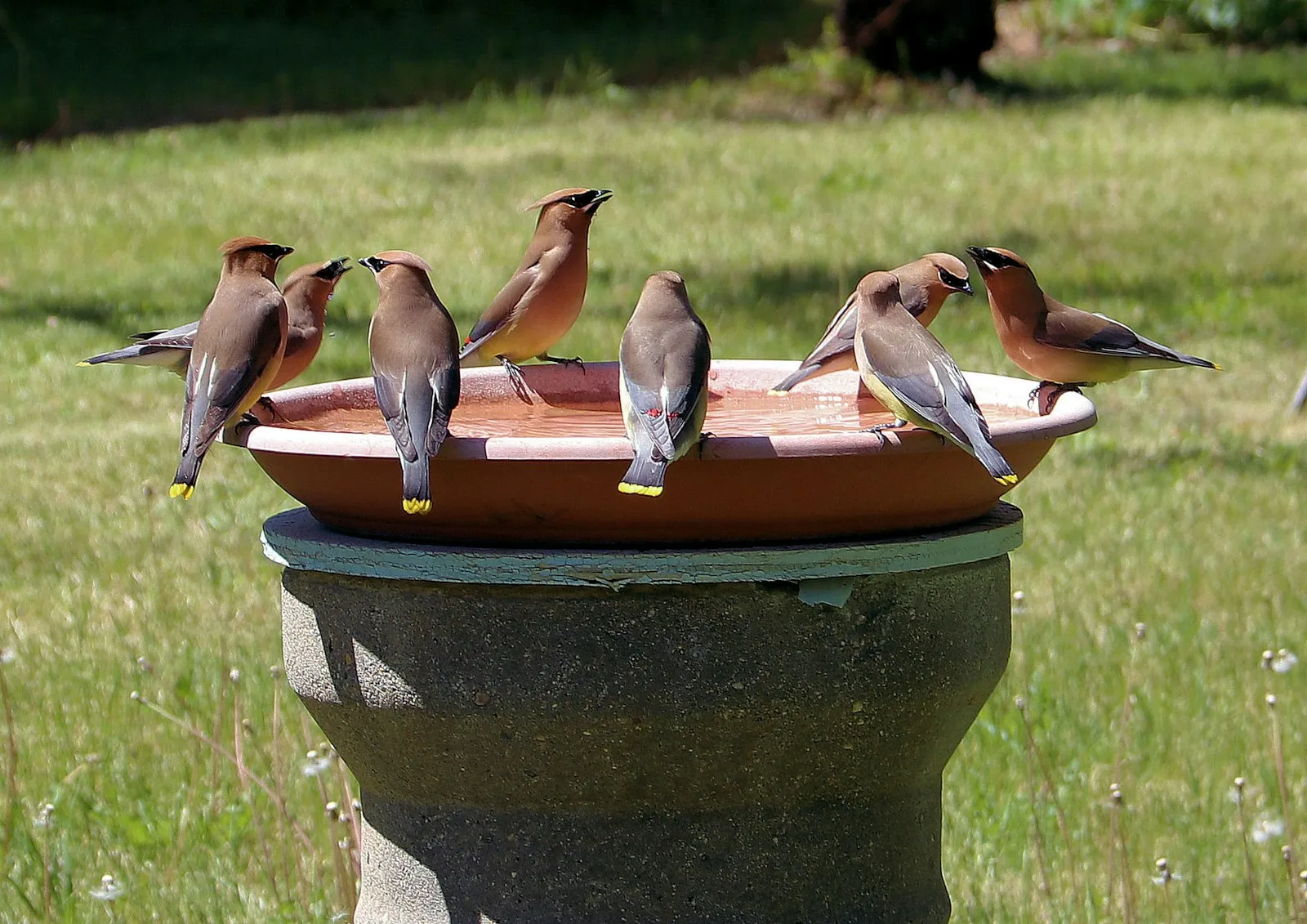
Audubon’s Winterize Your Yard for Birds guide and arid-west water FAQ both note that heated baths attract a high-quality mix of winter species (chickadees, juncos, Dark-eyed Juncos, woodpeckers, the occasional surprise like a Cedar Waxwing flock or a wintering bluebird).
Skip glazed ceramic in any climate that hard-freezes. The freeze-thaw cycle cracks them. Plastic with a built-in heater, or a stone bath with an add-on de-icer, is the durable winter setup.
No-power workarounds if you are not ready to commit to a heated bath:
- Warm-water morning refill: boil a kettle, dilute with cold water to lukewarm, refill the bath at sunrise. Buys 4 to 8 hours of liquid water on most cold days.
- Dark-bowl thermal mass: a black or dark stone bath holds solar heat better than white ceramic. Helps marginally in zones 6 to 7.
- Ping-pong ball or small floating object: breaks the surface tension and slows initial freezing in light cold. Useless below ~25°F.
In zones 3 to 6 the warm-water refill loses effectiveness around 20°F. Below that, a heated bath is the only thing that actually works.
Step 6: Match the bath to the species you want
Different birds bathe differently. Choosing a bath style that matches your target species roughly doubles the visit count from those birds.
Ground bathers (low pedestal or ground-level saucer):
- American Robin: prefers shallow puddles and ground-level saucers. Splashes hard.
- Dark-eyed Junco: ground-forager that bathes at ground or low pedestal level.
- Mourning Doves, Blue Jays, grackles, Northern Cardinals: all use ground or pedestal baths.
Pedestal bathers (24 to 36 inch pedestal):
- Black-capped Chickadee, titmice, nuthatches.
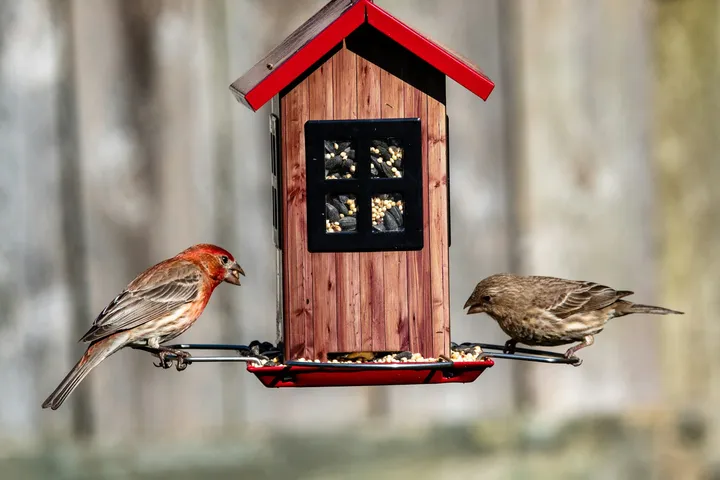
- House Finch, American Goldfinch, Purple Finches.
- Most warblers and vireos during migration.
Misters and shallow streams (rather than basins):
- Ruby-throated Hummingbird: drinks dew from leaves and uses misters; rarely uses traditional baths. Cornell Lab’s species page documents their preference for moving water and leaf surfaces over standing water.
- Baltimore Oriole: drinks at orange-half feeders and at moving water; rarely uses still baths.
- Eastern Bluebird: prefers shallow moving water, occasionally uses still pedestal baths for drinking.
The high-leverage move for variety: run two baths. A pedestal bath for the bulk of songbirds plus a ground-level saucer or a mister 15 feet away gives you both the ground/perch axis and the still/moving axis covered. The cost difference is small (a ceramic saucer is $15 to $25, a hose-fed mister is $20) and the species count typically jumps 50 percent within a month of adding the second feature.
We cover species-specific habitat in more detail in our how to attract cardinals guide and how to attract bluebirds guide; both cover water alongside food and shelter.
Step 7: Wait 2 to 3 weeks for regular visitors
Bird discovery of a new yard feature follows a predictable curve. Day 1: nothing. Days 2 to 7: occasional flyovers, no use. Days 7 to 21: first cautious visits, usually by the most common local species (sparrows, finches, maybe a robin). Days 21+: regular use establishes, and species variety builds.
The variables that affect discovery speed:
- Existing feeder traffic: yards with active feeders see bath use within a few days. Birds already in the yard for seed notice water within their normal foraging area.
- Movement and sound: a dripper or mister cuts discovery time by half or more because the sound travels.
- Cover proximity: baths placed 10 feet from a hedge get discovered faster than baths in the middle of open lawn, because more birds pass within visual range.
- Season: spring and fall migration produce sudden first-time visits as migrants discover the bath. Summer is steadier. Winter discovery is slow but loyalty is high once established.
The single most common mistake is moving the bath after a week of no activity. Birds rely on spatial memory. Relocating a bath resets the discovery timer; a bath moved every week may never get found at all. Pick a placement, commit to it for at least a month, and let the discovery curve play out.
If nothing has shown up after 30 days, troubleshoot in this order: depth (more than 2 inches?), cover distance (more than 10 feet from a shrub?), water freshness (when did you last refresh?), movement (still water?). One of those is almost always the issue.
What to skip
Direct sun in summer. Hot water and algae bloom. Move the bath or rig partial afternoon shade.
Bleach as a daily cleaner. Residual bleach is toxic. Use vinegar weekly; reserve bleach for after-algae or after-sick-bird events and rinse exhaustively.
Pennies in the bath. A folk remedy that doesn’t work at safe concentrations. Modern pennies are zinc, which is toxic. Use rocks instead.
Smooth glazed ceramic baths in freeze zones. They crack the first hard winter.
Decorative-only baths in the middle of open lawn. Beautiful and useless. Birds will not use them.
Fancy fountains over $200 if your only goal is birds. A $30 dripper attracts the same species. Spend the money on a second bath instead.
Adding “bird bath bacteria controllers” or chemical algicides. Not safe for birds. The 9:1 vinegar wash plus 2 to 3 day refresh handles algae without chemistry.
FAQ
Why won’t birds come to my birdbath? The four most common causes, in order: the water is too deep (more than 2 inches), the bath is in the middle of an open lawn with no cover within 10 feet, the water is dirty or stagnant, or the bath is brand new and has been up for less than 2 to 3 weeks. Fix the depth first by adding pebbles or a flat rock, then move the bath to within 10 feet of a shrub or low tree, then commit to a refresh-every-2-days schedule. Adding a simple dripper or mister accelerates discovery faster than any other single change.
How long does it take for birds to discover a new bird bath? Typically 2 to 3 weeks in a yard without active feeders, and a few days to a week in a yard with existing feeder traffic. Birds rely on visual scanning, sound, and following other birds. A dripper or mister cuts the timeline because the sound carries; a brand-new still bath in an open lawn can take a month. Do not move the bath during the wait period, since birds remember locations and a relocated bath resets the clock.
Should a bird bath be in the sun or shade? Morning sun and afternoon shade is ideal. Full sun in summer turns the water hot and accelerates algae bloom. Deep shade reduces visibility (birds need to see predators) and slows water warming after cold nights. A position under an open canopy 10 to 15 feet from a shrub gives you the best of both: enough light for birds to feel safe, enough shade to keep the water cool. Direct sun is the most common placement mistake.
What color attracts birds to a bird bath? Color matters less than movement, depth, and placement. There is no strong scientific evidence that any particular bath color attracts more birds. Hummingbirds are drawn to red on flowers and feeders but do not preferentially seek out red baths. Bright unnatural colors can actually spook birds in some studies. Neutral stone, terra cotta, or natural concrete colors blend into yards and let birds focus on the water itself, which is what they actually came for.
Should you put rocks or pennies in your bird bath? Rocks yes, pennies no. A few clean, smooth rocks or pebbles in the center of the bath give small birds a perch and break up depths that are too deep for safe wading. Pennies are a folk remedy meant to use copper to suppress algae; pre-1982 pennies are mostly copper, which is mildly anti-algal in theory but makes little measurable difference in an open basin, and post-1982 pennies are mostly zinc, which is toxic to birds at higher exposures. Skip the pennies. Use rocks for safety, and clean the bath every 2 to 3 days to manage algae.
Do birds use bird baths in winter? Yes, and often more than in summer. Liquid water is harder to find than food in a hard freeze, since most natural sources ice over. In zone 7 and warmer, a daily warm-water refill keeps a standard bath usable. In zones 3 to 6, a heated bath or a clip-on 75 to 150 watt de-icer keeps water open through the worst cold snaps. Skip glazed ceramic in any hard-freeze region; the freeze-thaw cycle cracks the bath. Plastic or stone with an add-on heater is the durable winter setup, per Audubon.
What to do this week
Pick one bath, one location, one source of motion. Set the depth to 1 to 2 inches with a flat rock if you need to. Place it 10 feet from a shrub. Add a $20 dripper or solar mister. Commit to a 2 to 3 day refresh schedule. Then leave it alone for a month.
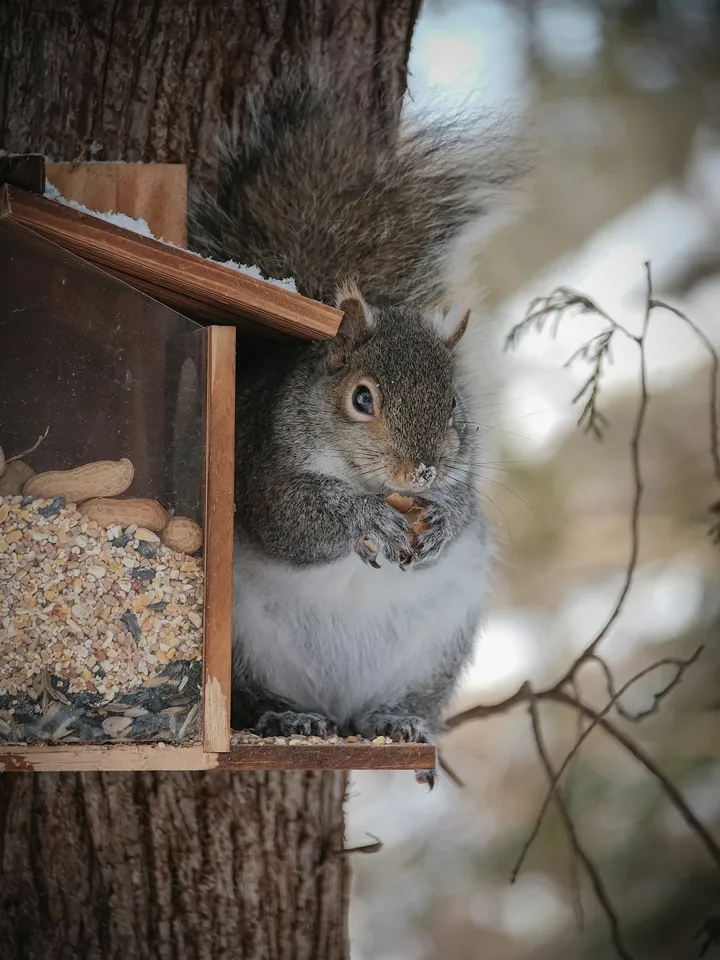
Once the bath is established and birds are using it regularly, the natural next steps are squirrel-proofing if a feeder is nearby (covered in our keep squirrels out of bird feeders guide) and matching the bath setup to a feeder setup for the bird mix you want. A bath also puts birds in the open at close range, which is the best time to watch them; a pair of binoculars makes it a real show, and our guide to 8x42 vs 10x42 binoculars helps you pick the right magnification. Because birds at a bath are often only a few feet away, close focus matters more than most buyers realize, which is one reason the budget pick wins in our Vortex Diamondback vs Viper comparison.
Bird baths are one of the highest-return changes you can make to a backyard. Water reaches species that ignore seed entirely, anchors a yard through migration, and pays welfare dividends in summer heat and winter freeze when natural water is hardest to find.