Blue jays show up at backyard feeders the way they show up everywhere else: loud, confident, and unmistakable. Half the readers searching for “bird feeder for blue jay” want to attract more of them. The other half want to know how to keep them from running off the chickadees. This guide solves both problems with the same set of decisions.
The good news is that the right feeder choice serves both intents. Pick the wrong feeder and you get nothing or chaos; pick the right one and you can welcome jays on purpose, exclude them by design, or run a 2-feeder setup that satisfies the jays and protects the smaller birds at the same time.
TL;DR
A whole-peanut wreath is the highest-attraction blue jay feeder. Other styles that work: large hopper, platform tray, suet cage, peg/spike for fruit and corn. Feed peanuts in the shell, sunflower seed, cracked corn, or suet. Place at 5 to 8 feet on a sturdy pole. If jays push smaller birds around, do not try to remove them (illegal under the Migratory Bird Treaty Act); use a 2-feeder setup with a small-port tube 15 feet away that jays cannot use. Clean weekly with 9:1 water-vinegar.
Who blue jays are (and why they’re misunderstood)
Blue jays are corvids, the same family as crows, ravens, and magpies. That single fact explains most of their reputation. Corvids are among the smartest birds in the world, with documented tool use, complex calls, individual human recognition, and spatial memory that supports thousands of cached acorns per bird per season.
Corvid intelligence
Audubon’s 10 Fun Facts About the Blue Jay covers a few of the documented behaviors. Jays carry acorns 1 to 2 miles from their source and bury them in scattered locations they remember weeks or months later. They imitate hawk calls (an apparent ruse to scatter other birds from a feeder before they descend). They recognize individual humans, both the people who feed them and the ones who do not. The “noisy nuisance” view of blue jays misses what they actually are.
What blue jays bring to a yard
A backyard with regular blue jay visits gets a few real benefits:
- Acorn dispersal. Eastern oak forests partly depend on jay caching for natural regeneration.
- Sentinel behavior. Jays mob hawks and owls (Cooper’s, sharp-shinned, screech owls), giving the whole yard 30 to 60 seconds of warning before a predator strikes. Chickadees, titmice, and other songbirds eavesdrop on jay alarms.
- Pest control. Jays eat insects, including pest species like tent caterpillars and gypsy moth larvae.
- Year-round residency. Unlike orioles or hummingbirds, jays are present every month of the year through most of their range. A feeder station that keeps jays satisfied has stable winter traffic.
The Audubon Blue Jay field guide and Cornell Lab’s Blue Jay overview cover the natural history in more depth.
Blue Jay vs Steller’s Jay (eastern vs western)
Two crested jay species cover most of the US. Blue Jay is the eastern bird, found from Texas to Maine and across the Great Lakes into Canada. Steller’s Jay (Cornell Lab overview) is the western counterpart, found from California north through Oregon, Washington, and into Alaska, plus the Rocky Mountain corridor. Steller’s Jay has a darker, almost-black crest and front. Both use the same feeder styles and same food. Where ranges overlap (eastern Rockies, especially Colorado), you may see both.
Two non-crested western jays, California Scrub-Jay and Woodhouse’s Scrub-Jay, also visit feeders in the West. Same approach.
The 5 feeder styles that work for blue jays
Whole-peanut wreath (the highest-attraction feeder)
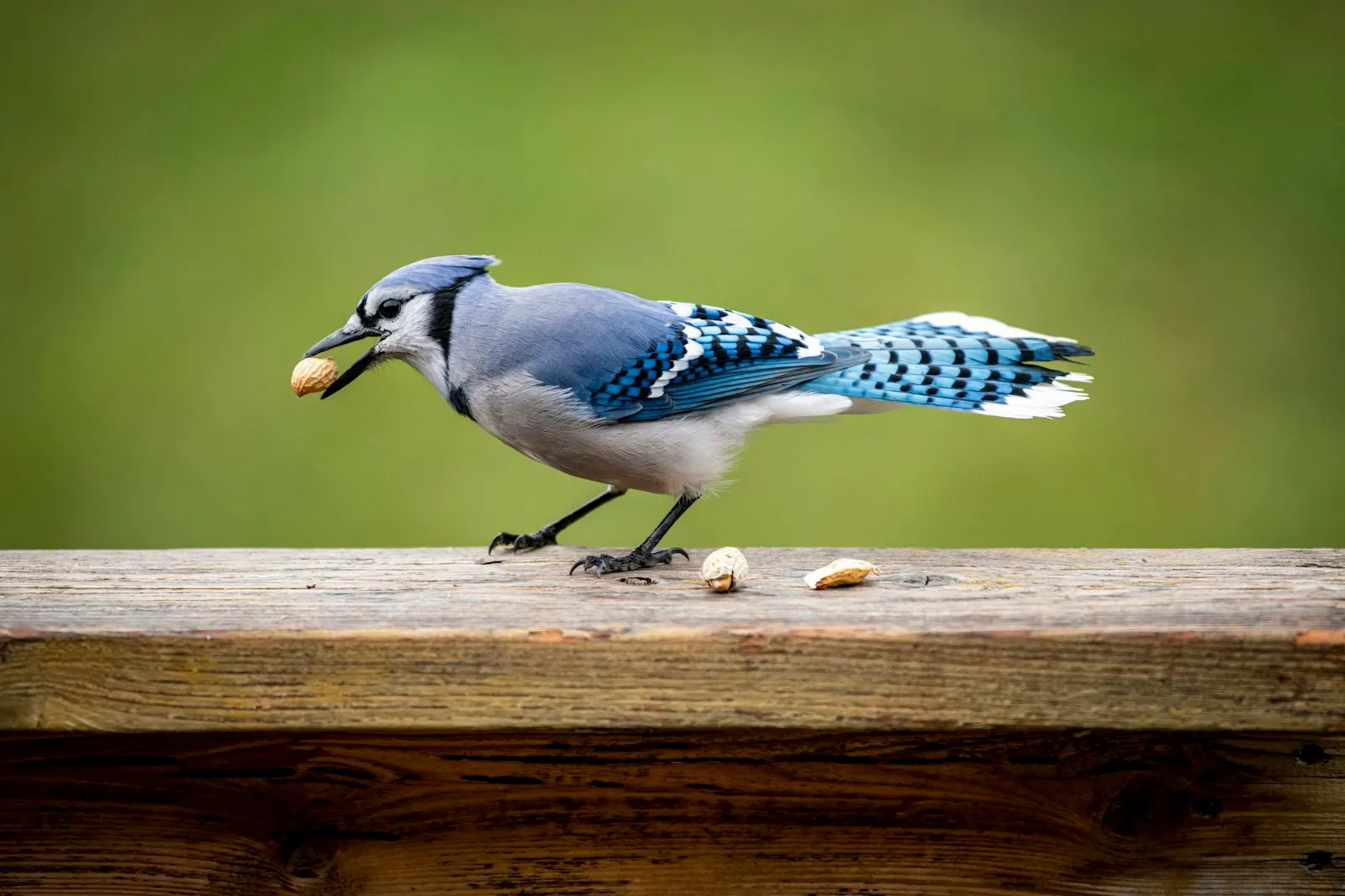
A wreath-shaped wire or mesh feeder holds whole peanuts in the shell. Jays land on the outside, pick a peanut, and fly off with it (often to cache, sometimes to crack open immediately). Peanut wreaths are the single highest-attraction blue jay feeder we know of.
Pros: cheap ($15-$30 commercial, or DIY for under $10), high attraction, jay-specific (small birds rarely use them), easy to refill.
Cons: peanuts can mold in humid weather (refresh every 4 days in humidity, weekly in dry); squirrels also love peanuts, so squirrel-proof placement matters.
Large hopper feeder
A hopper holds 2 to 5 pounds of seed and dispenses it onto a tray. Jays use hoppers comfortably because the tray gives them a perch surface their large bodies can balance on.
Pros: holds a lot of seed, low refill frequency, attracts a broad mix.
Cons: jays will dominate the hopper if you also want chickadees there; pair with a separate tube feeder for the small birds.
Platform / tray feeder
A flat platform on a pole or hanging tray. The most flexible feeder for jays because you can offer mixed food: peanuts, sunflower, cracked corn, mealworms, fruit.
Pros: jays love it, jay-friendly food variety, easy to refill.
Cons: jays will dominate it; ground predators and squirrels can sometimes reach it; rain wets the food (use a covered platform in rainy regions).
Suet cage with cage extender
A standard suet cage attracts woodpeckers and nuthatches, but jays will work suet too if the cage is large enough for them to perch. Plain suet, peanut-butter suet, and no-melt summer formulas all work.
Pros: attracts a diverse mix (jays, woodpeckers, chickadees, nuthatches); year-round food source.
Cons: jays sometimes monopolize a single suet cage; consider 2 cages if you want woodpeckers undisturbed.
Peg / spike feeder for fruit and corn
A simple feeder with horizontal spikes that hold whole ears of dried corn or fruit pieces (orange halves, apple slices). Jays will eat both, especially in winter when other food sources are scarce.
Pros: cheap, simple, dual-use with the oriole feeder we already covered.
Cons: lower overall attraction than peanut wreath; corn attracts other species that some readers don’t want (House Sparrows, European Starlings).
What to feed blue jays
These are the feeder foods that work; for the full wild diet behind them (acorns, insects, the famous acorn-caching habit, and the truth about the egg-raiding reputation), see our companion guide on what blue jays eat.
Whole peanuts in the shell (best)
Plain, unsalted, dry-roasted or raw. Whole shells matter, the shell gives the jay something to work with, and removing it reduces the attraction by half. Buy raw peanuts in bulk if you have regular jay traffic; a 5-pound bag from a backyard-bird retailer is usually cheaper than equivalent grocery-store peanuts.
Black-oil sunflower seed
The universal default. Jays will work sunflower in any feeder style, though they prefer the whole shell. Sunflower also keeps other species (cardinals, chickadees, finches) happy at the same feeder.
Cracked corn
Cheap, jay-loved, also attracts mourning doves and (unfortunately) starlings. Use on a platform feeder only; cracked corn dust does not flow well through a tube.
Mealworms and suet (especially in nesting season)
In spring and early summer, parent jays bring high-protein food to nestlings. Mealworms (dried or live) and suet cakes are both effective. Audubon and our fledgling article cover the broader fledgling-feeding context.
What not to feed
- Bread, crackers, cake. Empty calories, no protein, can ferment in the crop.
- Raw rice or pasta. Old myth notwithstanding, the digestion problem is real for nestlings.
- Salted, flavored, or sugar-coated nuts. Salt is toxic to songbirds in even small quantities.
- Leftover human food generally. Fats, oils, and seasonings that are fine for humans cause problems for birds.
Where to place a blue jay feeder
Height: 5 to 8 feet (lower than hummingbird/oriole)
Jays are heavy enough to bend cheap mounts. Use a 1-inch steel pole or a sturdy tree branch. Height of 5 to 8 feet keeps the feeder above most ground predators while remaining visible to passing jays.
Distance from windows and smaller feeders
At least 12 feet from windows (or under 3 feet, the safe zone where birds cannot accelerate to fatal collision speed). 15 to 30 feet from your main small-bird feeder station, so jays do not push chickadees and finches off the tube.
Distance from squirrel-accessible trunks
At least 10 feet from any climbable trunk, pole, or roof edge. Jays themselves do not need a launch surface (they fly directly to the feeder), but squirrels do. The 5-7-9 rule we covered in keep squirrels out of bird feeders applies the same way for jay feeders as for any other.
When jays push smaller birds around (the feeder war)
This is the question half the search traffic is actually asking. Blue jays are dominant at platform and hopper feeders. They push doves, sparrows, finches, and even cardinals off the tray. Smaller birds wait, then return when the jay leaves, but heavy jay traffic can reduce overall feeder use by smaller species.
What the Audubon data actually shows
Audubon’s Who Wins the Feeder War? documents the backyard feeder dominance hierarchy. The general pattern: bigger birds (jays, grackles, doves) win at open trays; smaller birds (chickadees, finches, titmice) win at small-port tubes that bigger birds physically cannot use. The solution is mechanical, not behavioral.
The 3 feeder designs that exclude jays without harming smaller birds
- Small-port tube feeder. Standard tube with feeding ports under about 0.5 inches accommodates chickadee, finch, and goldfinch beaks but excludes jay beaks. Most “finch feeder” tubes meet this spec.
- Weight-sensitive feeder (squirrel-proof but also jay-proof). Brome Squirrel Buster Plus and similar weight-triggered feeders close the ports under bird weight above ~2 ounces. Squirrels at 12+ ounces get shut out; jays at 3 ounces also get shut out. Smaller birds continue feeding. (See our roundup of the best squirrel-proof bird feeders.)
- Caged feeder. A wire cage surrounds the feeder with 1.5-inch gaps that admit small birds and exclude jays.
The 2-feeder solution (peanut wreath plus small tube)
The honest answer for most yards that have jays AND want chickadees:
- Run a peanut wreath or platform for the jays in one location.
- Run a small-port tube feeder 15 to 30 feet away for finches, chickadees, and goldfinches.
- Jays cannot use the tube. Chickadees rarely use the wreath (peanuts are too big). The two populations coexist with minimal contention.
This is the same logic our how to attract birds to a bird feeder pillar lays out: match the feeder to the species you want.
DIY blue jay feeders (2 fast builds)
Peanut wreath
A 12-inch wire wreath frame (from a craft store), some 24-gauge wire, and a bag of raw peanuts in the shell. Bend the frame, weave the peanuts onto the wire with single-loop wraps, hang from a tree branch or shepherd’s hook at 5 to 8 feet. 10 minutes of work, total cost under $10 plus peanuts.
Open tray on a pole
A 12-inch square of 1/4-inch hardware cloth (for drainage) framed with 1x2 lumber, mounted on a steel pole with a pipe flange. Fill with peanuts, sunflower, or cracked corn. The hardware cloth bottom lets rain through; the 1x2 frame stops food from blowing off. Build time about 30 minutes, cost under $20.
What to skip
Removing all jays. Native blue jays are protected under the Migratory Bird Treaty Act of 1918. Trapping, harming, relocating, or destroying nests is illegal without a federal permit. The legal and practical response is feeder design.
“Squirrel proof” feeders marketed as jay-friendly. Most weight-sensitive squirrel-proof feeders also exclude jays because jay weight triggers the same closure mechanism. Read the spec; if the feeder closes at 2 ounces, jays cannot use it. (This is fine if you don’t want jays at that feeder, but it’s the opposite of what marketing copy sometimes implies.)
Open platforms in cat-active yards. Jays themselves are big enough to escape most cat ambushes, but the smaller birds drawn to the platform are not. Mount feeders 10+ feet from any cat-launch surface.
Cheap “all-purpose” seed mixes with milo, red millet, oats. Jays pick the peanuts and sunflower and dump everything else on the ground, where it attracts rodents and rots. Buy single-ingredient food: whole peanuts, straight black-oil sunflower, plain cracked corn.
Glazed ceramic feeders in winter. Freeze-thaw cycles crack them. Plastic, metal, or wood holds up better.
Letting peanuts mold. Damp peanuts grow Aspergillus and aflatoxin-producing fungi that are fatal to songbirds. If a peanut feels soft, smells off, or shows surface mold, dump the whole batch and refill. Project FeederWatch covers the broader sick birds and bird diseases context.
FAQ
What type of bird feeder is best for blue jays? A whole-peanut wreath is the highest-attraction feeder for blue jays, followed by a large hopper feeder with sunflower seed and a platform tray for mixed offerings. Tube feeders with small ports are skipped by jays because their beaks do not fit. If you want to attract jays specifically, start with a peanut wreath at 5 to 8 feet on a sturdy pole. Audubon’s blue jay field guide confirms peanuts as their favorite feeder food.
What do blue jays like to eat? Blue jays prefer whole peanuts in the shell, black-oil sunflower seed, cracked corn, suet, and mealworms. They are omnivores and will also eat fruit, berries, acorns, and occasionally insects or small vertebrates. In a backyard setting, peanuts beat every other food for sheer attraction. Avoid bread, raw rice, salted or flavored nuts, and leftover human food, all of which can harm songbirds.
Will blue jays take over my bird feeder? Blue jays can dominate platform and hopper feeders, pushing smaller songbirds off. Audubon’s coverage of the backyard feeder dominance hierarchy documents this clearly. The solution is feeder design, not jay removal: run a dedicated peanut feeder for the jays plus a small-port tube feeder for chickadees, finches, and goldfinches 15 feet away. Jays cannot use tube feeders with small ports, so the small-bird traffic continues uninterrupted.
Do blue jays remember who feeds them? Yes. Blue jays are corvids, related to crows and ravens, and demonstrate strong individual recognition of humans. They remember feeding locations across multiple years, cache thousands of acorns per season in spatial memory, and adjust visit patterns to your schedule. Audubon’s 10 fun facts piece covers some of the documented intelligence. The practical implication for backyard birders is that consistency matters: a feeder maintained on a schedule earns regular visits faster than an intermittent one.
How do I keep blue jays from pushing smaller birds off my feeder? Use feeder design, not jay deterrence. Three approaches work: (1) Run a small-port tube feeder for chickadees, finches, and goldfinches that physically excludes jays by port size. (2) Use a weight-sensitive feeder that closes when a heavier bird perches. (3) Move the platform or hopper feeder 15 to 30 feet from the small-bird feeder, ideally with a visual barrier (shrub or trellis). Trapping or harming jays is illegal under the Migratory Bird Treaty Act.
Are blue jays bad for other backyard birds? They are competitive but not categorically harmful. Blue jays occasionally raid nests for eggs or nestlings (this gets disproportionate attention), and they push smaller birds off feeders. But they also disperse oak acorns (a major contribution to eastern forest regeneration) and act as sentinels by mobbing hawks and owls, warning the entire yard. The intelligent corvid is a feature of a healthy backyard ecosystem. Manage their dominance through feeder layout, not removal.
What to do this week
If you want more blue jays:
- Buy a peanut wreath feeder ($15 to $30) or build one (under $10).
- Hang it 5 to 8 feet up on a sturdy pole or branch.
- Fill with whole peanuts in the shell, refresh every 4 to 7 days.
- Give it 2 to 3 weeks for local jays to find and remember the spot.
If you have jays and they’re pushing smaller birds around:
- Identify which feeder they’re dominating (usually a platform or hopper).
- Add a small-port tube feeder 15 to 30 feet away.
- Keep filling the platform, the jays now have their own station and will leave the tube alone.
- Within a week, chickadee and finch traffic at the tube typically doubles.
If you have neither yet and want a feeder mix that includes jays without losing variety:
- Run a peanut wreath plus a small-port tube plus a suet cage, all at different distances around the yard.
- Add a bird bath within 30 feet, jays drink and bathe, and water doubles the species count.
- Refresh, clean, and store everything on the maintenance schedule above.
Blue jays are the corvid in your backyard. Smart, loud, opinionated, occasionally rude, and a measurable contributor to a healthy ecosystem. The right feeder setup welcomes them, manages them when they get pushy, and lets the smaller birds at your station continue their own lives undisturbed.