What do owls eat? Other animals, and for most North American owls that means rodents: voles, mice, and rats, plus shrews and rabbits. Depending on its size, an owl also takes birds, insects, earthworms, crayfish, frogs, snakes, and fish. A screech-owl weighing 4 to 9 ounces eats a surprising number of worms and insects; the Great Horned Owl takes prey as large as skunks and geese.
This guide covers what each backyard owl actually eats, how pellets work, whether your cat or chickens are at risk, and how to help the owls already hunting your yard. Every species claim comes from Cornell Lab of Ornithology’s All About Birds species pages unless another source is named.
TL;DR
- Owls are strict carnivores. No seed, fruit, or bread, ever (American Bird Conservancy).
- Rodents are the core for most species: voles, mice, and rats. Snowy Owls live on lemmings in summer; Burrowing Owls catch more insects than anything else.
- Bigger owl, bigger menu. The Great Horned Owl has the most diverse diet of any North American raptor, and it does occasionally take house cats and chickens.
- Owls can’t chew. They swallow small prey whole and cough up the bones and fur as pellets, usually once or twice a day.
- Owls ignore feeder seed, but spilled seed draws rodents, and rodents draw owls.
- Rat poison is the biggest backyard threat. In one Massachusetts study, 86% of 161 hawks and owls brought to a wildlife clinic carried rodenticide in their livers.
- Don’t feed or bait owls. Help them with a nest box, a standing dead tree, and a poison-free yard instead.
What do owls eat in the wild?
Every owl is a predator, and what it catches depends on three things: its size, its habitat, and when it hunts. The American Bird Conservancy describes owl prey ranging from moths and beetles to birds as large as an Osprey.
Timing matters more than most people expect. Most American Barn Owl prey is active at night, so Cornell notes that “squirrels and chipmunks are relatively safe from these owls.” Burrowing Owls split the work: females catch more insects, mostly by day, while males take most of the mice and other vertebrates at night.
Rodents and other small mammals
Small rodents are the staple. Barn owls eat mostly rats, mice, and voles, with shrews, bats, and rabbits mixed in. The most common prey of the Northern Saw-whet Owl is the deer mouse and white-footed mouse.
Larger owls move up the size scale. Barred Owls take squirrels, chipmunks, and rabbits. Great Horned Owls add hares, woodchucks, porcupines, and skunks; Audubon points out that an owl with almost no sense of smell has an advantage when the prey is a skunk.
Birds
Birds are opportunistic prey for most owls, not the main course. Cornell’s list for the Eastern Screech-Owl includes flycatchers, swallows, thrushes, waxwings, and finches, plus jays, doves, and woodpeckers. Snowy Owls are agile enough to catch small birds in flight, and saw-whets add chickadees, titmice, and juncos to their diet during migration.
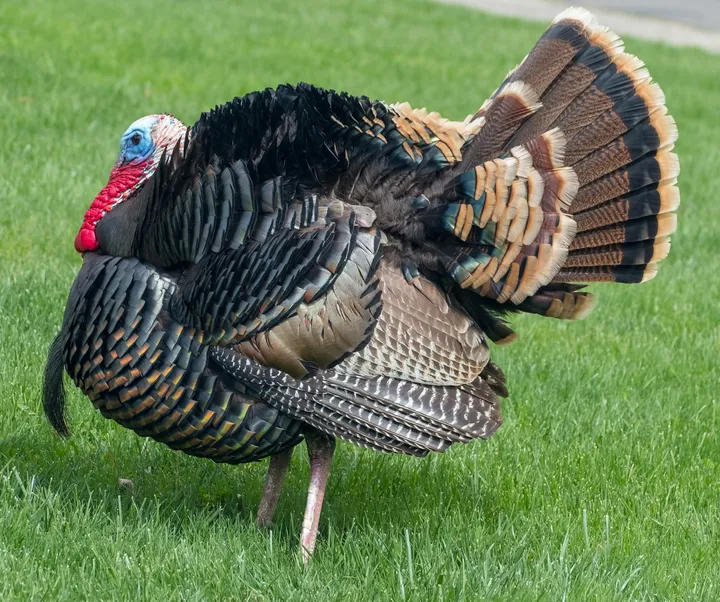
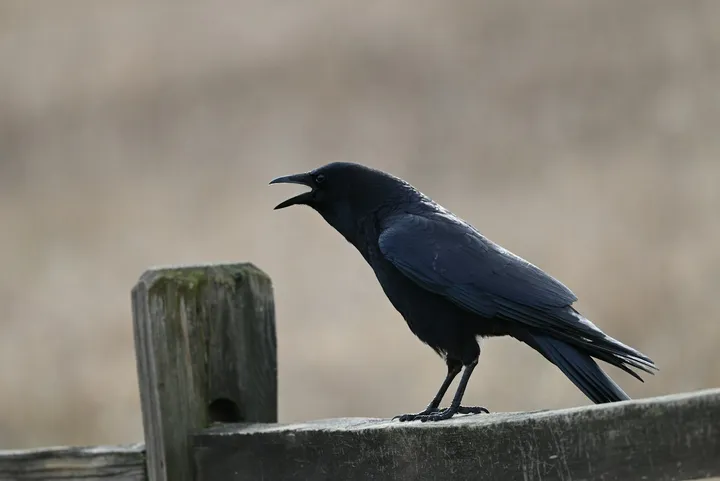
At the top end, Great Horned Owls take ducks, coots, hawks, other owls, and crows. That is why crows mob them: Cornell calls the Great Horned Owl the crow’s most dangerous predator. Our crow diet guide covers the other side of that rivalry. Cornell also lists the Great Horned Owl among the predators of the wild turkey, a bird several times its weight.
Insects, worms, and crayfish
Small owls eat far more invertebrates than their reputation suggests. For Burrowing Owls, insects make up the majority of food items, while vertebrates make up the bulk of the diet by weight. Grasshoppers, crickets, moths, and beetles are regulars.
Eastern Screech-Owls eat “surprisingly large numbers of earthworms, insects, crayfish,” per Cornell. Western Screech-Owls pick earthworms off rainy roads and even compost piles, and catch flying insects in midair.
Frogs, snakes, lizards, and fish
Barred Owls hunt along water. They perch over a stream and drop onto fish, or wade into the shallows after fish and crayfish. Eastern Screech-Owls take tadpoles, frogs, and lizards, and Burrowing Owls eat frogs, toads, snakes, lizards, and even small turtles. Great Horned Owls round out their diet with reptiles, fish, and occasionally carrion.
What owls eat, species by species
Which owls you have depends on where you live. This table covers eight species that North American homeowners are most likely to hear or see, with each row drawn from that species’ Cornell Lab life history page. Not sure which owl is calling? The free Merlin Bird ID app’s Sound ID handles that; this guide picks up once you know.
| Owl | Main prey | Also eats | Where you’ll find it |
|---|---|---|---|
| Great Horned Owl | Rabbits, hares, mice, American Coots | Skunks, squirrels, geese, hawks, other owls, house cats, reptiles, insects | Nearly all of North America, including suburbs and cities |
| Barred Owl | Squirrels, chipmunks, mice, voles, rabbits | Birds up to grouse size, frogs, fish, crayfish | Mature forest near water; the East, now expanding into the Pacific Northwest |
| Eastern Screech-Owl | Mice, rats, earthworms, insects | Crayfish, frogs, lizards, small birds, bats | Any treed habitat east of the Rockies, including suburbs and city parks |
| Western Screech-Owl | Pocket mice, deermice, woodrats, kangaroo rats | Bats, rabbits, insects, crayfish, worms | Western woodlands, canyons, suburbs, parks, deserts |
| American Barn Owl | Rats, mice, voles | Shrews, bats, rabbits, occasional starlings and blackbirds | Open country: grasslands, farms, marshes, suburbs |
| Snowy Owl | Lemmings (summer) | Rodents, rabbits, ducks, geese, seabirds | Arctic; winters in southern Canada and the northern US |
| Burrowing Owl | Insects: grasshoppers, crickets, beetles | Mice, voles, lizards, snakes, frogs | Open, treeless ground: grasslands, deserts, golf courses, airport medians |
| Northern Saw-whet Owl | Deer mice and white-footed mice | Voles, shrews, small birds in migration | Forests; winters across most of the US |
Great Horned Owl
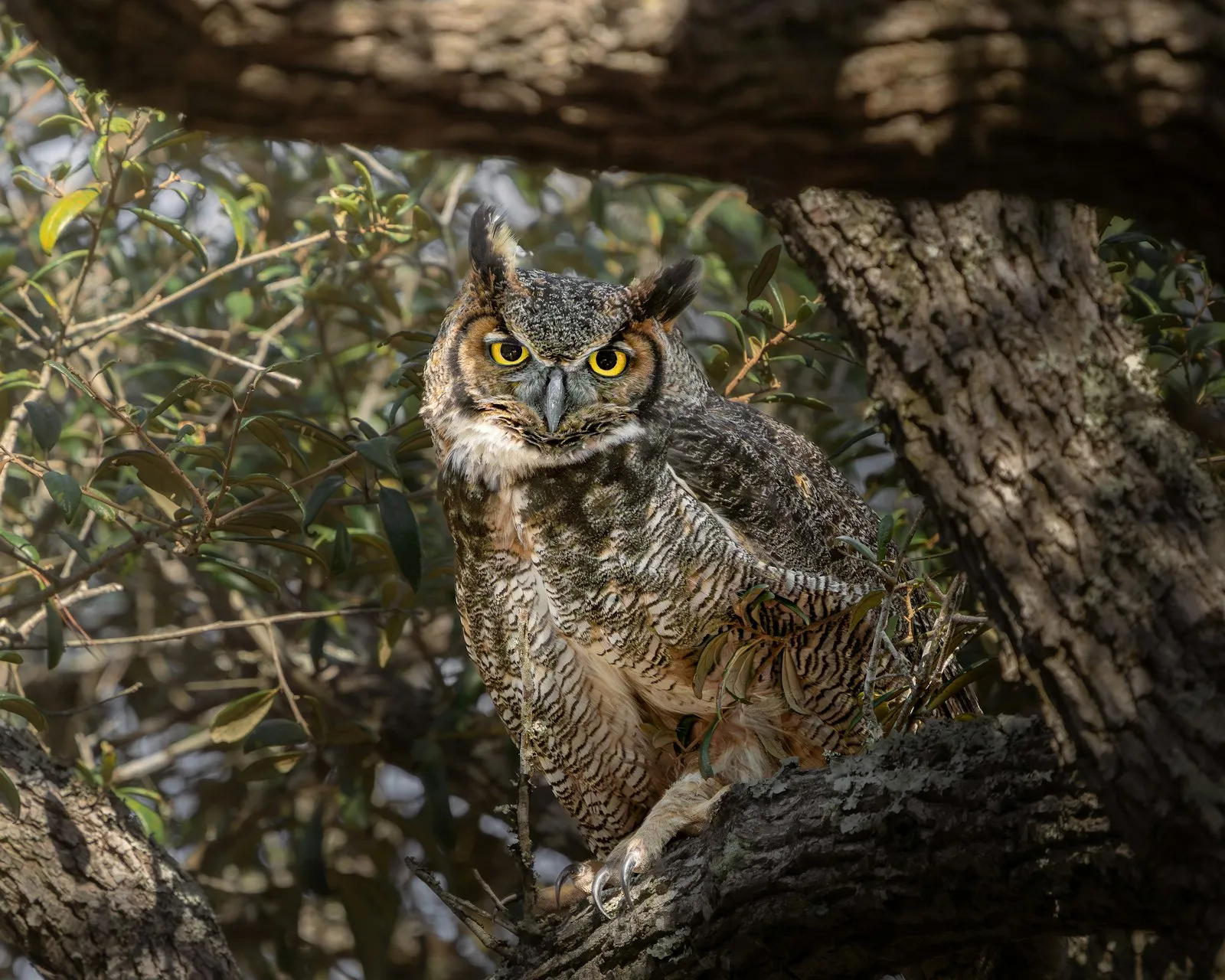
The Great Horned Owl is the generalist. Cornell says it has “the most diverse diet of all North American raptors,” from tiny rodents and scorpions to hares, skunks, geese, and other raptors. It weighs 34.7 to 55.9 ounces (about 2.2 to 3.5 pounds), and its clenched talons take 28 pounds of force to open.
It hunts mostly at night but sometimes in broad daylight, and it will walk along the ground to stalk small prey. It lives almost everywhere, including wooded parks, suburbs, and cities. The oldest one on record reached at least 28 years; our guide to how long birds live explains why big birds outlast small ones.
Barred Owl
The Barred Owl is a sit-and-wait hunter. It scans from an elevated perch, swallows small prey whole, and eats large prey head first. It sometimes stores extra food in a nest, the crook of a branch, or the top of a snag.
Barred Owls live in mature forest, often near water, and they stay put: of 158 banded birds found again later, none had moved more than 6 miles. If one is calling near your yard, expect a long-term neighbor. Its most serious predator is the Great Horned Owl.
Eastern and Western Screech-Owls
The Eastern Screech-Owl is the classic small backyard owl of the East. It weighs 4.3 to 8.6 ounces and lives in farmland, suburbs, and city parks wherever there are trees. Suburban pairs may even fledge more young than rural ones, probably because their predators are scarcer.
When prey is plentiful it caches the extra in tree holes for as long as four days. In the West, the Western Screech-Owl fills the same role, eating mostly small mammals such as pocket mice and kangaroo rats, plus bats and the occasional cottontail bigger than itself.
American Barn Owl
In 2024, ornithologists split the worldwide Barn Owl into three species, so the one in the Americas is now the American Barn Owl. It hunts open country: grasslands, marshes, farm fields, and suburbs.
Its specialty is hearing. Cornell says its ability to locate prey by sound alone “is the best of any animal that has ever been tested,” good enough to catch mice in complete darkness or under snow. Nesting barn owls sometimes stockpile dozens of prey items at the nest before the eggs hatch.
Snowy Owl
The Snowy Owl is a lemming specialist. On the tundra, lemmings may be all it eats, and Cornell estimates a single owl may eat more than 1,600 in a year. The American Bird Conservancy puts the daily catch at three to five lemmings.
At about 4 pounds, it is North America’s heaviest owl, and unlike most owls it hunts by day. Its winter diet is much broader; see the winter section below.
Burrowing Owl
The Burrowing Owl lives on open, treeless ground: grasslands, deserts, pastures, golf courses, and airport medians. It stockpiles food. One underground larder found in Saskatchewan in 1997 held more than 200 rodents.
It even farms its prey after a fashion. Before laying eggs, Burrowing Owls line the burrow entrance with animal dung, which attracts the dung beetles they then eat.
Northern Saw-whet Owl
The Northern Saw-whet Owl hunts at night from a low perch along forest edges, mostly for deer mice and white-footed mice. It usually eats an adult mouse in two meals. Saw-whets winter in dense forest across most of the US, so this tiny owl may be roosting in your evergreens in January without you ever knowing.
How owls eat: no chewing, two stomachs, and owl pellets
Owls have no teeth. The American Bird Conservancy explains that they tear larger prey with their hooked bills and swallow small prey whole, usually head first.
Digestion happens in two stomach chambers. The glandular stomach uses acids and enzymes to liquefy the flesh and organs. The muscular stomach (the gizzard) passes the digestible part on to the intestines and presses the fur, bones, and teeth into a tight bundle: the owl pellet, which the bird coughs up hours later.
Cornell notes that barn owls and Eastern Screech-Owls bring up pellets about once or twice a day, and that the ground under a regular roost can be littered with them. That makes pellets a useful clue: find a pile of gray, furry pellets under a tree, and you are probably standing under an owl’s daytime roost. One caveat from Cornell: pellets underestimate soft-bodied prey such as worms and insects, which leave little behind.
What do owls eat in winter?
Owls eat the same kinds of prey in winter, but snow, cold, and short days change how they get it.
- Snowy Owls come south. Cornell says they winter regularly in the northern plains, New York, and New England, and show up only in some winters in the Midwest, the Pacific Northwest, and eastern Canada. On the wintering grounds their diet widens to rodents, rabbits, hares, squirrels, weasels, ducks, grebes, and geese.
- They are usually not starving. A Project SNOWstorm co-founder writing for Audubon reports that most irrupting Snowy Owls are “actually quite plump.” A Snowy Owl sitting in a field is resting, not in trouble.
- Great Horned Owls use the freezer. Audubon notes that in northern regions they let cached leftovers freeze, then come back and “incubate” the frozen prey to thaw it. They also nest in winter: pairs can start courting as early as December, and owlets hatch by March. A pair hooting back and forth in your woods this winter may be setting up a nest.
- Screech-owls stockpile. Eastern Screech-Owls cache extra prey in tree holes for up to four days.
- Owls hunt by ear under snow. Barn owls can find mice hidden under snow, and the American Bird Conservancy says the Great Gray Owl can locate prey under almost a foot of it.
Water is less of a problem for owls than for songbirds, since most of their water comes from prey, and northern owls are sometimes seen eating snow. If you keep open water for winter birds, our winter bird feeding guide covers heated baths and de-icers.
Do owls eat cats, small dogs, or chickens?
The short answer: the Great Horned Owl occasionally takes cats and chickens, and most other owls are too small to bother either.
Cats. Cornell’s Great Horned Owl diet list includes house cats, alongside far more common prey like rabbits and mice. It is uncommon, but it is documented. A cat outside at night in Great Horned Owl country is at some risk, from owls as well as other predators.
Small dogs. Cornell’s diet lists do not include dogs, and we found no wildlife agency documentation of owls preying on them, only news clips and anecdotes. The sensible precaution is the same as for cats: don’t leave a toy-breed dog alone in the yard after dark.
“Can an owl pick up a 10 lb cat?” We could not find a reliable measurement of owl lift capacity, so treat any number you see online with suspicion. What is documented: a Great Horned Owl weighs 2.2 to 3.5 pounds, and Connecticut’s wildlife agency says these owls take chickens at night, “either carrying them away or eating them on the spot.” An owl does not need to lift an animal to kill it, so don’t count on your pet’s weight to protect it.
Chickens. This is the more realistic concern. NC Wildlife says owls, usually Great Horned Owls, take chickens that are not kept in a secure coop and run with overhead protection. The telltale sign is a carcass in the open with only the head missing, usually overnight. To prevent it:
- Lock the flock in a closed coop every night before dark.
- Cover the run with wire, mesh, or bright orange poultry netting; a chicken tractor or roofed run also works.
- Put the coop away from trees and posts where owls and hawks can perch (Connecticut DEEP).
Whatever the owl takes, it is protected. Connecticut DEEP notes that all owls, hawks, falcons, and eagles are covered by the federal Migratory Bird Treaty Act, which makes it unlawful to hunt, capture, or kill them. The fix is always the enclosure, never the owl.
Do owls come to bird feeders?
Not for the food. No owl eats seed. But Project FeederWatch warns that bird food scattered on the ground can attract rodents, and rodents are the main prey of most owls. An owl perched near your feeders at dusk is usually watching the ground, not the feeder.
Screech-owls and saw-whets do take feeder birds now and then (see the bird list above), and the feeder birds know it. Cornell suggests listening for a commotion of Blue Jays, chickadees, and titmice during the day: they may be mobbing a roosting screech-owl. Our Blue Jay feeder guide covers the jay’s role as the yard’s early-warning system.
An owl visit is not a reason to take your feeders down. It is a reason to rake or sweep under them regularly and move them now and then so spilled seed doesn’t pile up, which FeederWatch recommends anyway for bird health.
How to attract owls (the right way)
You can’t feed owls, but you can make your yard a better place to hunt and nest.
Stop using rat poison
This matters more than anything else on this list. In a classic feeding trial published through the US Geological Survey, owls died of hemorrhaging after eating rats killed with the anticoagulants brodifacoum, bromadiolone, or diphacinone.
The problem shows up in wild birds too. A study of 161 red-tailed hawks, Barred Owls, Eastern Screech-Owls, and Great Horned Owls brought to a Massachusetts wildlife clinic found rodenticide residue in 86% of them, and 6% had died of rodenticide poisoning. A follow-up covering 2012 to 2016 found second-generation rodenticides in 96% of the birds tested.
Instead: store seed in metal cans with tight lids, keep the ground under feeders clean, seal gaps where mice get into sheds and garages, and use snap traps indoors or inside enclosed stations. If a pest company services your property, ask what bait they use.
Put up a screech-owl box
Eastern Screech-Owls depend on tree cavities they can’t dig themselves, so they nest in old woodpecker holes and readily accept nest boxes. Cornell’s NestWatch gives the key specs:
- Entrance hole: 3 inches
- Interior depth: about 17 3/8 inches
- Height: 10 to 30 feet off the ground
- Placement: under a tree limb at a woodland edge, ideally near fields or wetlands, on a tree at least as wide as the box
- Bedding: 2 to 3 inches of wood shavings
- Squirrels: mount on a pole with a predator guard, out of jumping range of trees
Put it up this winter so it is in place well before spring nesting. Western Screech-Owls in the West use a similar box; NestWatch has a separate page for them. Our owl nest box guide covers box sizes for every backyard owl, when to hang one in your region, and which boxes for sale match the specs.
Leave dead trees standing where safe
A dead or dying tree that isn’t a hazard to your house is owl real estate. Woodpeckers excavate the cavities that screech-owls, chickadees, and nuthatches later use; our woodpecker guide explains that chain.
Keep a bird bath
Owls get most of their water from prey, but the American Bird Conservancy reports they have been seen bathing in ponds, streams, and backyard bird baths. A clean, shallow bath serves them and everything else in the yard; see our guide to attracting birds to a bird bath.
What to skip
- Feeding or baiting owls. Audubon’s guidance is an emphatic no. Pet-store mice may carry pathogens, but the bigger problem is habituation: owls quickly learn to link people with food, which draws them toward roads and people who may harm them. Minnesota lawmakers considered banning owl baiting in 2014.
- Rodenticides of any kind, including “just one bait box in the garage.” An owl that eats a poisoned rodent eats the poison too, which is exactly how the birds in the studies above were exposed.
- Fruit, bread, or seed “for the owls.” Owls are strict carnivores and won’t eat any of it.
- Rescuing an owlet on the ground. Contact a licensed raptor rehabilitator before touching it, as NC Wildlife advises. Our fledgling guide explains how to find a licensed rehabber near you.
- Assuming a daytime owl is sick. Snowy Owls hunt by day, and Great Horned and Barred Owls sometimes do. An owl in daylight is not automatically in trouble.
- Harming an owl that took a chicken. It is illegal, and it doesn’t solve anything. Cover the run.
FAQ
These answers are also marked up as FAQ structured data on the page.
What is an owl’s favorite food? Small rodents for most North American owls: voles, mice, and rats. Snowy Owls live on lemmings, and Burrowing Owls catch more insects than anything else.
Can an owl pick up a 10 lb cat? No one has reliably measured owl lift capacity. A Great Horned Owl weighs 2.2 to 3.5 pounds, but it can kill prey on the ground without carrying it, so bring small pets in at dusk.
Is it good to have owls around your house? Yes for most yards. They eat rodents. Just lock up chickens at night and keep small pets inside after dark.
Do owls eat snakes, rabbits, and squirrels? Many do. Great Horned, Barred, and screech-owls all take rabbits and squirrels; Burrowing Owls eat snakes. Barn owls rarely catch squirrels because they hunt at night.
Do owls chew their food? No. They swallow small prey whole and tear larger prey, then cough up the bones and fur as pellets.
What eats owls? Mostly bigger owls. The Great Horned Owl is the Barred Owl’s most serious predator, and it eats hawks and other owls too.
Do owls drink water? Rarely. Most of their water comes from prey, but they do bathe, sometimes in backyard bird baths.
What to do this week
If you have heard owls near your house, start with the shed and garage: if there is rodenticide anywhere on the property, replace it with snap traps and sealed seed storage. Then rake under your feeders, bring cats and chickens in before dark, and if you have a suitable tree at a woodland edge, put up a screech-owl box before winter ends. You won’t feed an owl directly, but you can give it a yard full of safe prey and a place to raise its young.
Sources
- Cornell Lab of Ornithology, All About Birds: Great Horned Owl, Barred Owl, Eastern Screech-Owl, Western Screech-Owl, American Barn Owl, Snowy Owl, Burrowing Owl, and Northern Saw-whet Owl life histories; species overview pages for weights, behavior, and longevity records
- American Bird Conservancy: Silent Hunters: Seven Facts About Owls’ Hunting and Eating Habits (digestion, pellets, water, Snowy Owl lemming intake, threats)
- Audubon: 10 Fun Facts About the Great Horned Owl (frozen caches, winter nesting, skunks) and Why You Shouldn’t Feed or Bait Owls
- Murray, M. (2011). Anticoagulant rodenticide exposure and toxicosis in four species of birds of prey presented to a wildlife clinic in Massachusetts, 2006-2010. Journal of Zoo and Wildlife Medicine 42(1): 88-97. PubMed
- Murray, M. (2017). Anticoagulant rodenticide exposure and toxicosis in four species of birds of prey in Massachusetts, USA, 2012-2016. Ecotoxicology 26(8): 1041-1050. PubMed
- Mendenhall, V. M., and L. F. Pank (1980). Secondary poisoning of owls by anticoagulant rodenticides. Wildlife Society Bulletin. USGS
- Connecticut DEEP: Conflicts with Birds of Prey and Backyard Livestock
- NC Wildlife Resources Commission: Great Horned Owl
- NestWatch: Eastern Screech-Owl nest box
- Project FeederWatch: Feeding Birds