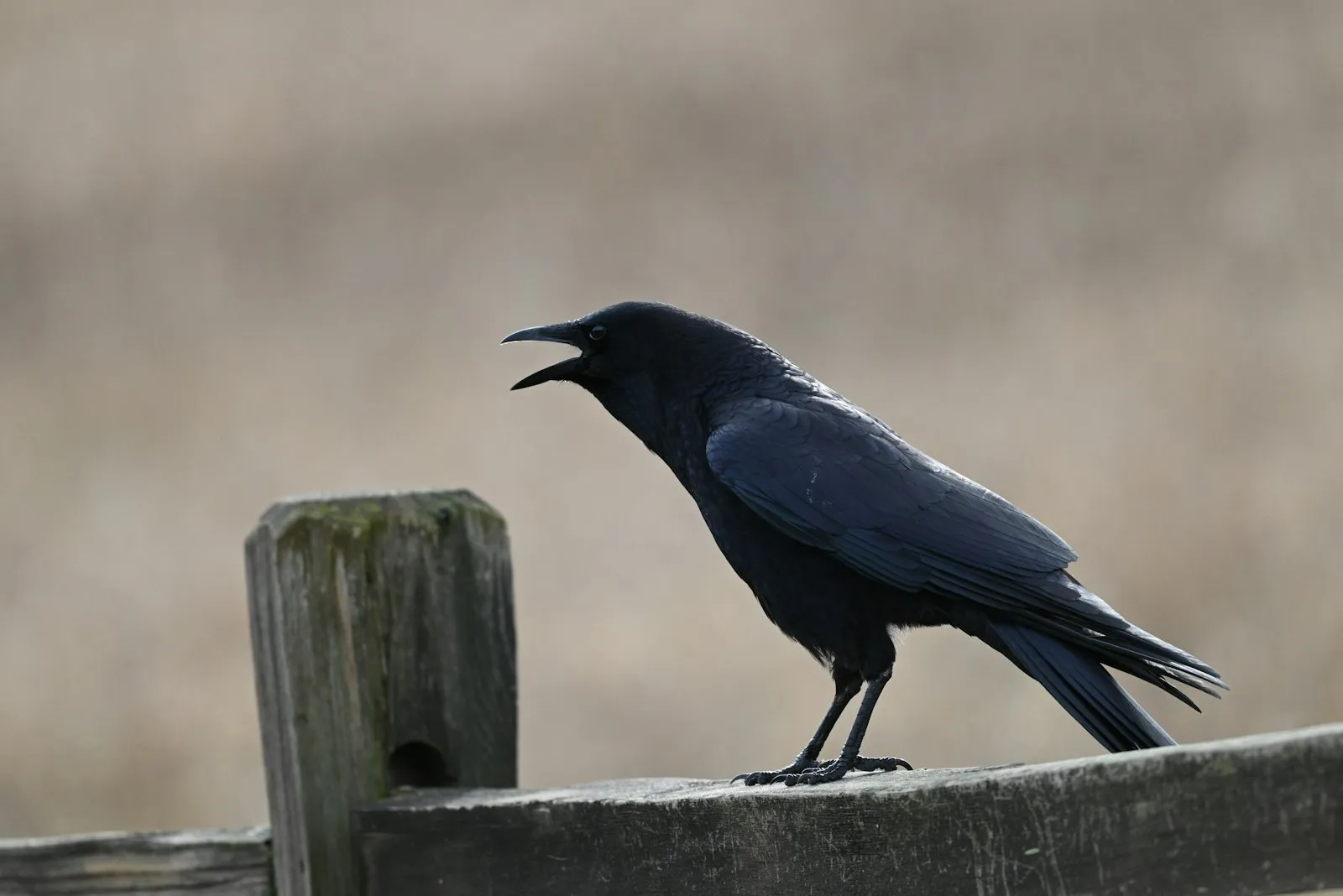
What do crows eat? Almost anything. The American Crow is one of the most omnivorous birds in North America, eating seeds, nuts, fruit, insects, small animals, the eggs of other birds, carrion, and the contents of your trash can with equal enthusiasm. That adaptability is exactly why crows thrive in cities, farms, and backyards alike. This guide covers the real crow diet, what to feed crows in your yard, what to avoid, and whether you should be feeding them at all, all grounded in Cornell Lab of Ornithology and American Bird Conservancy research.
TL;DR
- Crows are omnivores that eat almost anything: grains, seeds, nuts, fruit, insects, earthworms, small animals, eggs and nestlings, carrion, and human scraps (Cornell Lab).
- One study puts the average diet at roughly 72% plant and 28% animal matter (American Bird Conservancy).
- They are frequent nest predators, taking the eggs and young of other birds in spring and summer.
- To feed crows: unsalted peanuts in the shell, eggs, and a little suet work well. Avoid salt, processed food, and bread as a staple.
- Feeding is legal in most areas, but check local rules and feed responsibly to avoid nuisance flocks.
- Crows are highly intelligent, recognize individual people, and sometimes bring small gifts to those who feed them.
What do crows eat in the wild?
Crows are generalists in the truest sense. They forage mostly on the ground, walking and probing across open areas, and they will investigate nearly any potential food source.
The omnivore diet (plants and animals)
Per Cornell Lab’s All About Birds, American Crows “eat a vast array of foods, including grains, seeds, nuts, fruits, berries, and many kinds of small animals such as earthworms and mice.” They take many insects, including crop pests, and even aquatic prey like fish, young turtles, crayfish, mussels, and clams. They also eat carrion and garbage.
How much is plant versus animal? One study, cited by the American Bird Conservancy, found the diet averages about 72% plant matter and 28% animal matter. In other words, despite their scavenger reputation, most of what a crow eats is seeds, grain, nuts, and fruit. This puts them in the same broad omnivore camp as the other common backyard corvid, the blue jay, though crows are even less picky; see our guide on what blue jays eat for the comparison.
Do crows eat other birds and eggs?
Yes, and this is the part of the diet that gives crows their mixed reputation. Cornell Lab notes the American Crow is “a frequent nest predator” that eats the eggs and nestlings of many species, including sparrows, robins, jays, terns, loons, and eiders. It is one reason smaller songbirds mob crows that come near their nests.
This is natural omnivore behavior, not malice, and it is a seasonal activity concentrated in spring and summer when nests are active. Over a full year, eggs and nestlings are a small slice of a diet dominated by plant food. The same honest framing applies to the robin, whose own eggs sometimes end up on the crow menu; see what robins eat.
What do crows eat in winter?
When insects vanish and nesting ends, crows shift to whatever is dependable: waste grain left in harvested fields, acorns and other nuts, leftover fruit, carrion, and human food scraps. Winter is also when crows are most social, gathering in enormous communal roosts that can number in the thousands and dispersing each morning to forage.
This is the season when a backyard offering is most appreciated. Unsalted peanuts in the shell and a little suet give crows the fat and protein that are hardest to find in cold weather.
What to feed crows in your yard (and what to avoid)
Crows are easy to feed because they will eat almost anything, which is exactly why you have to be a little disciplined about it. The goal is food that is nutritious and does not create problems.
Safe foods to offer crows
- Unsalted peanuts, in the shell or shelled, are a crow favorite and the single best thing to offer. The American Bird Conservancy notes crows are opportunistic feeders readily drawn to peanuts.
- Eggs (hard-boiled, including the shell for calcium) are a natural, high-value food.
- Suet provides cold-weather fat and protein.
- Unsalted nuts, cracked corn, and fruit round out the menu.
- A clean water source. Crows drink and bathe readily, and water draws them as reliably as food.
Offer food on the ground or a low platform in an open spot where crows can watch for danger. For broader feeding-station principles, see our guide to attracting birds to a feeder.
What not to feed crows
- Salt and salty/processed foods (chips, salted nuts, cured meats). Salt is hard on birds.
- Bread as a staple. It is empty calories that fill a crow without nourishing it and fouls the ground; the same caution we detail in can birds eat bread.
- Sugary or junk human food, candy, and anything moldy or spoiled.
- Large quantities of anything. Overfeeding draws rodents and creates the nuisance flocks that get feeding banned in the first place.
Crow feeder-food cheat sheet
| Food | Good for crows? | Notes |
|---|---|---|
| Unsalted peanuts (in shell) | Yes | The top choice; a crow favorite |
| Eggs (hard-boiled, with shell) | Yes | High protein, plus calcium from the shell |
| Suet | Yes | Cold-weather fat and protein |
| Cracked corn, unsalted nuts | Yes | Cheap bulk options |
| Fruit (berries, apple chunks) | Yes | Matches the wild diet |
| Bread | No | Will eat it, but empty calories |
| Salted or processed food | No | Salt is hard on birds |
| Moldy or spoiled food | No | Risk of illness |
Is it legal (and a good idea) to feed crows?
In most of the United States, feeding crows is legal, but plenty of cities, counties, and homeowner associations restrict or prohibit feeding wildlife to control nuisance flocks, droppings, and rats. Check your local ordinances before you start.
Even where it is allowed, feed responsibly. Put out small amounts in a clean spot, do not let uneaten food pile up, and stop if large flocks begin bothering neighbors. Crows are smart and social, so a reliable food source can attract more birds than you bargained for. Responsible, modest feeding is the difference between a few welcome yard visitors and a neighborhood complaint.
What do baby crows eat?
Insects and other animal protein, mostly. Crow parents, often helped by their older offspring from previous years, feed nestlings a high-protein diet of insects, earthworms, and other small animals. Crows are cooperative breeders, so a single nest may be provisioned by several family members. For the bigger picture of how young birds are fed as they grow, see our guide on what fledgling birds eat.
Crows, gifts, and intelligence (the quick version)
Crows are among the most intelligent birds in the world. Cornell Lab notes they can solve problems, work together, recognize unusual food sources, and even recognize individual people. People who feed crows consistently sometimes report the birds leaving small objects (buttons, beads, bits of metal or glass) in return, the famous crow gifting behavior.
It is real but not guaranteed, and it tends to emerge only after months of calm, consistent feeding. Treat it as a delightful possibility, not a transaction. The intelligence is the point: feeding crows means feeding a bird that may well come to know you.
FAQ
These answers are also marked up as FAQ structured data on the page.
What do crows eat in winter? Waste grain, nuts, leftover fruit, carrion, and scraps, supplemented by what people put out. Unsalted peanuts and suet are good cold-weather offerings.
Can crows eat bread? They can, but it is empty calories and should never be a staple. Offer peanuts, eggs, or suet instead.
Do crows eat other birds and their eggs? Yes. Cornell Lab calls the American Crow a frequent nest predator that takes eggs and nestlings of sparrows, robins, jays, and others, mostly in spring and summer.
What do crows eat at night? Generally nothing. Crows are diurnal; they forage by day and gather in large roosts to sleep at night.
Is it illegal to feed crows? Usually legal, but some cities and HOAs restrict feeding wildlife. Check local rules and feed responsibly.
What do crows like as gifts? Crows that are fed regularly sometimes bring small shiny objects in return. It is a side effect of their intelligence, not something you can force.
What to do this week
If you want crows in your yard, start small: put a handful of unsalted peanuts in the shell on an open patch of ground or a low platform at the same time each day, and add a shallow water source nearby. Crows are wary of new feeding spots at first, so it may take days or weeks before they trust one. Once they do, keep portions modest, skip the salt and bread, and check that feeding is allowed where you live. You are feeding one of the smartest birds on the continent, so feed it well.
Sources
- Cornell Lab of Ornithology, All About Birds: American Crow Life History (omnivore diet, nest predation, foods)
- Cornell Lab of Ornithology, All About Birds: American Crow Overview (ground forager, intelligence, social roosting)
- American Bird Conservancy: Something to Crow About: The Amazing Diet and Eating Habits of American Crows (72% plant / 28% animal study, nestling diet, opportunistic feeding)