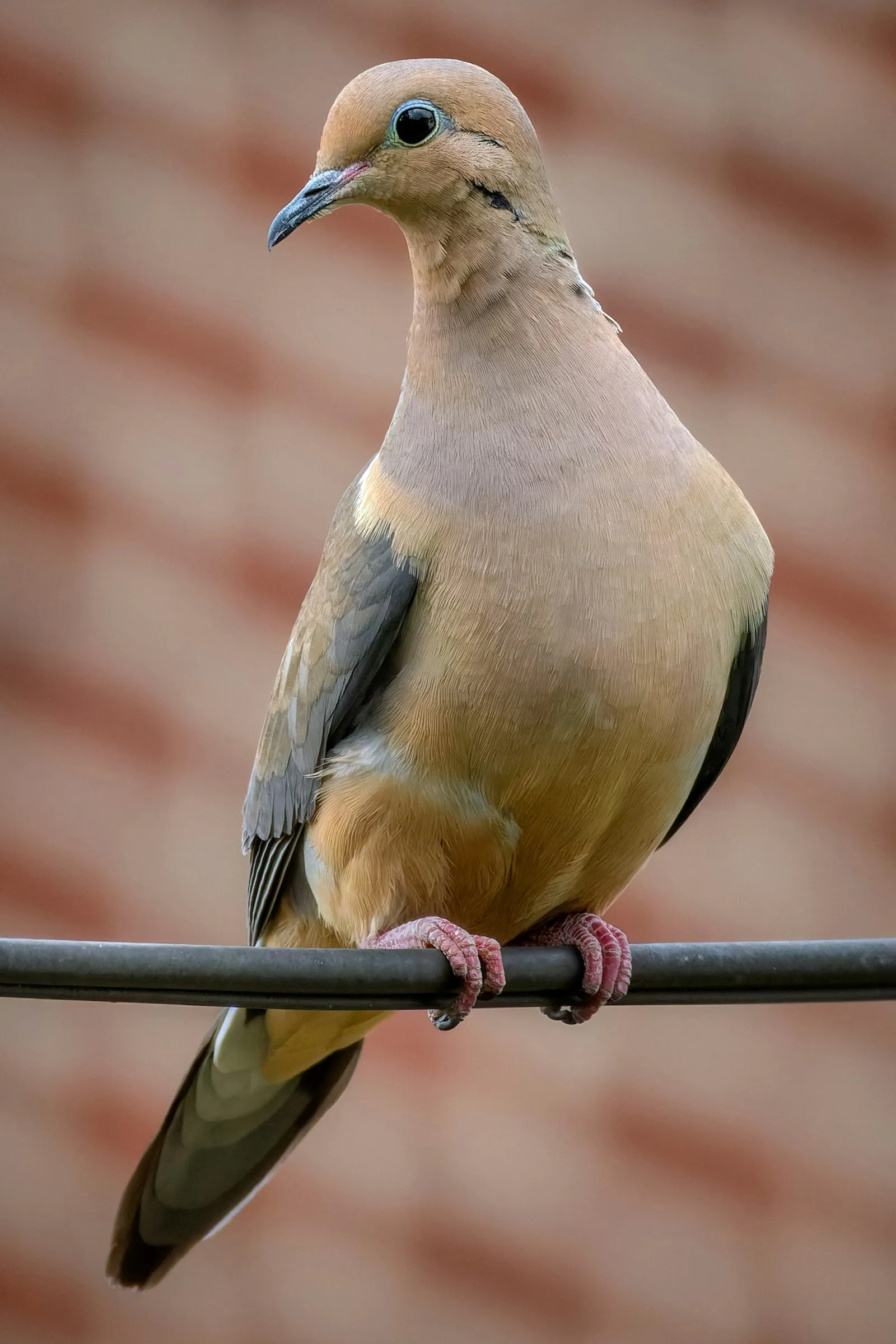
Mourning doves eat seeds, and almost nothing but seeds. About 99 percent of their diet is seeds and grain, which makes them one of the most single-minded eaters in the backyard. But the practical question, how do you actually feed them, has a different answer than it does for most feeder birds: doves eat on the ground, not at the feeder. Get that one thing right and mourning doves are among the easiest birds to attract.
This guide covers what mourning doves really eat through the year, the specific seeds they prefer, why they need a ground or platform feeder, the surprising way baby doves are fed, and how to keep a dove-feeding area safe and clean.
TL;DR
Mourning doves are ground-feeding granivores: about 99% of their diet is seeds (Cornell Lab, Audubon). Feed them white proso millet, cracked corn, black-oil sunflower, milo, or safflower, scattered on the ground or on a low platform or tray feeder, not a hanging tube. They swallow seeds whole and need grit to grind them, drink heavily (by suction), and feed their babies “crop milk” for the first days. Keep ground seed clean and dry to prevent disease, and keep cats indoors since ground-feeders are vulnerable.
What mourning doves eat in the wild (the granivore story)
About 99% seeds
Mourning doves are granivores in the truest sense. Cornell Lab’s Mourning Dove Life History states that seeds make up 99 percent of the diet, including cultivated grains and even peanuts, as well as wild grasses, weeds, herbs, and occasionally berries. Audubon’s Mourning Dove field guide agrees: the dove “feeds almost entirely on seeds (approximately 99 percent of its diet),” favoring cultivated grains plus the seeds of grasses, ragweed, and many other plants, and only occasionally eats snails and very rarely insects.
That is unusual. Most backyard birds shift their diet seasonally (robins go from worms to berries; chickadees mix seeds and insects). The mourning dove just eats seeds, all year.
Grit: how doves digest seeds they swallow whole
Doves do not crack seeds the way a cardinal does. They swallow seeds whole, store them quickly in the crop, then digest them later while resting. To break the hard seeds down, doves rely on grit. As Audubon notes, the Mourning Dove “regularly swallows grit (small gravel) to aid in the digestion of hard seeds,” which collects in the muscular gizzard and grinds the seed. A small dish of fine grit or crushed, baked eggshell near your feeding area helps, especially in winter when natural grit is under snow.
The best foods for mourning doves at a feeder
White proso millet (the standout)
If you want one seed for doves, make it white proso millet. Doves love it, and the happy accident is that the showier feeder birds (cardinals, jays, finches, chickadees) largely reject millet, so it draws doves without fueling feeder competition. It is cheap, and on a ground tray it brings doves in fast.
Cracked corn, black-oil sunflower, milo, and safflower
Beyond millet, mourning doves readily take:
- Cracked corn (cheap, dove-favorite, also draws jays and sparrows)
- Black-oil sunflower (they swallow it whole rather than cracking it)
- Milo / sorghum (often ignored by other birds but doves eat it)
- Safflower (the same squirrel-resistant seed we recommend in the keep squirrels out of bird feeders guide)
Cornell Lab notes doves even take peanuts among cultivated grains. A simple millet-and-cracked-corn mix on the ground is a reliable dove menu.
Why doves need a ground or platform feeder, not a tube
This is the key that most people miss. Mourning doves are large, heavy, walk-and-peck ground foragers. Audubon describes them foraging “mainly on the ground” and coming “to bird feeders, often eating on the ground under elevated feeders.” They cannot perch-feed at the small ports of a tube feeder the way a finch or chickadee does.
So to feed doves, do one of three things:
- Scatter seed directly on the ground or a cleared patch.
- Use a wide platform or tray feeder, ground level to about 3 feet.
- Simply let doves clean up the seed that other birds spill below a hanging feeder, which they do faithfully.
Our how to attract birds to a bird feeder pillar covers the broader feeder-matching logic; doves are the clearest case of “match the feeder to the bird,” because the wrong feeder gets you no doves at all.
How mourning doves feed and drink
The crop and quick feeding
Doves feed fast. They fill the crop (a storage pouch in the throat) with seed quickly, then retreat to a safe perch to digest at leisure, which is part of why you see a dove gorge at a feeding area and then sit quietly on a wire for an hour. That quick-fill strategy minimizes time spent exposed on the ground where predators hunt.
Drinking by suction
Most birds scoop water and tip the head back to let it run down. Doves and pigeons are different: they drink by suction, pumping the tongue like a piston to draw water up continuously, according to the research Audubon cites in its 10 Fun Facts About the Mourning Dove. It lets them drink quickly and, again, spend less time vulnerable. A shallow ground-level water source or a bird bath draws doves reliably.
What do baby mourning doves eat? (crop milk)
For the first days of life, baby mourning doves, called squabs, are not fed seeds at all. Both parents produce crop milk (also called pigeon milk), a nutrient-rich substance with a texture like cottage cheese, secreted by cells lining the crop and regurgitated to the chicks. Audubon’s fun-facts piece describes it directly, and notes that only a handful of birds outside the pigeon and dove family (flamingos and some penguins) feed their young anything similar.
After roughly the first week, the parents gradually transition the squabs from crop milk to regurgitated seeds, easing them onto the all-seed adult diet.
If you find a baby dove out of the nest, do not try to feed it. Most grounded young doves are fledglings the parents are still feeding nearby. Watch from a distance and contact a licensed wildlife rehabilitator only if the bird is injured or genuinely orphaned. Our what do fledgling birds eat guide covers the welfare-first protocol and why hand-feeding a baby bird the wrong way is a common cause of death.
What mourning doves eat in winter
Unlike robins, which switch to fruit, or woodpeckers, which lean on suet, mourning doves stay seed eaters in winter. The challenge is just that seed is harder to find under snow. In cold months doves rely on:
- Weed and grass seeds still standing above the snow line
- Waste grain in agricultural fields
- Backyard ground-feeding stations
Offer white proso millet, cracked corn, and black-oil sunflower on a platform or a swept patch of ground, and keep a water source from freezing. For the contrast in how a fruit-eater handles the same season, see what do robins eat; for the suet-and-nut winter strategy, see what do woodpeckers eat.
What mourning doves eat when nesting
Nesting adults eat the same all-seed diet, just more of it, and they convert some of that seed into the crop milk that feeds the squabs for the first days before switching them to regurgitated seed. Keeping a steady, clean seed supply near (but not directly under) a nesting area supports the parents through the demanding nestling period. Mourning doves nest prolifically, often raising several broods a season, so a reliable ground-feeding station can support a lot of dove production over a summer.
What not to feed mourning doves
Bread, crackers, chips, processed food. No nutrition, fills the crop without value, and risks impaction. The instinct to toss bread to doves is genuinely bad for them.
Moldy or spoiled seed. Ground feeding makes this the biggest real risk (see below). Wet, fermenting, or droppings-fouled seed spreads disease.
Salted or flavored nuts. Salt is harmful to birds; offer only plain seeds and grains.
Stick to plain white proso millet, cracked corn, black-oil sunflower, safflower, and milo. That is the entire dove menu.
Is it good to have mourning doves in your yard?
Yes, with two things to manage.
The good: mourning doves are gentle, native, abundant ground-feeders that clean up spilled seed, eat enormous quantities of weed seeds, and add a calm presence and soft cooing. They are one of the most widespread birds in North America.
Manage disease. Because doves gather in flocks and feed on the ground, dirty or wet seed spreads salmonellosis and other illnesses fast. Project FeederWatch’s Sick Birds and Bird Diseases covers the math. Rake spilled seed, never let it mold, offer only what gets eaten in a day or two, and scrub platform trays weekly with a 9:1 water-to-vinegar solution. Take feeders down for two weeks if you see sick birds.
Manage predation. Ground-feeding makes doves vulnerable to cats. Keep cats indoors and keep the feeding area a clear 10 feet or more from dense shrubs where a cat can hide. (Mourning doves are also a legal game species in many states, which is part of why their populations are carefully tracked.) Cornell Lab’s Mourning Dove overview has the full range and natural-history picture.
How to attract mourning doves (food + ground feeder + water)
Pulling it together, the dove-friendly yard has three elements:
- Seed on a flat surface. White proso millet and cracked corn on the ground or a low platform/tray feeder. Or just let doves work the spill zone under your other feeders.
- Water they can reach. A shallow ground-level water source or low bird bath; doves drink heavily.
- Grit and open sightlines. A dish of fine grit or crushed eggshell, and an open feeding area set back from ambush cover.
Doves are the contrast case to a bird like the cardinal: where attracting cardinals means a sturdy hopper or tube with sunflower and safflower up off the ground, attracting doves means seed on the ground. Run both and you cover two very different feeding styles in the same yard.
FAQ
What is the best food to feed mourning doves? White proso millet is the best single food for mourning doves, scattered on the ground or offered on a low platform feeder. It is also the seed that cardinals, jays, and finches usually reject, so it attracts doves without fueling feeder competition. Cracked corn, black-oil sunflower, milo, and safflower also work well. Mourning doves are ground-feeding granivores (about 99 percent of their diet is seeds, per Cornell Lab), so the key is offering seed on a flat, open surface rather than in a hanging tube feeder.
Do mourning doves eat from bird feeders? Mostly they eat on the ground beneath feeders rather than at the feeder itself. Mourning doves are large, heavy ground foragers that walk and peck on flat surfaces; they rarely use hanging tube or small-port feeders built for perching songbirds. To feed them at a feeder, use a wide platform or tray feeder at ground level to about 3 feet, or simply let them clean up the seed that other birds spill below a hanging feeder, which they do reliably.
What do baby mourning doves eat? For the first days of life, baby mourning doves (called squabs) are fed “crop milk” (also called pigeon milk), a nutrient-rich, cottage-cheese-textured substance that both parents secrete from cells in the crop and regurgitate to the chicks, as Audubon describes. After the first week or so, parents gradually transition the squabs to regurgitated seeds. If you find a baby dove out of the nest, do not try to feed it; watch from a distance and contact a licensed wildlife rehabilitator only if it is injured or truly orphaned.
What do mourning doves eat in winter? The same thing they eat the rest of the year: seeds and waste grain, just harder to find under snow. In winter, mourning doves rely on weed and grass seeds still standing above the snow, waste grain in agricultural fields, and backyard ground-feeding stations. Offer white proso millet, cracked corn, and black-oil sunflower on a platform or a cleared patch of ground, and keep a water source from freezing. Doves do not switch to fruit or insects in winter the way robins and some other species do; they remain seed eaters year-round.
Do mourning doves eat sunflower seeds? Yes. Mourning doves eat black-oil sunflower seeds, usually swallowing them whole and grinding them in the gizzard with the help of grit, rather than cracking the shell the way a cardinal or chickadee does. They also take cracked corn, white proso millet, milo, safflower, and even peanuts, per Cornell Lab. Offer sunflower on the ground or a low platform, since doves feed on flat surfaces rather than at hanging tube feeders.
Is it good to have mourning doves in your yard? Yes. Mourning doves are gentle, native ground-feeders that clean up spilled seed beneath feeders, eat large quantities of weed seeds, and add a calm presence and soft cooing to a yard. They are one of the most abundant and widespread birds in North America. The main things to manage are disease (keep ground seed clean and dry, since doves gather in flocks) and predation (keep cats indoors, since ground-feeding doves are vulnerable). They are also a legal game species in many states, which is one reason their numbers are closely monitored.
What to do this week
If you want to feed and attract mourning doves:
- Scatter white proso millet and cracked corn on a low platform feeder or a swept patch of open ground, set back from shrubs where cats hide.
- Add a shallow, ground-level water source; doves drink heavily.
- Put out a small dish of fine grit or crushed, baked eggshell.
- Keep the area clean: sweep or rake spilled seed, never let it mold, and scrub trays weekly.
- Keep cats indoors to protect ground-feeding doves.
The mourning dove is the backyard’s seed specialist: no fruit, no insects, no suet, just seeds eaten off the ground and ground up with a bellyful of grit. Once you stop trying to feed them at a hanging feeder and put the seed where they actually eat, they become one of the most dependable visitors in the yard. For the bigger picture of which bird eats what, see our companion diet guides on robins and woodpeckers.