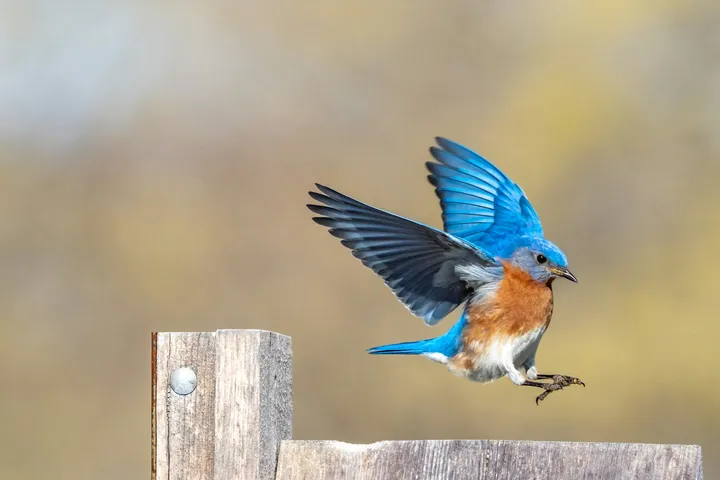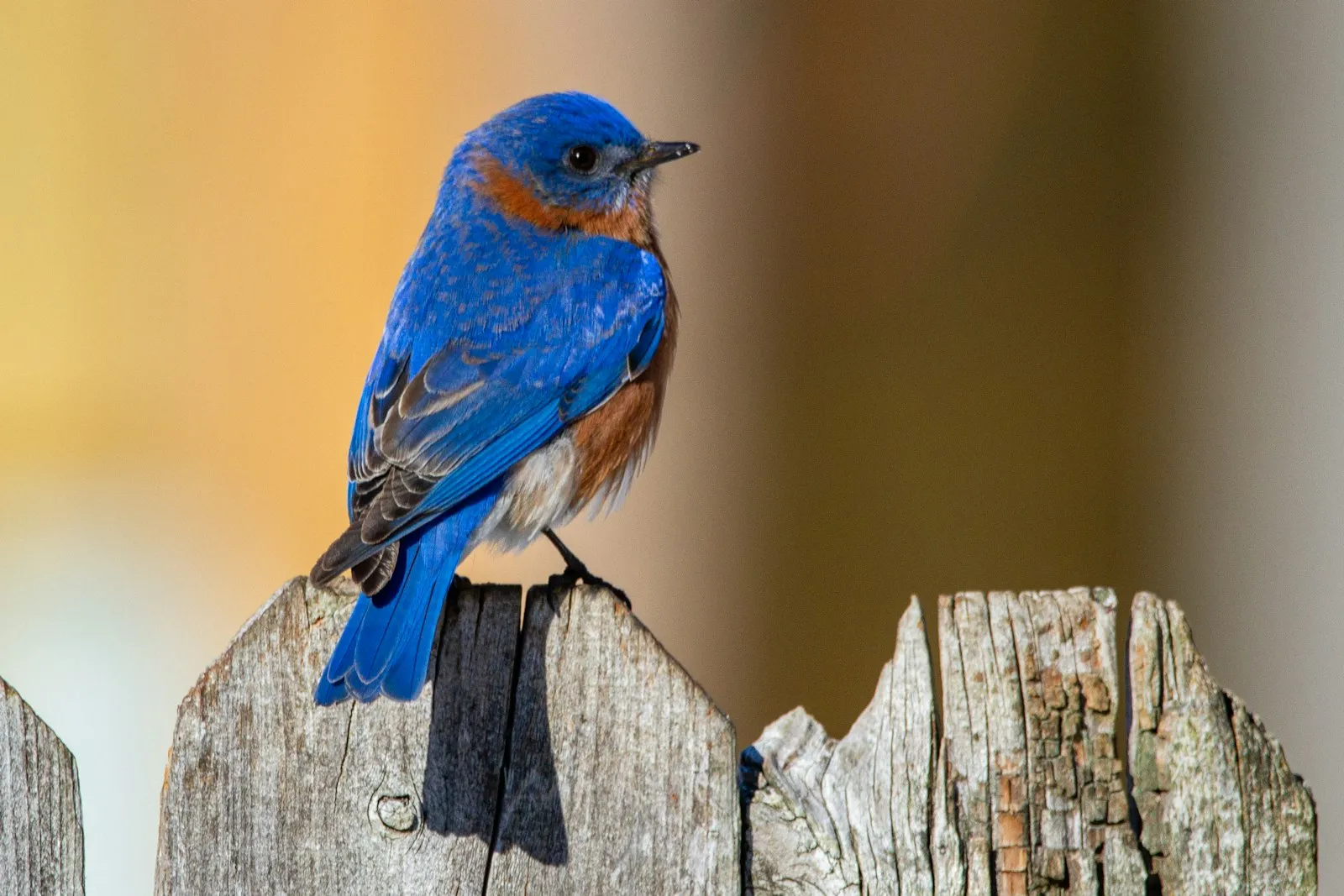
What do bluebirds eat? Mostly insects through the warmer months and fruit and berries in fall and winter, with mealworms (not seed) being the food that brings them to a feeder. Bluebirds are thrushes, not seed crackers, so the answer has more to do with bugs, berries, and a mealworm dish than with a tube of sunflower. This guide covers the full bluebird diet by season and by species, what to offer at a feeder, and what to skip, all grounded in Cornell Lab of Ornithology research.
TL;DR
- Bluebirds are insectivores for much of the year: caterpillars, beetles, crickets, grasshoppers, and spiders caught on the ground (Cornell Lab).
- In fall and winter they switch to fruit and berries: sumac, dogwood, juniper, mistletoe, holly, and wild grapes.
- At feeders, mealworms are the draw, not seed. Bluebirds mostly ignore seed feeders.
- All three North American species (Eastern, Western, Mountain) follow the same insect-then-fruit pattern with regional berry differences.
- Baby bluebirds eat insects, soft-bodied invertebrates the parents catch nearby.
- Native berry shrubs are the highest-value long-term bluebird food in winter.
What do bluebirds eat in the wild (insects most of the year, fruit in winter)
Bluebirds hunt by sight. They perch on a wire, fence post, or low branch overlooking open ground, then drop down to grab prey they have spotted from as far as 60 feet away (Cornell Lab). That foraging style explains both what they eat and why they need open habitat rather than dense woods.
Warm-season diet: insects and other invertebrates
From spring through early fall, insects are the main food. Per Cornell Lab’s All About Birds, “insects caught on the ground are a bluebird’s main food for much of the year,” with major prey including caterpillars, beetles, crickets, grasshoppers, and spiders. Rarely, Eastern Bluebirds have even been recorded eating small salamanders, shrews, snakes, lizards, and tree frogs.
This is the most important fact about feeding bluebirds: they are insect hunters, not seed eaters. The same is true of the robin, another thrush that largely ignores seed feeders, and of the insectivorous wren. All three sit at the opposite end of the diet spectrum from seed specialists.
Fall and winter diet: fruit and berries
When cold weather thins out the insects, bluebirds become fruit specialists. Cornell Lab notes that in fall and winter, Eastern Bluebirds “eat large amounts of fruit including mistletoe, sumac, blueberries, black cherry, tupelo, currants, wild holly, dogwood berries, hackberries, honeysuckle, bay, pokeweed, and juniper berries.” That seasonal flexibility helps explain how bluebirds can winter farther north than a strict insect-eater could.
The practical takeaway: a yard with native berry-producing shrubs feeds bluebirds through the months when no feeder mealworm can compete with what nature is offering.
Do the three bluebird species eat the same things?
Mostly yes, with regional berry differences. North America has three bluebird species, and all follow the insects-in-summer, fruit-in-winter pattern. Knowing which one lives in your area helps you match the local berries.
Eastern Bluebird
The Eastern Bluebird ranges across the entire eastern half of the continent. Its warm-season diet is ground insects (caterpillars, beetles, crickets, grasshoppers, spiders), shifting in winter to sumac, dogwood, holly, juniper, mistletoe, and hackberries (Cornell Lab). Most are year-round residents, so winter food matters where you live.
Western Bluebird
Per Cornell Lab, Western Bluebirds “eat mainly insects” in summer (grasshoppers, caterpillars, beetles, ants, wasps, pillbugs, plus spiders and snails) and switch to “mostly fruits and seeds” in winter. Their winter berries skew western: elderberry, mistletoe, grapes, serviceberry, sumac, chokecherries, juniper, and even poison oak. They have been seen catching marine invertebrates on beaches, a reminder of how opportunistic the genus is.
Mountain Bluebird
The Mountain Bluebird eats “mostly insects, especially during breeding season,” with beetles, grasshoppers, and especially caterpillars topping the menu, per Cornell Lab. In winter it takes small fruits and seeds: grapes, currants, elderberries, cedar berries, and the seeds of sumac, mistletoe, and hackberry. Spiders are an important part of the adult diet, and nestlings are fed primarily beetles and grasshoppers.
What to feed bluebirds at a feeder
Bluebirds will come to a feeder, but only for the right food. They are among the birds that mostly skip seed and instead respond to insect-based and fruit foods.
- Mealworms are the single most reliable bluebird feeder food, live or dried. Cornell Lab describes mealworms as “an excellent source of protein, calcium, and vitamins for a great many birds, including some that normally don’t visit feeders.” Offer them in a tray or a dish-style feeder. (For the build, see our DIY bluebird feeder guide.)
- Suet gives cold-weather protein and is readily taken, especially in winter.
- Chopped fruit (halved grapes, raisins or currants soaked in warm water, blueberries) matches the natural winter diet.
- Peanut butter and a little jelly are both on Cornell’s recommended-foods list and work in moderation, mainly in cold weather.
The complete setup, nest box, feeder placement, water, and habitat, lives in our companion guide on how to attract bluebirds. This article is about the food itself.
Bluebird feeder-food cheat sheet
| Food | Will bluebirds eat it? | Notes |
|---|---|---|
| Mealworms (live or dried) | Yes | The top feeder food; protein and calcium |
| Suet | Yes | Cold-weather protein; offer in a cage feeder |
| Chopped fruit / soaked raisins | Yes | Matches the winter fruit diet |
| Peanut butter | In moderation | Cornell-recommended; plain, cold weather only |
| Jelly | Small amounts | Occasional treat, not a staple |
| Hulled sunflower chips | Sometimes | De-shelled only; minor, not a draw |
| Mixed birdseed / millet | Rarely | Wrong food; bluebirds are not seed eaters |
| Whole sunflower in shell | No | Bluebirds do not crack hard shells |
What do bluebirds eat in winter?
Fruit, plus whatever protein they can find. Once insects are gone, wild berries carry bluebirds through winter: sumac, dogwood, juniper, mistletoe, holly, and grapes are all documented winter foods (Cornell Lab). Because most Eastern Bluebirds do not migrate fully south, the berries in your yard and the mealworms in your feeder genuinely matter in the cold months.
Late winter (February into early March) is the highest-leverage feeding window. Natural fruit is depleted, insects have not returned, and adult bluebirds are scouting nest sites. A mealworm dish and a suet feeder stocked then can be the difference for the birds that will nest nearby.
What do baby bluebirds eat?
Insects, almost entirely. Like nearly all songbirds, bluebirds feed their nestlings a high-protein diet of soft invertebrates. Cornell Lab notes Mountain Bluebird nestlings are “fed primarily beetles and grasshoppers,” and the other two species follow the same insect-heavy pattern. Growing chicks need protein that fruit and seeds cannot supply, which is one more reason an insect-rich, pesticide-free yard matters as much as any feeder. For the broader picture of how young birds are fed as they grow, see our guide on what fledgling birds eat.
What not to feed bluebirds
- Do not rely on a seed feeder. Bluebirds are insect and fruit eaters. A tube of sunflower or mixed seed will not bring them; use mealworms.
- Do not spray pesticides. You are removing the caterpillars, beetles, and crickets that are the foundation of the bluebird diet and the only food for their nestlings.
- Skip bacon drippings and salty or processed leftovers. Cornell lists these among foods not recommended for birds.
- Do not offer peanut butter in hot weather, when it can soften or go rancid. Keep it to cold months, plain and unsalted.
- Do not expect bluebirds to control mosquitoes. They eat ground insects, not flying mosquitoes; reduce standing water instead.
FAQ
These answers are also marked up as FAQ structured data on the page.
What do bluebirds eat at feeders? Mealworms, live or dried, are the reliable draw, along with suet, chopped fruit, and small amounts of peanut butter or jelly. Bluebirds mostly ignore seed feeders.
Do bluebirds eat sunflower seeds? Rarely. They may take soft hulled sunflower chips occasionally, but bluebirds are not seed crackers, so seed is not a draw. Offer mealworms instead.
What do bluebirds eat in winter? Fruit and berries (sumac, dogwood, juniper, mistletoe, holly, wild grapes), supplemented by mealworms and suet at feeders. Native berry shrubs are the highest-value winter food.
Do bluebirds eat mosquitoes? They eat many ground insects (caterpillars, beetles, crickets, grasshoppers, spiders) but not mosquitoes as a staple. Do not expect mosquito control from them.
Can you feed bluebirds peanut butter? Yes, in moderation and in cold weather. Cornell lists it among recommended foods. Offer it plain, and avoid it in heat.
Do bluebirds migrate? Most Eastern Bluebirds are year-round residents (only the northernmost move south); Mountain and Western Bluebirds are partial migrants, with northern and high-elevation birds moving south for winter. Many stay through winter, so cold-season food helps.
What to do this week
If you already have bluebirds in the area, set out a dish of dried mealworms near an open perch and add a suet feeder for cold-weather protein. If you want bluebirds but do not have them yet, the food is only half the equation: pair the mealworms with the nest box, open habitat, and water covered in how to attract bluebirds, and plant native berry shrubs (dogwood, sumac, holly, juniper, serviceberry) for the winter diet that keeps them around.
Sources
- Cornell Lab of Ornithology, All About Birds: Eastern Bluebird Life History (insect diet, winter fruit, foraging)
- Cornell Lab of Ornithology, All About Birds: Western Bluebird Life History (summer insects, winter fruits and seeds)
- Cornell Lab of Ornithology, All About Birds: Mountain Bluebird Life History (insect diet, nestling food)
- Cornell Lab of Ornithology, All About Birds: About Suet, Mealworms, and Other Bird Foods (mealworms, peanut butter, foods to avoid)