What do cardinals eat? Mainly seeds and fruit, with a side of insects, but the full answer is more useful than that, especially if you want cardinals at your feeder and want to know why the food matters for their famous red color. This guide covers the wild cardinal diet by season, what baby cardinals eat, the exact feeder foods that work, and what to skip, all grounded in Cornell Lab research.
TL;DR
- Cardinals eat mainly seeds and fruit, supplemented with insects (Cornell Lab).
- They feed their nestlings mostly insects, because growing chicks need protein.
- Their red color comes from carotenoid pigments in fruit and insects, not from seeds.
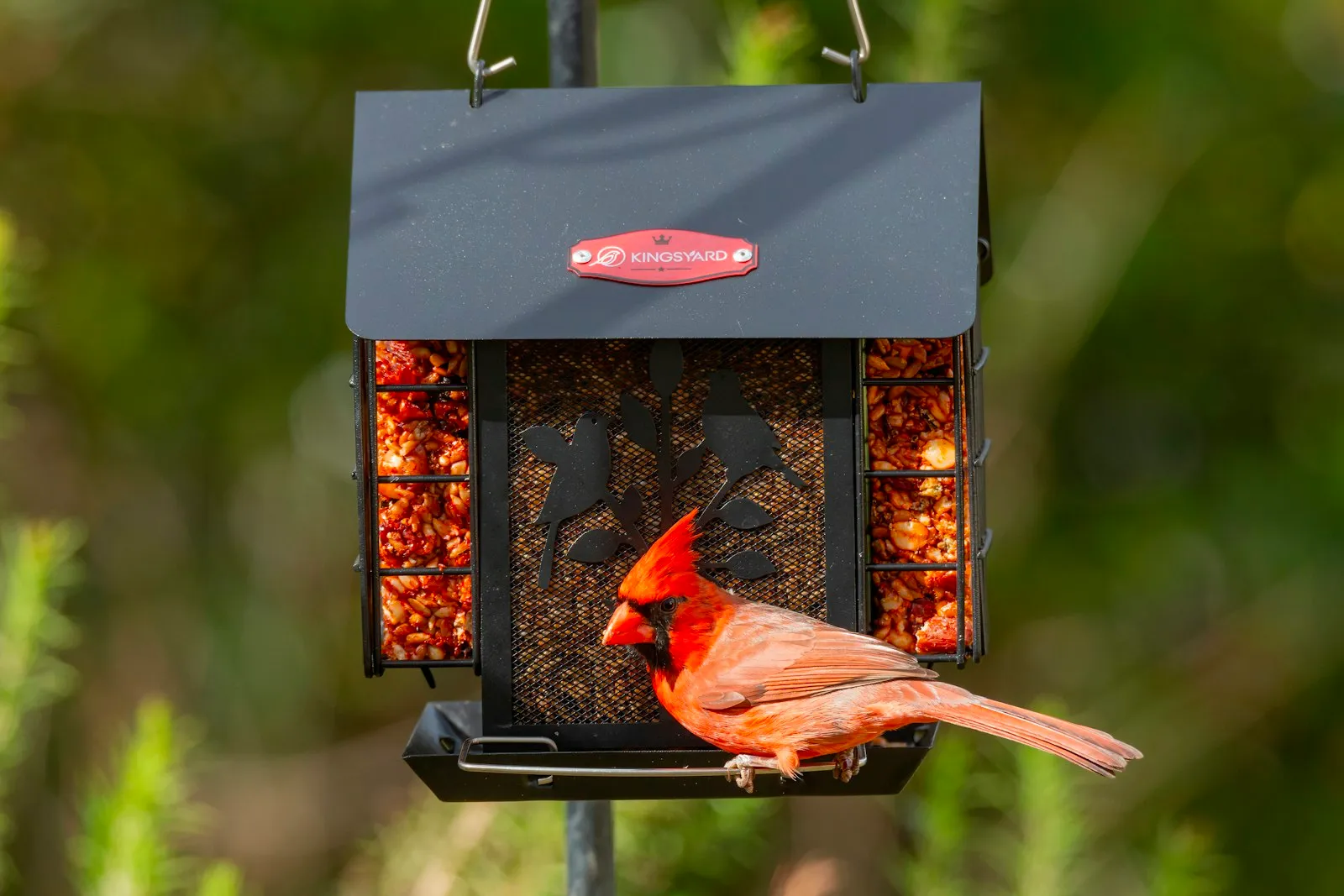
- At a feeder, the cardinal staples are black-oil sunflower and safflower seed, offered on a platform or hopper feeder, not a small-perch tube.
- In winter they lean on seeds, persistent fruit, and feeders, since insects are gone. Cardinals do not migrate, so your feeder helps the local pair year-round.
What cardinals eat in the wild
Northern Cardinals are primarily seed-and-fruit eaters with a strong, cone-shaped bill built for cracking shells. Cornell Lab sums up the diet plainly: cardinals “eat mainly seeds and fruit, supplementing these with insects.” They forage mostly on or near the ground, hopping through dense shrubby edges rather than clinging to high branches.
Seeds and fruit (the year-round base)
The bulk of a wild cardinal’s diet is the seeds and fruits of common plants. According to Cornell’s Birds of the World, their major wild foods include the seeds and fruit of grape, dogwood, mulberry, sumac, smartweed, and sedge, plus agricultural grains like corn and oats. This is why cardinals thrive at the brushy edges of yards, fields, and hedgerows, where seed-bearing weeds and berry shrubs grow thick.
Insects (and why they matter in summer)
Cardinals are not strict vegetarians. They take insects such as beetles, crickets, grasshoppers, caterpillars, and cicadas, and they eat the most insects in late spring and summer when bugs are abundant and breeding is underway. Insects are a protein source, not a main course, for adult cardinals, but as you will see below, they are the main course for the chicks.
What cardinals eat that makes them red
A male cardinal’s brilliant red is not something the bird produces on its own; it comes from carotenoid pigments in the food it eats. Cornell’s Birds of the World notes that to maintain red plumage, cardinals must ingest carotenoid pigments during the fall molt, and that fruits and insects are high in carotenoids while most seeds are poor sources.
In practice, that means a cardinal eating a varied diet of berries, fruit, and insects grows a richer, deeper red than one scraping by on seed alone. If you want vivid cardinals in your yard, the berry shrubs matter as much as the seed feeder.
What do cardinals eat in winter?
In winter the insects vanish, so cardinals shift to almost entirely seeds and fruit. They eat weed and grass seeds still standing above the snow, persistent berries and wild fruits, waste grain in fields, and whatever your feeder offers. High-fat seeds matter most now, because a small bird burns serious energy staying warm through a cold night.
Because cardinals do not migrate, the pair near your home is there all winter, which makes a reliably stocked feeder genuinely valuable in the cold months. Black-oil sunflower and safflower are the foods to keep topped up.
What do baby cardinals eat?
Baby cardinals eat mostly insects, not seeds. Cornell Lab notes that cardinals feed their nestlings mostly insects, and the reason is simple growth math: a chick has to develop from a hatchling to a feathered fledgling in a couple of weeks, and that takes protein, which insects supply and seeds do not.
This is the clearest argument for keeping your yard insect-friendly. A nesting pair of cardinals needs a steady supply of caterpillars, beetles, and other bugs to raise a brood, so the less you spray, the better your odds of a cardinal family.
The best foods to feed cardinals at a feeder
Cardinals are one of the easiest backyard birds to feed well, as long as you offer the right seed on the right feeder.
Black-oil sunflower and safflower (the cardinal staples)
Black-oil sunflower seed is the single best feeder food for cardinals: high in fat, thin-shelled, and a favorite across the species Project FeederWatch tracks, cardinals included. Safflower is the cardinal’s other go-to; FeederWatch notes safflower attracts cardinals and other big-billed birds, even though most other birds prefer sunflower. Safflower has a bonus that bird-feeding hobbyists rely on: many squirrels and grackles dislike its bitter shell, so a safflower feeder tends to draw cardinals while cutting down on raiders. We cover that dynamic in detail in our guide to keeping squirrels out of bird feeders.
Skip nyjer (thistle) for cardinals; it is goldfinch and siskin food, dispensed from tiny-port feeders a cardinal cannot use, and cardinals are simply not nyjer eaters. Cracked corn is a cheap supplement cardinals will take on the ground.
The right feeder and placement (a ground forager, not a tube)
Cardinals are heavy, mostly ground-foraging birds, and they cannot comfortably perch on the short pegs of a small tube feeder. Give them a platform or hopper feeder, a wide tray, or seed scattered on a low table or the ground. Place it within about 10 feet of a shrub or hedge so cardinals have cover to retreat to. For the broader logic of matching feeder and food to the birds you want, see our how to attract birds to a bird feeder pillar, and for cardinals specifically, our full how to attract cardinals guide.
Fruits and other foods cardinals take
Beyond seed, cardinals will eat soft fruit at or near a feeder: chopped apple, unsweetened raisins, and berries. The best long-term move is planting native berry shrubs (dogwood, sumac, serviceberry, wild grape), which feed cardinals through fall and winter and supply the carotenoids behind that red plumage.
Cardinal feeder-food cheat sheet
| Food | Cardinals eat it? | Notes |
|---|---|---|
| Black-oil sunflower | Yes (top choice) | High fat, thin shell; the cardinal staple |
| Safflower | Yes | Attracts big-billed birds like cardinals; many squirrels reject it |
| Cracked corn | Yes, on the ground | Cheap supplement; offer on a tray or ground |
| Peanuts (shelled pieces) | Yes | Unsalted, in pieces; a good protein source |
| Suet | Sometimes | Mainly a woodpecker/chickadee food; cardinals will occasionally take it |
| Mealworms | Sometimes, in summer | Extra protein during the nesting season |
| Fruit (apple, raisins, berries) | Yes | Plain and unsweetened |
| Nyjer (thistle) | No | Goldfinch food, dispensed from tiny-port feeders cardinals cannot use |
| Millet, milo | Mostly no | Cardinals leave it for ground-feeding sparrows and doves |
| Bread, salted snacks | No | Empty calories or harmful salt |
A cardinal will sometimes yield the feeder to bigger, bolder birds. If blue jays are muscling in, our bird feeder for blue jays guide covers how to feed both without the jays clearing out the seed.
What not to feed cardinals
A few common “treats” do more harm than good. Skip these:
- Bread, crackers, and chips. Bread is empty calories with no real nutrition, and salty snacks are worse. We explain why in our guide on whether birds can eat bread.
- Salted, sweetened, or flavored anything. Salt and additives are hard on birds. Offer plain seed and plain fruit only.
- Mostly-millet or mostly-nyjer seed mixes. Cardinals leave both, so a cheap mix mostly goes to waste or to ground-feeding sparrows and doves. (Those millet-loving doves are happy to clean it up, as our guide to what mourning doves eat explains.)
- The “potato in the bird feeder” trick. This is a folk myth, not a feeding strategy; we address it in the attract cardinals guide. It does nothing for cardinals.
FAQ
What is a cardinal’s favorite food? At a feeder, the cardinal favorite is black-oil sunflower seed, followed closely by safflower seed. Both are high in fat and easy for a cardinal’s heavy, cone-shaped bill to crack. In the wild, cardinals favor the seeds and fruits of plants like grape, dogwood, mulberry, and sumac, along with insects in summer. If you put out one food for cardinals, make it black-oil sunflower.
What do cardinals eat in winter? In winter cardinals eat mostly seeds and fruit, because the insects they catch in summer are gone. They rely on weed and grass seeds, persistent berries and wild fruits, waste grain, and backyard feeders. High-fat seeds like black-oil sunflower and safflower are especially valuable in cold weather, when birds burn extra energy staying warm. Cardinals do not migrate, so a stocked winter feeder genuinely helps the pair that lives near you.
What do cardinals eat that makes them red? Their red color comes from carotenoid pigments in their food, not from the birds themselves. According to Cornell’s Birds of the World, cardinals must ingest carotenoids during the fall molt to grow bright red feathers, and fruits and insects are high in carotenoids while most seeds are poor sources. A cardinal on a varied diet of berries, fruit, and insects develops a richer red than one living on seed alone.
Do cardinals eat bugs? Yes. Cardinals supplement their seed-and-fruit diet with insects such as beetles, crickets, grasshoppers, caterpillars, and cicadas, and they eat the most insects in late spring and summer. Insects matter most during the breeding season: Cornell notes that cardinals feed their nestlings mostly insects, because growing chicks need the protein that seeds cannot provide.
What fruits do cardinals eat? Cardinals eat a wide range of wild and garden fruits, including grapes, mulberries, blackberries, dogwood and sumac berries, and the fruit of hackberry. At a feeder they will take raisins (unsweetened), chopped apple, and other soft fruit. Planting native berry shrubs is one of the best long-term ways to feed cardinals and helps them keep their red color.
Do cardinals eat from bird feeders? Yes, readily, but the feeder style matters. Cardinals are large, mostly ground-foraging birds that cannot comfortably grip small-perch tube feeders. They prefer a platform or hopper feeder, a wide tray, or simply seed scattered on a low table or the ground. Offer black-oil sunflower or safflower on a sturdy perch and cardinals will become feeder regulars.
What to do this week
If you want cardinals, the move is simple: put black-oil sunflower (and ideally a second feeder of safflower) on a platform or hopper feeder near a shrub, and skip the cheap millet mix. For the long game, plant a native berry shrub or two; the fruit feeds cardinals through winter and supplies the carotenoids behind their red. Keep the yard insect-friendly for the summer nesting season, when the local pair will be hunting bugs to feed their chicks. Do that, and the cardinals will not just visit, they will stay.
For how other backyard birds eat (and why each one needs a different setup), see our companion diet guides on what robins eat, a thrush that ignores seed entirely, and what blue jays eat, a nut specialist that hammers open acorns the way a cardinal cracks sunflower seed.
Sources
- Cornell Lab of Ornithology: All About Birds, Northern Cardinal Life History (diet: mainly seeds and fruit plus insects; nestlings fed mostly insects; ground forager)
- Cornell Lab of Ornithology: Birds of the World, Northern Cardinal Diet and Foraging (carotenoids and red plumage; major wild foods)
- Project FeederWatch: Food Types (black-oil sunflower and safflower as feeder staples)