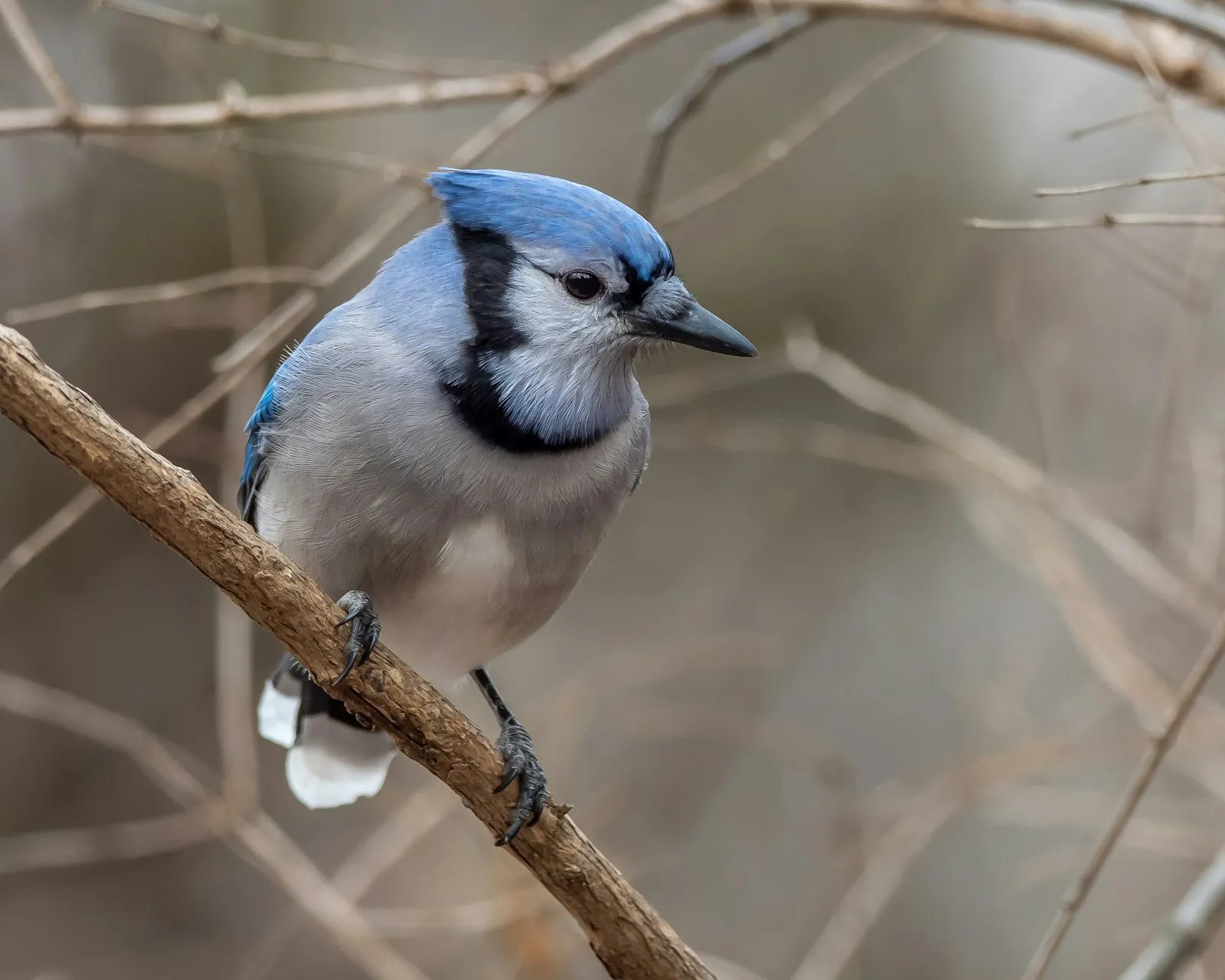
What do blue jays eat? Mostly nuts, acorns, seeds, and fruit, with a side of insects, but the full answer is more interesting than the reputation. Blue jays are not the nest-raiding bullies folklore makes them out to be; they are omnivores that run mostly on plant food and happen to plant oak forests along the way. This guide covers the real blue jay diet, the acorn secret, what to feed them at a feeder, and the egg-raiding myth, all grounded in Cornell Lab and Audubon research.
TL;DR
- Blue jays are omnivores: most of the diet (up to about 75%) is plant matter (acorns, nuts, seeds, grain, fruit), and insects make up about 22% of year-round stomach contents (Audubon; Cornell Lab).
- Acorns are the signature food. Blue jays hoard and bury them, and in doing so help plant oak trees.
- They occasionally take eggs or nestlings, but this is overstated, not a defining behavior.
- At a feeder, the top draws are whole peanuts, black-oil sunflower, and suet, on a platform or tray feeder.
- Baby blue jays eat mostly insects. Blue jays do not reliably migrate, so they use feeders year-round.
What blue jays eat in the wild
Blue jays are omnivores with a strong, all-purpose bill built for hammering open hard food. Cornell Lab’s summary: blue jays “glean insects and take nuts and seeds in trees, shrubs, and on the ground; they also eat grains.” Audubon puts numbers on it: “most of diet is vegetable matter (up to 75% of diet for year, higher percentage in winter).”
Nuts, acorns, and seeds (the bulk of the diet)
The majority of what a blue jay eats is plant matter: acorns, beechnuts, and other nuts, many kinds of seeds, grain, berries, and small fruits, per Audubon. That heavy bill is the key. Blue jays pound hard nuts and acorns open against a branch and crack seeds other backyard birds leave alone, which is why they thrive in oak woods and at peanut feeders alike.
Insects (about a fifth of the year-round diet)
Blue jays are not vegetarians. Cornell Lab reports that stomach contents over the year are about 22 percent insect. Audubon lists caterpillars, beetles, grasshoppers, and spiders among their prey, with the insect share highest in late spring and summer when bugs are abundant and the birds are feeding young. Insects are the smaller part of an otherwise plant-heavy diet, but they matter, especially for the protein-hungry chicks. For a bird at the opposite end of the diet spectrum, see what wrens eat: they run almost entirely on insects and spiders and barely touch seed.
Do blue jays eat other birds’ eggs? The honest answer
This is the question the folklore gets wrong. Cornell Lab notes that blue jays “sometimes raid nests for eggs and nestlings, and sometimes pick up dead or dying adult birds.” The key word is sometimes. Egg and nestling raiding is an occasional behavior, not a staple, and it is far rarer than the blue jay’s bully reputation suggests. With roughly three-quarters of the diet being acorns, nuts, seeds, and fruit, the eggs-and-nestlings share is a small footnote, not the headline. The blue jay’s larger corvid cousin does the same thing on a bigger scale: Cornell calls the crow a frequent nest predator, as we cover in what crows eat.
Blue jays and acorns (how they plant oak forests)
Blue jays do not just eat acorns; they hoard them. Audubon notes that a blue jay “will harvest acorns and store them in holes in the ground,” caching them for winter. A single jay can cache thousands of acorns in a season, and the ones it never comes back for sprout into oak seedlings.
Ecologists credit blue jays with helping oak forests spread, since every buried acorn a jay forgets is a tree it effectively planted. The bird that gets a bad name for raiding nests is, on balance, one of the great tree planters of eastern North America. It is the single most interesting thing about what blue jays eat.
What do blue jays eat in winter?
In winter the plant share of the diet climbs even higher (Audubon notes the vegetable percentage rises in the colder months). With insects gone, blue jays live on acorns and nuts, including the stores they cached in fall, plus seeds and whatever feeders provide. Because blue jays do not reliably migrate, the jays in your yard are often year-round residents, which makes a winter feeder stocked with whole peanuts, black-oil sunflower, and suet genuinely useful to them.
What do baby blue jays eat?
Mostly insects. Like nearly all songbirds, blue jays feed their nestlings a high-protein insect diet (caterpillars, beetles, and other soft-bodied insects) because growing chicks need more protein than nuts and seeds alone provide. As the young fledge, adults introduce them to the nuts, seeds, and other foods of the adult diet. This is the clearest reason to keep your yard pesticide-free: a nesting pair of jays needs a steady insect supply.
The best foods to feed blue jays at a feeder
Blue jays are easy and rewarding feeder birds, as long as you offer foods their big bill is built for and a feeder that fits their size.
Peanuts (the number one blue jay food)
Peanuts are the strongest blue jay draw. Blue jays take both shelled peanut pieces and whole peanuts in the shell, and they will often grab several at once and fly off to cache them. Offer unsalted, unflavored peanuts only. Whole in-shell peanuts on a platform or a dedicated peanut feeder will pull jays in faster than anything else.
Sunflower, suet, cracked corn, and the right feeder
Beyond peanuts, blue jays readily take black-oil sunflower seed, suet, and cracked corn. Audubon notes they “come to feeders for seeds or suet.” The catch is size: blue jays are large and cannot perch on small tube feeders built for finches and chickadees. Give them a platform, tray, or hopper feeder with room to land. For the full setup, our bird feeder for blue jays guide covers the best feeder styles, and our how to attract birds to a bird feeder pillar covers matching feeder and food to the birds you want.
Blue jay feeder-food cheat sheet
| Food | Blue jays eat it? | Notes |
|---|---|---|
| Whole peanuts (in shell) | Yes (top draw) | Unsalted only; jays grab and cache them |
| Shelled peanut pieces | Yes | Unsalted, unflavored; great on a platform |
| Black-oil sunflower | Yes | Jays crack the shells easily |
| Suet | Yes | Especially valued in winter |
| Cracked corn | Yes | Cheap supplement on a tray or ground |
| Acorns and nuts | Yes (wild staple) | Their signature natural food |
| Mealworms / insects | Yes | Natural protein, important for nestlings |
| Nyjer (thistle) | No | Finch food; jays ignore the tiny seeds |
| Bread, salted snacks | No | Empty calories or harmful salt |
What not to feed blue jays
- Salted or flavored peanuts and snacks. Salt is harmful to birds. Plain, unsalted peanuts only.
- Bread and crackers. Empty calories with no real nutrition. Our guide on whether birds can eat bread covers why it should never be a feeder staple.
- Anything moldy. Damp peanuts and seed can grow a mold (aflatoxin) that is dangerous to birds. Keep feeder food dry and fresh.
- Cheap filler mixes. Blue jays leave behind the milo and red millet in bargain mixes. Offer peanuts and sunflower instead and skip the filler.
FAQ
What is a blue jay’s favorite food? At a feeder, the blue jay favorite is peanuts, especially whole peanuts still in the shell, followed by black-oil sunflower seed and suet. In the wild, acorns are the standout: blue jays are famous acorn eaters and hoarders. Their powerful bill is built to hammer open hard nuts and acorns, which most feeder birds cannot crack, so peanuts and acorns are the foods that pull jays in fastest.
Do blue jays eat other birds’ eggs? Occasionally, but far less than their reputation suggests. Cornell Lab notes that blue jays sometimes raid nests for eggs and nestlings and sometimes pick up dead or dying adult birds, but this is an occasional behavior, not a staple. The vast majority of a blue jay’s diet, roughly three-quarters, is plant matter (acorns, nuts, seeds, grain, and fruit), with most of the rest being insects. The egg-raiding reputation is largely overstated.
What do blue jays eat in winter? In winter blue jays lean even more heavily on plant food, especially acorns and other nuts they cached in fall, plus seeds, and whatever feeders offer. Audubon notes the vegetable share of the diet rises in winter. This is when a feeder stocked with whole peanuts, black-oil sunflower, and suet is most valuable, since insects are gone and natural nuts are buried under snow. Blue jays do not reliably migrate, so the jays in your yard are often there year-round.
What do baby blue jays eat? Mostly insects. Like most songbirds, blue jays feed their nestlings a high-protein diet of insects (caterpillars, beetles, grasshoppers, and more) because growing chicks need protein that nuts and seeds cannot supply on their own. The adults gradually introduce other foods as the young fledge. An insect-rich, pesticide-free yard matters as much for nesting jays as any feeder.
Do blue jays eat peanuts? Yes, peanuts are one of the best foods for attracting blue jays. They take both shelled peanut pieces and whole peanuts in the shell, and they will often grab several and fly off to cache them. Offer unsalted, unflavored peanuts only, never salted or seasoned, on a platform or tray feeder or a dedicated peanut feeder. Whole in-shell peanuts are the single strongest blue jay draw.
Is it good to have blue jays in your yard? Yes, on balance. Blue jays eat many insects, their famous habit of caching acorns helps plant oak trees, and their loud alarm calls warn other birds about hawks and cats. They can be bold at feeders and will occasionally raid a nest, but the egg-raiding is overstated and the ecological upside (insect control and oak dispersal) outweighs it. A platform feeder with peanuts keeps them happy and less likely to dominate smaller feeders.
What to do this week
If you want blue jays, put out whole peanuts. Add a platform or tray feeder (jays are too big for small tube feeders), stock it with whole in-shell peanuts and black-oil sunflower, and add a suet cake for winter. Skip the salted snacks and the cheap filler mixes. Keep the food dry so it does not mold. Do that and you will not only draw one of the boldest, most striking birds in North America, you will be feeding a tree planter. For two more common feeder birds and how their diets differ, see our guides on what cardinals eat and what woodpeckers eat.
Sources
- Cornell Lab of Ornithology: All About Birds, Blue Jay Life History (diet, ~22% insect, occasional egg/nestling raiding, ground forager near oaks)
- Audubon: Blue Jay Field Guide (omnivorous, up to 75% vegetable matter, acorns/nuts/seeds/fruit, caches acorns, comes to feeders for seeds and suet)
- Project FeederWatch: Food Types (peanuts as a feeder food for jays, which grab several at a time and fly off to cache them)