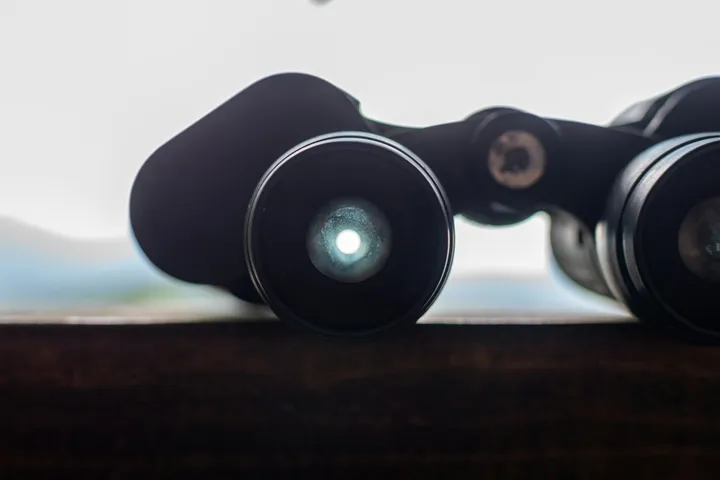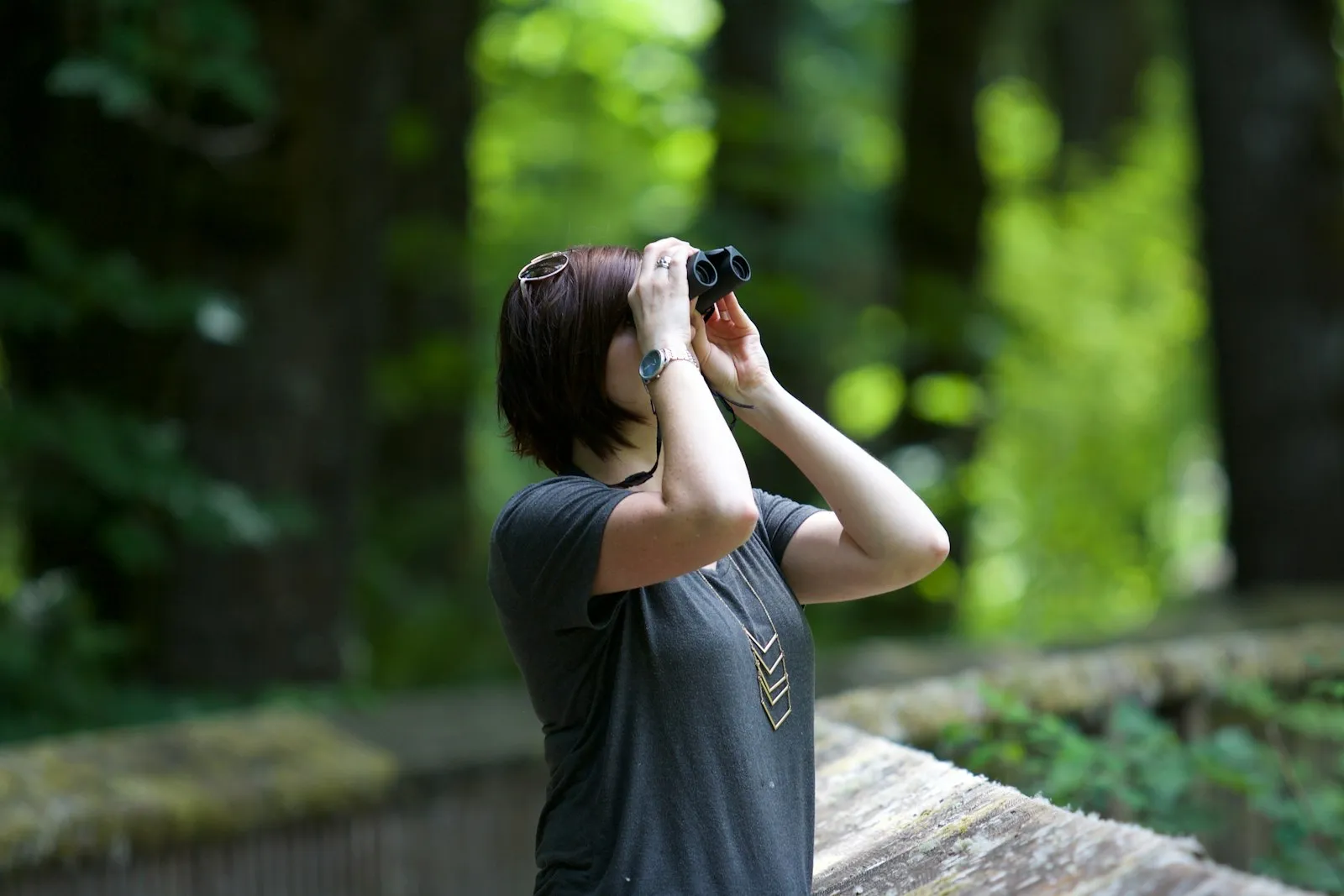
For most birders, 8x42 is the better choice, and 10x42 is the specialist. 8x42 vs 10x42 is the single most common question new binocular buyers ask, and the honest answer is not “get the bigger number.” An 8x42 gives a wider, steadier, brighter-in-low-light view that makes birds easier to find and follow; a 10x42 trades some of that away for extra reach that only matters in certain situations. This guide breaks down what the numbers mean, what the authorities recommend, and which specific binoculars are worth buying in either configuration.
The quick answer
For most birding, choose 8x42. The wider field of view makes it easier to find a bird and follow it, the image is steadier in your hands, and the larger 5.25mm exit pupil is brighter at dawn and dusk. Choose 10x42 if you regularly watch at a distance, such as shorebirds, raptors, waterfowl, and open-country birds, where reach matters more than field of view. If you are unsure, or your hands are less than rock-steady, 8x42 is the safer pick.
This is not just our opinion. Cornell Lab’s guide to choosing binoculars says “many find 8x binoculars are in a sweet spot: good magnification and a steady, wide field of view,” and steers you to 10x only for “long-distance viewing, think shorebirds, raptors, seabirds.” Audubon agrees: “Most birders prefer 7- or 8-power binoculars because they’re bright and have a wide field of view,” and standardized on 8x42 for its own review testing.
What do 8x42 and 10x42 actually mean?
Both numbers describe the optics, and understanding them makes the choice obvious.
Magnification (8x vs 10x)
The first number is magnification. An 8x binocular makes a bird look eight times closer than your naked eye sees it; a 10x makes it look ten times closer. More is not automatically better: higher magnification narrows your view and magnifies every tremor in your hands, so the practical question is whether you need the extra reach enough to accept those costs.
Objective lens and exit pupil (brightness)
The second number, 42, is the diameter of the front (objective) lenses in millimeters. Both 8x42 and 10x42 gather the same amount of light through identical 42mm lenses. The difference shows up in the exit pupil, the width of the light beam leaving the eyepiece, which you get by dividing the objective by the magnification:
- 8x42: 42 / 8 = 5.25mm exit pupil
- 10x42: 42 / 10 = 4.2mm exit pupil
A larger exit pupil delivers a brighter image in dim conditions, which is exactly when birds are most active: dawn, dusk, and in shaded woods. That 5.25mm versus 4.2mm difference is a real, if modest, edge for the 8x42 in low light.
Field of view and image steadiness
Field of view is how wide a scene you see, and it is where 8x pulls clearly ahead. To make it concrete, take one model sold in both configurations. The Vortex Diamondback HD has a 7.5-degree field of view in 8x42 and a narrower 6.3-degree field in 10x42. It also gives more eye relief at 8x (17mm versus 15mm), which matters if you wear glasses. A wider field makes it far easier to locate a warbler flitting through a tree and to keep a bird in view as it moves. The 10x also, as Cornell puts it, “will exaggerate any unsteadiness from shaking or jostling,” so the view wobbles more.
8x42 vs 10x42 at a glance
Using the Vortex Diamondback HD as a like-for-like example (the pattern holds across brands):
| Spec | 8x42 | 10x42 |
|---|---|---|
| Magnification | 8x | 10x |
| Objective lens | 42mm | 42mm |
| Field of view | 7.5 degrees (wider) | 6.3 degrees |
| Exit pupil | 5.25mm (brighter in low light) | 4.2mm |
| Eye relief | 17mm | 15mm |
| Handheld steadiness | Steadier | More shake |
| Best for | Woodland, feeders, general birding | Distance, open country, raptors, shorebirds |
When 8x42 is the better choice (most birders)
Reach for 8x42 if you mostly watch:
- Backyard feeders and gardens, where birds are close and move fast between perches.
- Woodland and forest, where the wider field helps you catch a bird in cluttered branches.
- Warblers, songbirds, and anything quick, which are easier to find and follow at 8x.
- Low light, at dawn and dusk, thanks to the brighter 5.25mm exit pupil.
It is also the friendlier choice if you are new to binoculars, wear glasses (more eye relief), or do not have especially steady hands. This is why both Cornell and Audubon nudge most birders toward 8x, and why it is the most common recommendation for a first pair.
When 10x42 is worth it (distance, open country)
Step up to 10x42 if your birding regularly involves:
- Open country, fields, and prairies, where birds sit farther off.
- Shorebirds and waterfowl on mudflats, lakes, and coastlines.
- Raptors and hawk watches, where you are identifying distant birds in flight.
- Any situation where a few extra feet of apparent reach helps more than a wide view.
The tradeoff is real: you accept a narrower field and a shakier image for that reach. Many experienced birders who watch open habitats keep a 10x precisely for these situations, sometimes braced or on a support to steady the view.
Which should you buy?
- Your first pair, or general backyard and woodland birding: 8x42.
- You wear glasses or have unsteady hands: 8x42 (more eye relief, steadier).
- You mostly watch open water, shorelines, or raptors: 10x42.
- You want one pair for everything and cannot decide: 8x42. It does more things well, and it is the choice you are least likely to regret.
For where and how to actually use them once you have a pair, our guides on attracting cardinals, attracting birds to a bird bath, and attracting birds to a feeder cover the backyard setups that put birds in front of your lenses.
Good binoculars that come in both 8x42 and 10x42
The nice thing about this decision is that most popular birding binoculars are sold in both configurations, so you can pick the model, then pick the magnification. Every option below comes in both 8x42 and 10x42, and prices are approximate because optics prices move.
Budget: Celestron Nature DX or Nikon Prostaff P7
The Celestron Nature DX (around $150) is a long-standing budget birding recommendation with genuinely good glass for the price. The Nikon Prostaff P7 (around $180) is a step up in refinement while still affordable. Either one is plenty for backyard and general birding. As we always say, most beginning birders are better served by a solid $130 to $180 pair than by spending four times as much.
Best all-around: Vortex Diamondback HD
The Vortex Diamondback HD (listed by Vortex at $319.99, often less at retail) is the mid-range all-arounder we point most people to. It is sharp, bright enough, comfortable, and backed by Vortex’s no-questions lifetime warranty, and it is the model whose 8x42 and 10x42 field-of-view numbers we compared above. If you want one binocular that will keep you happy for years without overspending, this is the safe pick in either magnification.
Splurge: Vortex Viper HD
If you want to spend more for noticeably brighter, sharper glass, the Vortex Viper HD (listed at $719.99) is a meaningful step up in optical quality while keeping the same 8x42 or 10x42 choice. It is more binocular than a beginner needs, but a joy if birding becomes a serious hobby. Whether that step up is worth roughly $400 is its own question, and we work through it spec by spec in Vortex Diamondback vs Viper. Above the Viper sit Vortex’s own Razor HD and Razor UHD lines, and above those the premium European brands (Zeiss, Swarovski, Leica), which are wonderful and priced accordingly.
What about hunting, whale watching, and stargazing?
The same 8x-versus-10x logic applies beyond birding, with different emphasis:
- Hunting: dense woods favor 8x42 for the wider, steadier view; open, long-range western hunting favors 10x42 for reach, often on a tripod.
- Whale watching and boats: 8x42 wins. A rocking boat makes image steadiness critical, and the wider field helps you find a surfacing whale, so the lower magnification is an advantage, not a compromise.
- Stargazing: either works for the moon and bright clusters, with 10x giving slightly more detail, but 42mm is small for astronomy. For serious night-sky use, larger objectives (10x50, 15x70) gather far more light.
FAQ
These answers are also marked up as FAQ structured data on the page.
Is 8x42 or 10x42 better for bird watching? For most birders, 8x42: wider field of view, steadier image, and brighter in low light. Choose 10x42 for distance work like shorebirds and raptors.
Is 10x42 too much magnification for birding? Not too much, but the narrower field and more visible hand shake make it harder to use for general and woodland birding. It shines at distance.
What does 8x42 mean on binoculars? 8x magnification with 42mm objective lenses. Dividing 42 by 8 gives the 5.25mm exit pupil; 10x42 gives 4.2mm.
Which is better for hunting, 8x42 or 10x42? 8x42 for dense woods and steadiness; 10x42 for open, long-range country, often on a tripod.
Are 10x42 binoculars good for stargazing? Usable for the moon and bright objects, but 42mm is small for astronomy; 50mm or larger objectives are better for the night sky.
What are the best 8x42 binoculars for birding? The Celestron Nature DX, Nikon Prostaff P7, Vortex Diamondback HD, and Vortex Viper HD are all strong, and all come in 10x42 too. Most birders do not need to spend more than about $250.
Sources
- Cornell Lab of Ornithology, All About Birds: How To Choose Binoculars (8x as the birding sweet spot; 10x for long-distance; field of view and steadiness)
- Audubon: The Audubon Guide to Binoculars (most birders prefer 7- to 8-power; reviews standardized on 8x42)
- Vortex Optics: Diamondback HD 8x42 and 10x42 (verified field-of-view and eye-relief specs used in the comparison)