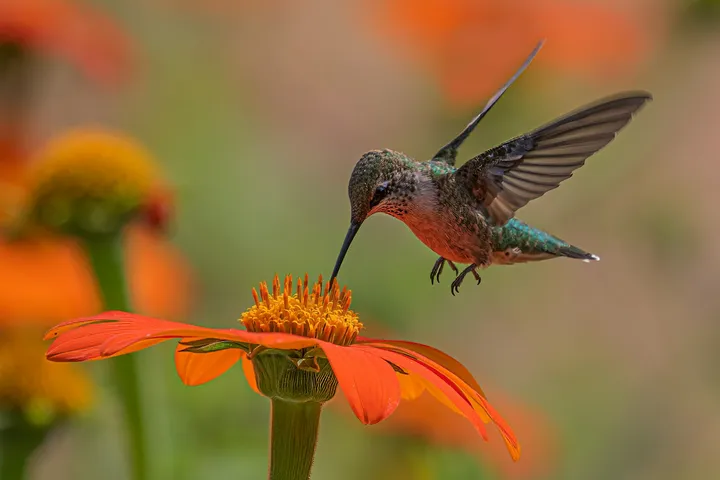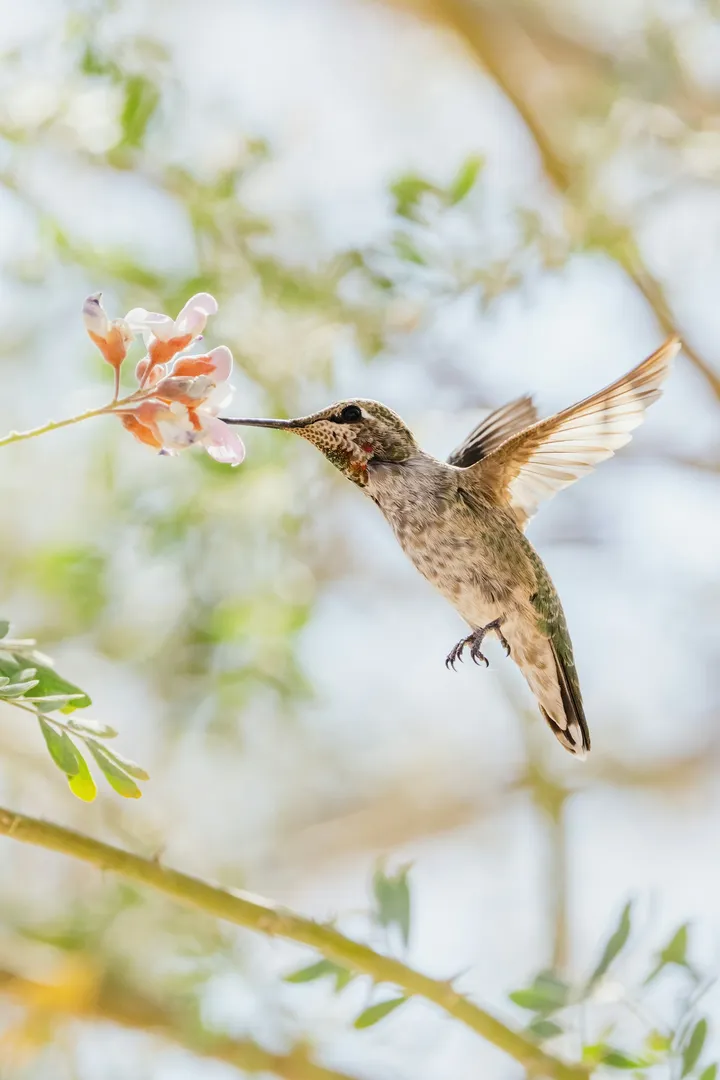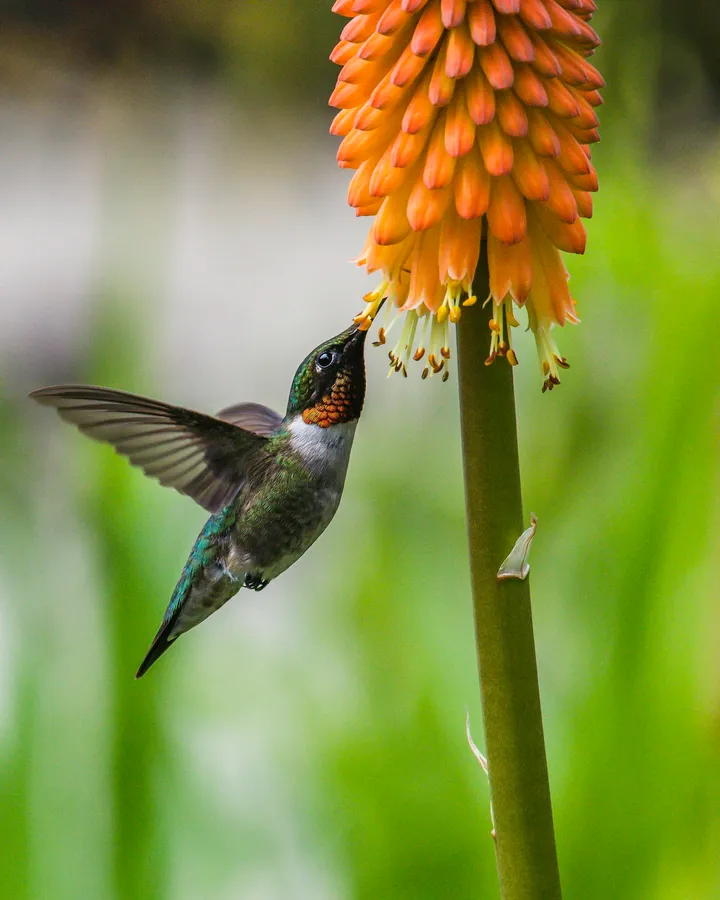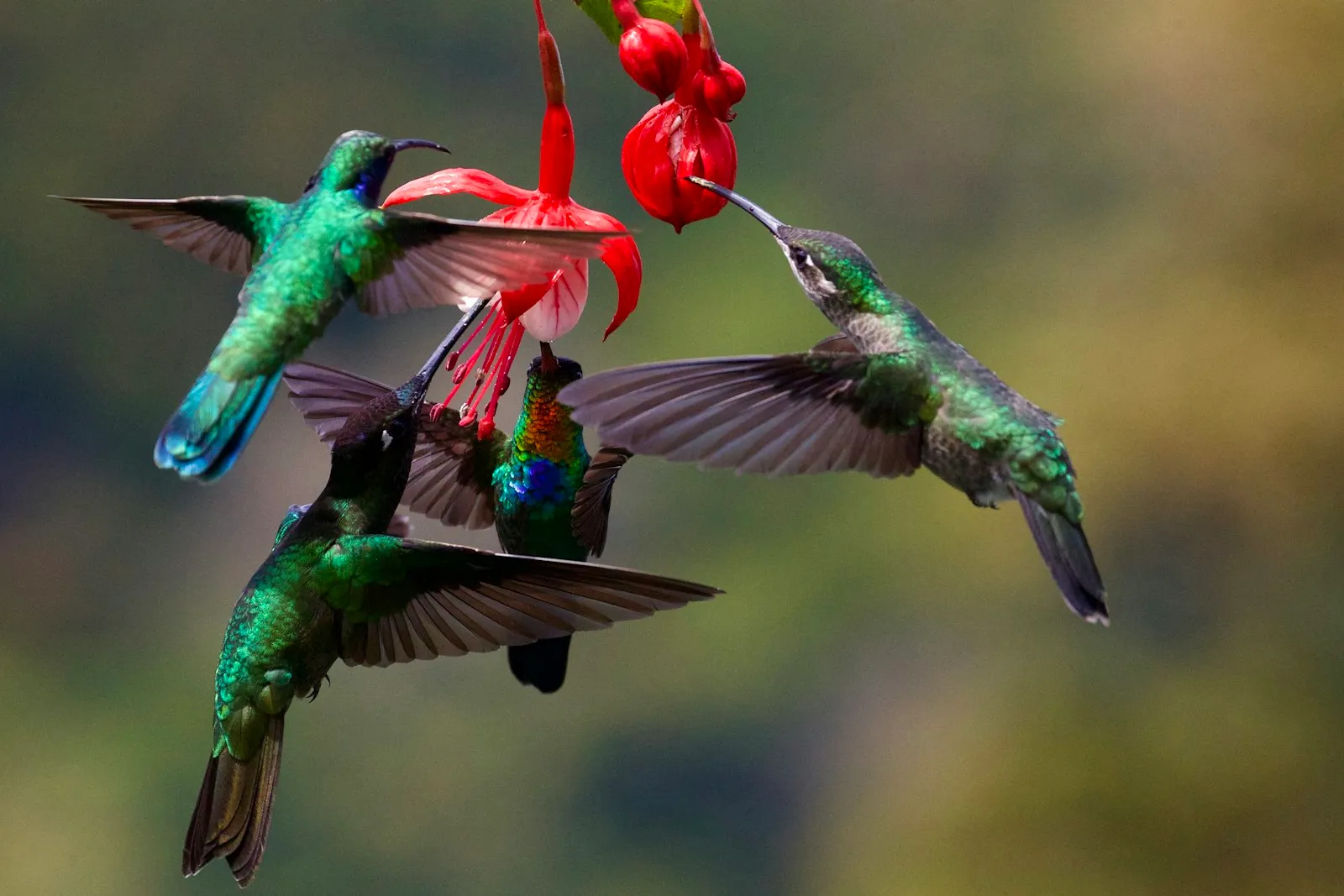
You bought a hummingbird feeder, filled it with sugar water, hung it from a hook on the back porch, and now you are checking it every fifteen minutes wondering what you did wrong. Probably nothing. Most new hummingbird feeders take 2 to 3 weeks to be discovered, and the patience window is the part most “how to attract hummingbirds” articles skip. Here is how to attract hummingbirds to a hummingbird feeder, how long it actually takes, and what to do in each of those first three weeks so you are not just staring at a feeder no one is visiting yet.
Quick answer
To attract hummingbirds to a hummingbird feeder, hang a red-bodied feeder filled with fresh 4:1 sugar water (1 part plain white sugar to 4 parts water, no red dye) in a partly shaded spot within 12 to 15 feet of cover. Plant 1 to 2 red tubular flowers (salvia, bee balm, trumpet vine, cardinal flower) within sight of the feeder. Expect 2 to 3 weeks for the first hummingbird to find a brand new feeder if you have hummingbirds in your region. Keep the nectar fresh during the wait; a moldy feeder is more repellent than no feeder at all.
How long it takes a hummingbird to find a new feeder
Two to three weeks is the typical discovery window for a brand new feeder in a yard where hummingbirds are already present in the area, per Project FeederWatch citizen-science observations. Some readers see a visitor in 3 days; others wait a full month. Two factors swing the timing:
- Season. During peak spring migration (late February in the Gulf Coast, late April in New England, see our state-by-state hummingbird feeder timing guide for your region), more hummingbirds are actively scouting for nectar sources, and a new feeder gets discovered faster. Outside migration, you are relying on the few resident birds to wander into your yard.
- Local hummingbird density. A yard within a half-mile of mature trees, native flowers, or existing feeders has a higher background rate of hummingbird traffic than a new-construction subdivision with little native vegetation. The first hummingbird that finds your feeder also draws others.
The honest version: if you are 2 weeks in and have not seen anything, the feeder is probably not the problem. Confirm hummingbirds are actually in your region right now (the state guide above is the fastest check), then keep the nectar fresh and wait another week before changing anything.
Do not move the feeder during the wait. This is the single most common mistake. Hummingbirds use spatial memory; once a bird notices the feeder from a flight path, it remembers the location. Move the feeder and you reset that memory back to zero.
The three things hummingbirds use to find a feeder
Every recommendation in this article reduces to one of three signals. Get all three right and discovery accelerates from weeks to days.
Red color (the feeder body itself, not the nectar)
Hummingbirds have tetrachromatic vision and a strong cone-cell response to red. They evolved on a diet of red, orange, and pink tubular flowers (Cornell Lab’s Ruby-throated Hummingbird species page covers the cone biology in detail). A red feeder body is visible to a hummingbird at distances that yellow, clear, or pastel feeders are not. If your current feeder is not red, replace it (the cornerstone best hummingbird feeder guide tiers them) or wrap a strip of red ribbon around the body. Both work; the feeder body is the higher-leverage fix.
Do not add red dye to the nectar. This is the single most common contradicting piece of advice in feeder marketing. The red of the feeder is enough. Red dye in the nectar is unnecessary and the long-term safety has not been well studied; major bird authorities (Cornell Lab, Audubon, Smithsonian National Zoo) all recommend against it. See our hummingbird nectar recipe for the full reasoning.
Fresh nectar
A clean, fresh feeder is more attractive than a dirty one. Hummingbirds reject fermenting nectar (they can detect the alcohol byproducts), and a fermenting feeder smells worse from further away than fresh nectar. Hold to this cleaning schedule:
- Above 80°F: empty, scrub, refill every 2 days
- 70°F to 80°F: every 3 days
- Below 70°F: every 5 to 7 days
Use hot water and a bottle brush. No soap (residue is toxic to hummingbirds). The full method is in the 4:1 nectar recipe article. If you wait the 2 to 3 weeks without cleaning, the feeder is actively repelling birds; clean it and the timer effectively resets to zero.
Location
A partly shaded spot, 12 to 15 feet from a shrub or small tree, visible from the air above. Three notes:
- Partial shade. Full sun accelerates nectar fermentation. Full shade makes the red feeder harder to see at distance. Morning sun + afternoon shade is the optimal microclimate.
- Near cover. Hummingbirds spend roughly 80% of their day perched, watching for territorial rivals and predators. A feeder with no nearby perch or shrub is one a hummingbird will visit once and not return to.
- Visible from above. Hummingbirds approach feeders by surveying from height. Under a deep overhang or a closed pergola, the feeder is harder to spot. A feeder on a shepherd’s hook in an open area is easier to find than the same feeder on a porch.
A 7-day starter plan
Most “10 ways to attract hummingbirds” articles overwhelm you with twenty changes to make at once. Here is what to actually do in the first week.
Day 1: Hang the feeder
Mix 1 cup plain white sugar in 4 cups water. Stir until dissolved. Fill the feeder. Hang in a partly shaded spot within 12 to 15 feet of a shrub. That is the entire day 1 action; resist the urge to overoptimize.
Days 2 to 7: Watch and wait, refresh on schedule
Check the feeder twice a day (morning and evening). If you spot a visitor, note the time; hummingbirds keep regular feeding circuits and tend to return at the same time the next day. Refresh the nectar on day 3 (or day 2 if temperatures are above 80°F). Do not move the feeder. Do not add red dye. Do not add additional feeders yet.
Week 2: Add 1 to 2 red flowering plants
If you have not seen a hummingbird by day 7, the most useful single thing you can add is a red tubular flower in view of the feeder. A 4-inch pot of red salvia from a garden center costs $5 to $8 and goes within 6 feet of the feeder. Bee balm, cardinal flower, trumpet vine, coral honeysuckle, and columbine all work; salvia is the easiest and blooms continuously through summer. If you already have these in the yard, this step is done.
Week 3: Evaluate and adjust
If a hummingbird has visited by week 3, move to the “how to attract more” section below. If not, two checks:
- Is your region in hummingbird season right now? If you are in Vermont in mid-March, you are simply early; check the state-by-state guide for your zone.
- Is the feeder visible from above and from at least 50 feet? Stand at the edge of your property and look back at the feeder. If you cannot see it clearly, neither can a hummingbird at altitude.
Beyond week 3 without visitors and with both checks passing, the issue is local hummingbird density. Keep the feeder fresh; the next migration wave (early fall in most regions) will bring scouts.
Once you have your first hummingbird, how to attract more
The first hummingbird is the discovery problem. More hummingbirds is a different problem: hummingbirds are intensely territorial, and a single dominant male will chase every other bird off a single feeder. Visible visitor count caps at 1 or 2 unless you change the setup.
Add a second (or third) feeder, spaced apart
The trick is out of sight-line. A second feeder 10 to 15 feet from the first, with a tree, shrub, or corner of the house breaking line-of-sight, lets a second hummingbird feed without the dominant bird seeing it. Three feeders in a triangle around the yard, each blocked from the others, is the maximum-density setup in a small yard.
Plant red, tubular flowers (and let them spread)
A single salvia plant accelerates feeder discovery. A bed of native red tubular flowers (bee balm, cardinal flower, salvia, trumpet vine, columbine, coral honeysuckle) sustains a year-over-year hummingbird population. Audubon’s native plants tool lets you filter by your ZIP code for region-specific recommendations. The plant bed gives the hummingbirds nectar when the feeder is empty, water sources to forage at, and protein from the small insects the flowers attract.
Add a mister or a shallow water feature
Hummingbirds bathe in flight by passing through fine spray, and a garden mister mounted near (not directly over) the feeder is one of the most powerful add-ons for keeping hummingbirds in your yard once they have found the feeder. A standard birdbath is too deep; aim for water depth of 0.25 inches at the edge, with stones or twigs for landing. A leaky garden hose nozzle on a low setting works. A dedicated mister is $15 to $30 and runs off a standard outdoor faucet.
Leave small insects alone (no pesticides)
Hummingbirds eat insects for protein. Nectar is the energy source; gnats, fruit flies, aphids, and small spiders provide the protein, calcium, and amino acids that nectar lacks. A pesticide-treated yard reduces the insect supply, reduces the hummingbird supply, and risks direct toxicity through contaminated water. Audubon and Cornell Lab both flag this as the most-overlooked factor in declining yard hummingbird counts.
Provide perches within sight of the feeder
Hummingbirds spend most of their day perched, scanning for rivals and predators. A small bare branch (a 1/4-inch twig works), a wire run between two posts, or a small dead tree limb left in place within 6 to 10 feet of the feeder gives the territorial male a vantage point and signals to other hummingbirds that the feeder is “owned” but accessible. Counterintuitive but consistent: perches near a feeder increase total hummingbird visits.
Best feeder for fast hummingbird attraction
If you are still shopping, a saucer-style feeder with a red basin is the fastest-to-discover design. The red is large and bright, the saucer geometry keeps bees out (which keeps the feeder from getting swarmed and abandoned by the hummingbird), and most saucer designs include an integrated ant moat. The full breakdown by use case and budget is in our best hummingbird feeder guide. For the specific saucer + ant moat combo that solves the most common feeder problems at once, the keep ants and bees out article names the two best options.
What to skip
Common advice that wastes time or actively repels hummingbirds.
- Red dye in the nectar. Unnecessary and possibly harmful. The red of the feeder is enough.
- Sugar substitutes (honey, brown sugar, raw sugar, organic sugar, agave, stevia, artificial sweeteners). Honey ferments and grows a fungus that causes fatal tongue infections. Brown and raw sugars contain iron, which is toxic to hummingbirds in volume. Stick to plain white granulated sugar.
- Soap when cleaning. Residue is toxic. Hot water and a bottle brush. Vinegar rinse is optional.
- Wind chimes immediately next to the feeder. Some hummingbirds avoid loud or unpredictable sound. Move chimes at least 10 feet away.
- Pesticide-treated flower beds. Kills the insects hummingbirds eat for protein. Treated water can also poison the bird directly.
- Moving the feeder daily before any visitor has found it. Each move resets the discovery timer. Choose a location on day 1 and commit to it for at least 3 weeks.
- Giving up after 1 week. The typical discovery window is 2 to 3 weeks. Week 1 is normal.
- A feeder under a closed overhang or deep porch ceiling. Hummingbirds find feeders by surveying from above; obstructed sky-views slow discovery dramatically.
FAQ
How do you get hummingbirds to come to a feeder?
Three things: a red-bodied feeder, fresh 4:1 sugar water with no red dye, and a partly shaded location within 12 to 15 feet of cover. Hummingbirds locate feeders by red color and by surveying for nectar-producing flowers nearby, so adding 1 to 2 red tubular plants like salvia or bee balm in view of the feeder accelerates discovery. Expect 2 to 3 weeks for the first hummingbird at a new feeder if you have hummingbirds in your region.
Why aren’t hummingbirds coming to my feeder?
Three most common reasons: the feeder is new and the local hummingbirds have not found it yet (2 to 3 weeks is typical), the nectar is fermented or moldy (refresh and clean), or there are no hummingbirds in your region yet (check your state in our state-by-state arrival guide). Less common: the feeder is in a windy or fully shaded spot, the feeder body is not red, or pesticides nearby have reduced the local insect population that hummingbirds depend on for protein.
How long does it take to attract hummingbirds to a new feeder?
Typically 2 to 3 weeks for the first hummingbird to find a new feeder in an area where hummingbirds are present, per Project FeederWatch citizen-science data. Some yards see a visitor within days (especially during peak migration when more birds are scouting), others take a full month. Do not move the feeder during the wait; relocating resets the timer because hummingbirds rely on spatial memory of food locations.
What is a hummingbird’s biggest enemy?
Free-roaming domestic cats and window collisions, by a wide margin. We cover the numbers in our state-by-state hummingbird feeder timing guide. Ants and bees at the feeder are nuisances, not threats; the welfare issues are covered in our keep-ants-and-bees-out article. Keeping your cat indoors and treating large windows with decals does more for hummingbirds than any feeder upgrade.
Should I stop feeding hummingbirds in September?
No. Leave feeders up until 2 weeks after your last hummingbird sighting in fall. Migration is triggered by day length, not food availability, so a feeder does not prevent migration. Late juveniles and stragglers depend on feeders that are still up in September and October. The state-by-state guide has the take-down windows by region.
Why are hummingbirds hovering in front of me but not the feeder?
Usually curiosity. Hummingbirds inspect anything red in their territory, including red clothing, hats, lipstick, and earrings. The bird is checking whether you are a nectar source. Occasionally it is a territorial display if you are too close to a contested feeder. Stand still; the bird will move on within 10 to 20 seconds and is not threatening you.
What you can do today
If you do not have a feeder yet: hang one this afternoon, fill it with the 4:1 nectar recipe, and start the 7-day plan above. If you have a feeder and have been waiting: confirm you are inside the discovery window (most likely), confirm your region is in hummingbird season (state guide), refresh the nectar, and stop checking it fifteen times a day. The hummingbirds will find it. For the spring and fall timing behind that season, our hummingbird migration guide maps when each region’s birds arrive and leave.
Sources
- Cornell Lab of Ornithology, All About Birds: Ruby-throated Hummingbird, Anna’s Hummingbird
- Audubon: How to Create a Hummingbird-Friendly Yard
- Audubon Native Plants Database (regional plant recommendations by ZIP code)
- Project FeederWatch (Cornell Lab) (citizen-science backyard observations on feeder discovery times and hummingbird visitation patterns)