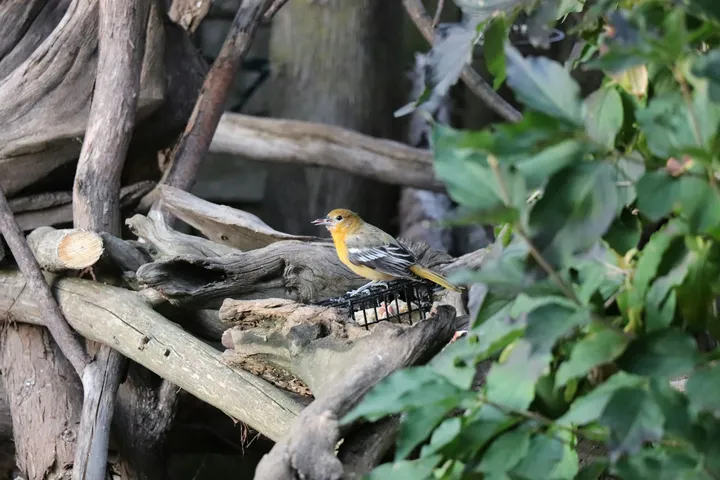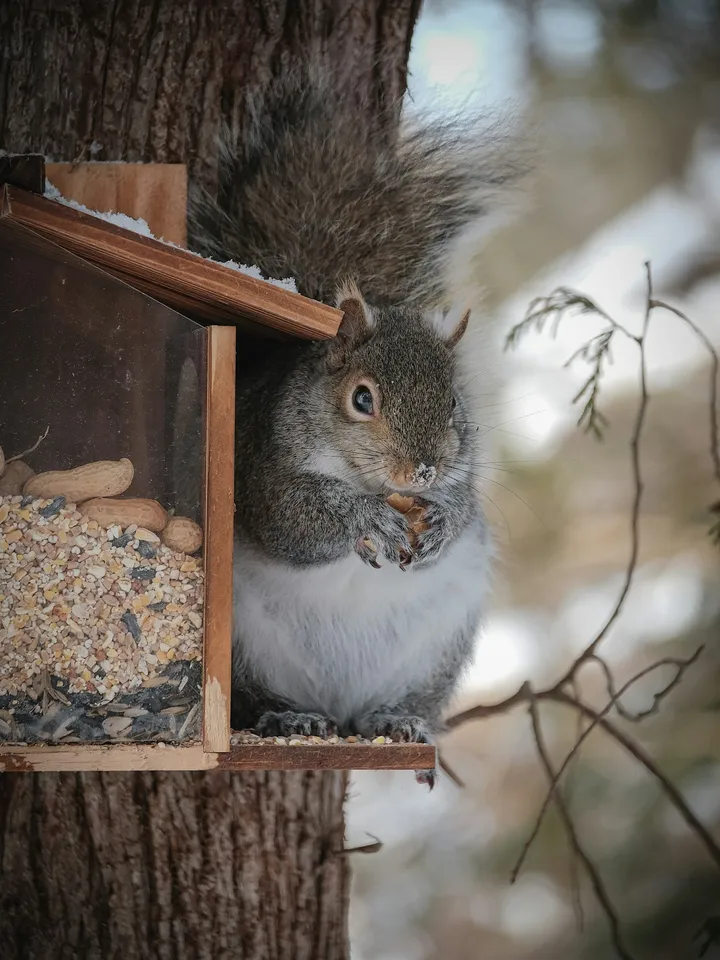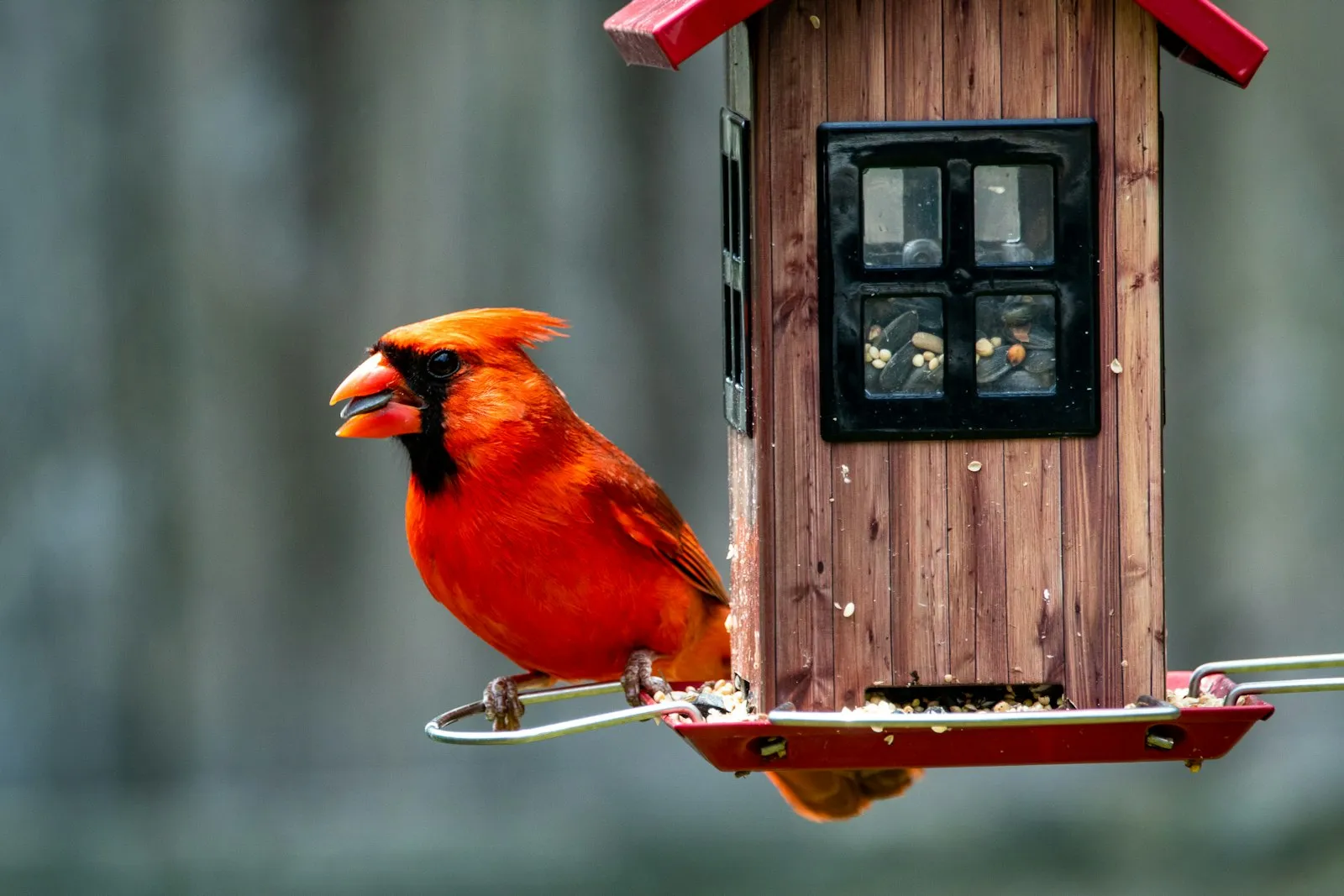
The best bird seed for most US backyards is plain black-oil sunflower seed. Not a blend, not a “premium” bag with a cardinal on the front: one ingredient, about $1.70 a pound in a 25-pound bag. Cornell Lab calls sunflower the seed that attracts the widest variety of birds. The rest of this guide covers when a mix makes sense, how to spot the filler seeds that end up on the ground, and specific bags by goal, each checked against the ingredient list on the manufacturer’s own page. We did not field-test these; we read the labels against Cornell Lab’s and Project FeederWatch’s seed guidance, which is the part most buyers skip.
TL;DR
- Best overall: straight black-oil sunflower. Any brand works because there is only one ingredient.
- Read the ingredient list, not the front of the bag. Skip mixes with red millet, golden millet, oats, flax, wheat, or a lot of canary seed. Price does not predict filler: one premium mix we checked contains Cornell-flagged fillers, while a cheaper mix from the same company has none.
- Match seed to goal: safflower for cardinals and squirrel trouble, nyjer for goldfinches, white millet on the ground for juncos and doves, sunflower kernels if shells under the feeder are a problem.
- Milo is regional. Western ground birds eat it; eastern birds mostly kick it out.
- Keep seed dry. Corn and peanuts are the seeds most likely to carry aflatoxins, which are toxic to birds even at low levels.
The best bird seed for most yards: black-oil sunflower
Black-oil sunflower wins on every measure that matters. Cornell Lab’s quick guide to seed types explains why: the shells are thin enough for virtually all seed-eating birds to crack, and the kernels are high in fat, which makes them especially valuable to winter birds. Project FeederWatch’s food types guide calls it the most common feeder seed in North America and lists cardinals, chickadees, finches, and sparrows among its biggest fans.
The research agrees. Audubon’s summary of the two biggest seed-preference studies covers a U.S. Fish and Wildlife Service study by Aelred Geis from the late 1970s, which tested 23 ingredients, and David Horn’s Project Wildbird, which tracked 1.2 million feeder visits over three years across North America. The conclusion across both: birds have always loved black-oil sunflower, and barely anyone likes milo.
So start here. A tube or hopper feeder full of black-oil sunflower will bring in more species than any mix, and every seed you add after that should earn its place by reaching a bird sunflower doesn’t.
How to read a bird seed label (the filler test)
The front of a bag tells you which bird is in the photo. The ingredient list tells you what you are buying. Cornell Lab names the seeds to watch for:
- Red millet, golden millet, oats, and flax: common fillers that “most birds shun,” per Cornell. Birds sort through the mix, throw these on the ground, and the waste breeds bacteria and fungus that contaminate fresh seed.
- Canary seed and rapeseed (often sold as canola): they don’t offer much over sunflower. Canary seed is a favorite of House Sparrows and cowbirds, and the other birds that eat it are just as happy with sunflower.
- Wheat and dyed seed: Audubon’s top winter foods list flags wheat and dyed seed meant for pet birds as signs of a bad mix.
- Milo (sorghum): the small, round, reddish grain. Fine in the West, mostly wasted in the East (more on that below). Cornell’s tip: if a mix has a lot of small red seeds, make sure they are milo, not red millet.
What a good mix looks like, per that Audubon list: a large amount of sunflower, plus cracked corn, white proso millet, and perhaps peanut hearts.
Here is the part that surprised us. Price and “premium” branding don’t predict filler. From Lyric’s own product pages, checked in October 2026:
- Lyric Wild Bird Mix (the economy bag, $24.99 for 20 pounds) lists cracked corn, white proso millet, black-oil sunflower, striped sunflower, shelled peanuts, and safflower. None of Cornell’s named fillers.
- Lyric Supreme Wild Bird Mix ($10.99 for 4.5 pounds, almost twice the price per pound) lists 12 ingredients, including small golden millet and canary seed.
- Lyric Finch Small Songbird Mix leads its ingredient list with canary seed and canola seed, then nyjer, small golden millet, and sunflower kernels.
None of those are bad bags. Birds will eat from all of them. But on two of the three, part of what you pay for is seed Cornell says most birds leave on the ground. The label is the only way to know.
Our picks: best bird seed by goal
Prices are as listed on each manufacturer’s site in October 2026 and change often. Big-box store brands of the same single seeds are often cheaper; the ingredient list is what matters.
Best overall: plain black-oil sunflower
Lyric Black Oil Sunflower ($41.99 for 25 pounds, about $1.68 a pound) or Wagner’s Oil Sunflower Seed (2 and 5 pound bags). Both are one ingredient. Buy whichever is fresh and cheapest near you.
Who it’s for: everyone, and especially anyone starting with one feeder. It works in tube, hopper, and tray feeders.
The catch: squirrels love it too. Pair it with a baffle or one of the squirrel-proof feeders we compared.
Best budget mix: Lyric Wild Bird Mix
Lyric Wild Bird Mix ($24.99 for 20 pounds, about $1.25 a pound) is the cheapest seed on this list and passes the filler test. Lyric says it is over 20 percent sunflower, with cracked corn and white millet listed first.
Who it’s for: yards with a lot of ground-feeding birds (doves, juncos, towhees, native sparrows), fed on a low tray or scattered in small amounts. Our mourning dove diet guide covers why doves favor this kind of mix.
The catch: Cornell notes that white millet and corn are also favorites of House Sparrows, cowbirds, and other blackbirds. If those birds take over, switch to straight sunflower. Corn also needs to stay bone dry (see storage below).
Best for cardinals: Kaytee Cardinal Blend
Kaytee Cardinal Blend (7 or 15 pound bags) lists three ingredients: black-oil sunflower, safflower, and soybean oil. Cornell calls safflower a cardinal favorite, and the safflower helps when squirrels or sparrows are a problem.
Who it’s for: anyone feeding cardinals, grosbeaks, and chickadees from a hopper or tray. Cornell notes that cardinals and grosbeaks tend to prefer those feeder types. For the full picture, see what cardinals eat.
The catch: none on the label. Buying straight sunflower and straight safflower and mixing them yourself gets you the same two seeds.
Best no-mess: sunflower kernels
Lyric Sunflower Kernels ($21.99 for 5 pounds, about $4.40 a pound) is one ingredient: shelled sunflower. No shells under the deck, no sprouted sunflowers in the flower bed. For more variety, Lyric Delite No-Waste Mix ($15.99 for 5 pounds) is shelled peanuts, sunflower kernels, pecans, pistachios, and shelled pumpkin seed.
Who it’s for: feeders over patios, decks, and apartment balconies. Many birds prefer the work-free kernel, per FeederWatch.
The catch: without a shell, the seed spoils quickly and can harbor dangerous bacteria. Cornell says to offer no more than birds eat in a day or two, and not to use kernels in tube feeders where moisture collects. Peanuts in the no-waste mix need the same dry handling as corn.
Best for finches: straight nyjer
Lyric Nyjer Seed ($23.99 for 10 pounds, about $2.40 a pound) is one ingredient. Cornell lists American and Lesser Goldfinches, Indigo Buntings, Pine Siskins, and Common Redpolls as nyjer eaters, and the seed is heat-sterilized on import so it won’t sprout.
Who it’s for: goldfinch fans. FeederWatch says to feed nyjer by itself, not in a mix, in a feeder with tiny ports or a mesh sock.
The catch: straight nyjer beats a “finch mix” for most yards. The finch mix we checked leads with canary seed and canola, the seeds Cornell says add little.
Best when squirrels or sparrows are the problem: safflower
Lyric Golden Safflower ($11.99 for 5 pounds, about $2.40 a pound). Safflower has a thick shell, and according to some sources Cornell cites, House Sparrows, starlings, and squirrels don’t like it. Cardinals, some grosbeaks, chickadees, doves, and native sparrows eat it.
Who it’s for: yards where squirrels or House Sparrows clean out the sunflower.
The catch: Cornell adds that in some areas those pests have developed a taste for it, and FeederWatch notes most birds prefer sunflower. If House Sparrows are the main problem, Cornell’s first suggestion is cheaper: switch to striped sunflower, whose thicker shell sparrows and blackbirds struggle to open. For squirrels, placement beats seed; our squirrel guide covers the 5-7-9 rule.
Best bird seed picks compared
| Pick | What’s in it | Size and price (Oct 2026) | Per pound | Best for |
|---|---|---|---|---|
| Lyric Black Oil Sunflower | Black-oil sunflower | 25 lb, $41.99 | ~$1.68 | Nearly every seed-eater |
| Wagner’s Oil Sunflower Seed | Black-oil sunflower | 2 or 5 lb | n/a | Small bags, same seed |
| Lyric Wild Bird Mix | Corn, white millet, black-oil and striped sunflower, peanuts, safflower | 20 lb, $24.99 | ~$1.25 | Ground feeders on a budget |
| Kaytee Cardinal Blend | Black-oil sunflower, safflower, soybean oil | 7 or 15 lb | n/a | Cardinals, grosbeaks |
| Lyric Sunflower Kernels | Shelled sunflower | 5 lb, $21.99 | ~$4.40 | No mess under the feeder |
| Lyric Nyjer Seed | Nyjer | 10 lb, $23.99 | ~$2.40 | Goldfinches, siskins |
| Lyric Golden Safflower | Safflower | 5 lb, $11.99 | ~$2.40 | Squirrel and sparrow trouble |
Bird seed types compared (cheat sheet)
| Seed | Who eats it | Watch out for |
|---|---|---|
| Black-oil sunflower | Almost every seed-eating bird | Squirrels |
| Striped sunflower | Cardinals, jays, big-billed birds | Harder for small birds to open |
| Sunflower kernels | Same as black-oil | Spoils fast; 1-2 days’ worth at a time |
| Safflower | Cardinals, grosbeaks, chickadees, doves | Most birds still prefer sunflower |
| Nyjer | Goldfinches, siskins, redpolls, buntings | Needs a nyjer feeder; feed alone |
| White proso millet | Juncos, doves, towhees, native sparrows | Also feeds House Sparrows and cowbirds |
| Cracked corn | Doves, jays, quail, turkeys | Aflatoxin risk; never let it get wet |
| Peanuts | Jays, woodpeckers, chickadees, titmice | Aflatoxin risk; unsalted only |
| Milo | Western ground birds | Mostly wasted in the East |
| Red or golden millet, oats, flax | Few birds | Filler; skip |
Sources: Cornell Lab seed guide and Project FeederWatch food types.
Regional differences: milo, millet, and your yard
The “skip milo” rule is an eastern rule. Cornell Lab’s seed-preference tests found that Steller’s Jays, Curve-billed Thrashers, and Gambel’s Quail preferred milo to sunflower, and FeederWatch notes that western birds eat milo more readily than eastern birds. If you live in the West or Southwest, a mix with milo scattered on the ground is a reasonable choice. Kaytee’s Birders’ Paradise and Lyric’s Song ‘n Beauty economy food both list milo, which makes them better fits for western yards than eastern ones.
White millet is a regional call too, though the deciding factor is which birds you get rather than where you live. In a yard full of juncos, towhees, and native sparrows, a handful on the ground each morning is ideal. Where House Sparrows and cowbirds dominate, Cornell says it is wiser to skip millet, since virtually every bird that likes it also eats black-oil sunflower.
Store bird seed so it stays safe
Bad storage turns good seed into a hazard. Cornell Lab warns that corn is the bird food most likely to carry aflatoxins, which are extremely toxic even at low levels, and that peanuts share the risk. Its rules for corn: never buy it in plastic bags, never let it get wet, offer only what birds eat in a day during rainy or humid weather, and rake up old corn.
For every seed:
- Store it sealed, cool, and dry. Kaytee’s storage instructions recommend a sealed container in a cool, dry place to prevent insect infestation. A metal trash can with a tight lid also keeps mice out.
- Throw out anything moldy, clumped, or musty. Don’t sift it; replace it.
- Rake under the feeder. Cornell notes that waste seed on the ground breeds bacteria and fungus.
- Clean feeders every 2 weeks. Our winter feeding guide covers the bleach-soak method Project FeederWatch recommends.
What to skip
- Mixes with red millet, golden millet, oats, flax, or wheat near the top of the list. You pay for seed that ends up on the ground.
- Dyed seed meant for pet birds (Audubon). Wild birds don’t need the color.
- Red-dyed corn. Cornell says it is treated planting seed, highly toxic to people, livestock, and birds.
- Buttered or microwave popcorn. Cornell lists it as a never; popped corn spoils quickly.
- Bread and kitchen scraps. See can birds eat bread for why.
- Buying by the bird on the bag. A cardinal photo doesn’t mean cardinal food. Read the ingredients.
- A 40-pound bag of anything before you know who visits. Start with straight sunflower, watch for two weeks, then add seeds for the birds you actually get. Our guide to attracting birds to a feeder covers that first month.
FAQ
These answers are also marked up as FAQ structured data on the page.
What is the best quality bird food? Plain black-oil sunflower for most yards: the widest variety of birds, a thin shell, high fat. Quality also means no fillers, fresh and dry seed, and a clean feeder.
What bird seeds should I avoid? Red millet, golden millet, oats, flax, and wheat; most canary seed and rapeseed; milo in the East; dyed seed; and red-dyed corn, which is toxic treated seed.
Is bird seed actually good for birds? Good seed is a healthy, high-energy supplement, and birds don’t depend on it. The harm comes from moldy or wet seed and dirty feeders.
Is no-mess bird seed worth it? Yes over decks and patios. It costs about 2.6 times as much per pound as in-shell sunflower on Lyric’s list and spoils faster, so put out a day or two’s worth at a time.
What is the difference between black-oil and striped sunflower seed? Black-oil has a thinner shell almost any bird can crack. Striped has a thicker shell that House Sparrows and blackbirds struggle with, which makes it Cornell’s first fix for sparrow trouble.
What is the best bird seed for winter? Black-oil sunflower, plus suet and unsalted peanuts. Our winter feeding guide has the full cold-weather setup.
What to do this week
Buy one bag of straight black-oil sunflower, whatever brand is freshest near you, and a sealed container to keep it in. Fill one tube or hopper feeder and watch for two weeks. If you see cardinals, add safflower; goldfinches, add a nyjer feeder; juncos and doves on the ground, scatter a little white millet in the morning. Before you buy any mix, turn the bag over and read the ingredients. If red millet, oats, or flax show up, put it back.
Sources
- Cornell Lab of Ornithology, All About Birds: Feeding Birds: A Quick Guide to Seed Types (sunflower, fillers, safflower, nyjer, millet, corn and peanut aflatoxins, milo preference tests)
- Project FeederWatch: Food Types (black-oil sunflower prevalence, hulled sunflower, nyjer, safflower, milo in the West)
- Audubon: Who Likes What: The Favorite Birdseed of Feeder Regulars and Rarities (Geis and Horn preference studies) and Top 10 Foods for Winter Bird Feeding (good vs bad mixed seed)
- Manufacturer product pages for ingredient lists and prices (checked October 2026): Lyric, Wagner’s, Kaytee (linked above)