Where you hang an oriole feeder decides whether orioles ever find it. Orioles are canopy birds: they move through the tops of trees scanning for food from 30 to 60 feet up, and a feeder placed wrong, too low, too open, or hidden in shade, might as well be invisible to them. This guide covers the exact height, location, and placement that gets a passing oriole to drop down and stay.
TL;DR
- Height: 6 to 10 feet off the ground. Higher is fine; lower than 5 feet usually fails.
- Location: near tall trees, visible from above. Orioles scan from the canopy; give them clear sightlines.
- Color: bright orange or yellow, with real orange halves for the first two weeks.
- Distance: 15 to 30 feet from other feeders, at least 10 feet from climbable trunks, and either within 3 feet or beyond 12 feet of large windows.
- Light: partial shade, so nectar and jelly do not spoil in the sun.
How high should an oriole feeder be?
Hang an oriole feeder 6 to 10 feet off the ground. Orioles forage high in the tree canopy and will not consistently drop to a feeder placed lower than about 5 feet in open lawn. Higher than 10 feet is fine; lower is not. Use a sturdy branch, shepherd’s hook, or steel pole, since orioles are heavier than hummingbirds and will bend a lightweight stake.
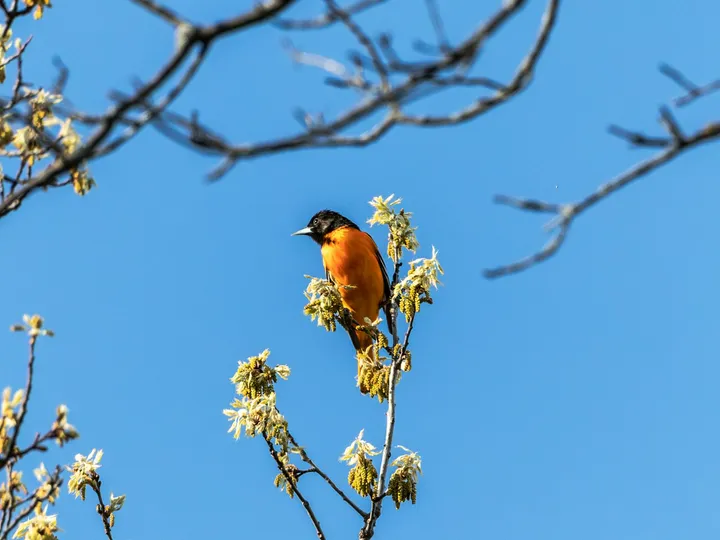
The reason height matters comes down to how orioles look for food. According to the Cornell Lab of Ornithology, Baltimore Orioles forage in the leafy canopy of deciduous trees. A bird scanning from 30 to 60 feet up needs to see your feeder from above, so a low feeder tucked under a deck rail or sitting on open lawn never enters its line of sight. Our main oriole feeder guide covers the feeder styles that go with this placement, and what orioles eat covers the diet itself.
Where to place an oriole feeder
Near tall trees (the canopy rule)
Put the feeder within sight of mature trees, oak, elm, cottonwood, sycamore, or any tall deciduous tree orioles already use. A feeder at the edge of tree cover gets found far faster than one stranded in the middle of a lawn. You are trying to intercept a bird that is already moving through the treetops, so meet it where it travels. The same match-the-feeder-to-the-bird logic runs through our how to attract birds to a bird feeder pillar.
Make it visible from above
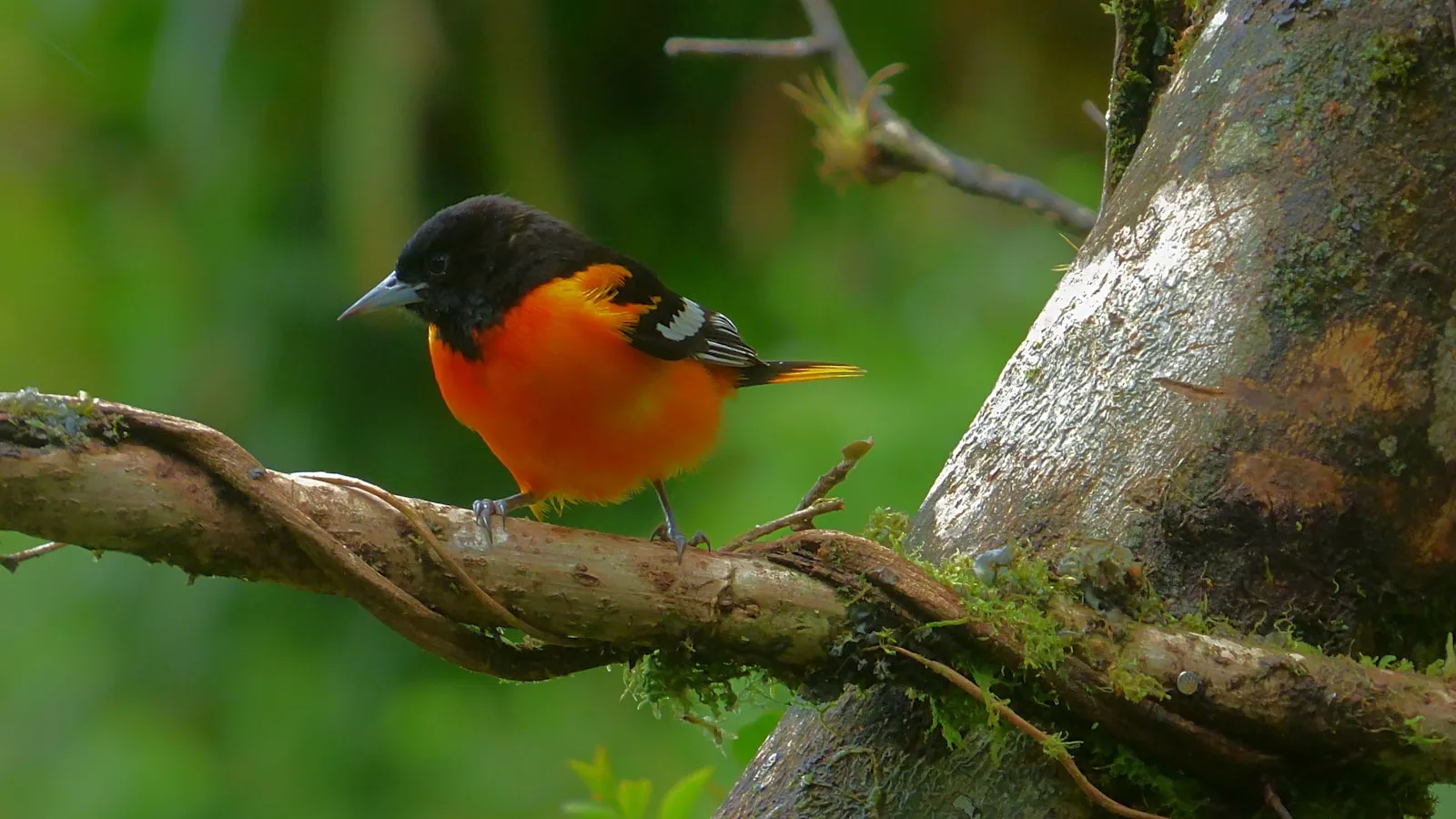
Visibility from overhead is the whole game. Use a feeder with bright orange or yellow color, hang real orange halves alongside it, and for the first two weeks tie a strip of orange flagging tape nearby to amplify the signal. Orioles find food by sight, and orange is the flag that pulls a canopy bird down. Once they establish the spot, they remember it and the extra signals are no longer needed.
Distance from other feeders
Place the oriole feeder 15 to 30 feet from your main seed and hummingbird feeders. That is far enough that fallen seed and squirrel traffic do not foul the oriole station, but close enough that birds already active in your yard notice it. If you run a hummingbird-friendly yard, the same canopy-edge placement that works for hummingbirds works for orioles, so the two can share a corner of the yard.
Distance from windows (strike safety)
Hang the feeder either closer than 3 feet or farther than 10 to 12 feet from large windows. This two-zone rule reduces window strikes: a feeder right against the glass does not let a bird build up dangerous speed, and one well away from the house is not on a flight path into it. The dangerous distance is the in-between, roughly 5 to 8 feet, where a startled bird gains momentum before hitting the glass.
Squirrel-proofing the placement
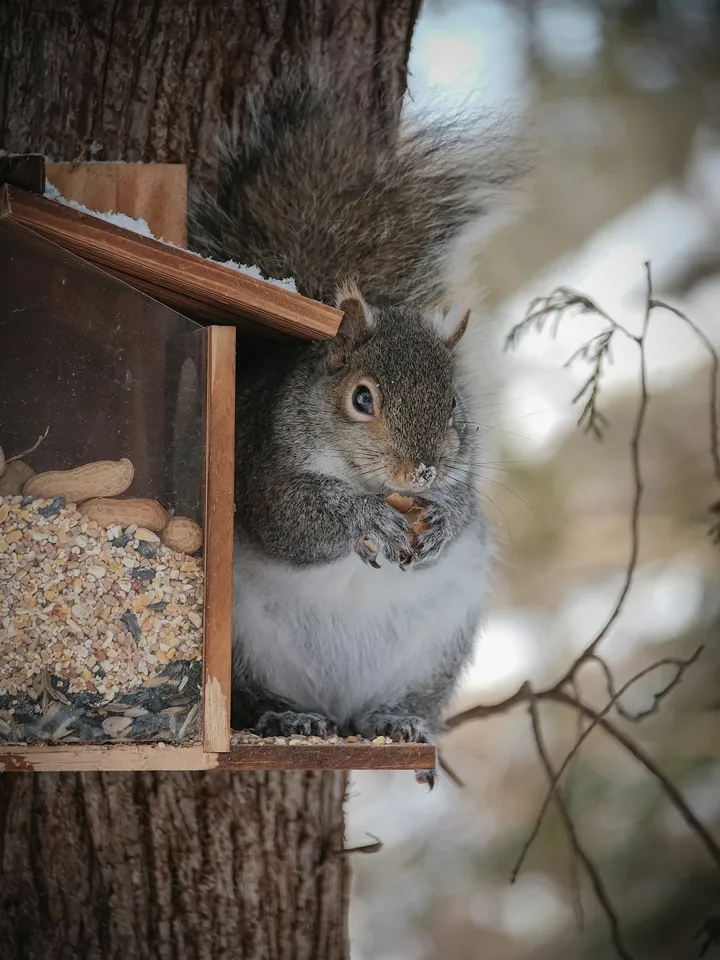
Keep the feeder at least 10 feet from any climbable trunk, fence, or pole. Squirrels eat oranges and steal jelly, and they will clear a poorly placed oriole feeder in a day. The same spacing math that protects seed feeders applies here; our keep squirrels out of bird feeders guide covers the 5-7-9 rule (5 feet up a pole, 7 feet from a jump-off, 9 feet of clearance) that keeps both seed and oriole feeders out of reach.
Sun or shade?
Aim for partial shade. A feeder in full afternoon sun ferments jelly and spoils nectar within hours in warm weather, which repels orioles and can make them sick. A spot with morning sun and afternoon shade, or dappled light near tree cover, keeps the food fresh longer and sits closer to where orioles naturally forage. Do not overcorrect and bury the feeder inside dense foliage, though; it still has to be visible from above.
Common placement mistakes
- Too low. A 3 to 4 foot stake or porch rail in the open almost never works. Get the feeder to 6 to 10 feet.
- Too exposed. A feeder stranded in the middle of a lawn, far from trees, gives a canopy bird no reason to drop in.
- Wrong light. Full-sun placement spoils jelly and nectar fast. Partial shade keeps food fresh.
- Too close to trunks. Within squirrel-jumping range, the oranges and jelly disappear before orioles arrive.
- The window danger zone. 5 to 8 feet from a big window is the worst spot for strikes. Move it closer than 3 feet or beyond 12.
FAQ
How high should an oriole feeder be off the ground? Hang an oriole feeder 6 to 10 feet off the ground. Orioles forage high in the tree canopy and will not consistently drop to a feeder placed lower than about 5 feet in open lawn. Higher than 10 feet is fine; lower is not. Use a sturdy branch, shepherd’s hook, or steel pole, since orioles are heavier than hummingbirds and bend lightweight mounts.
Where is the best place to hang an oriole feeder? Near tall trees, 6 to 10 feet up, and visible from above. Orioles scan for food from the canopy 30 to 60 feet up, so a feeder placed near an oak, elm, cottonwood, or sycamore, with clear sightlines from overhead, gets found fastest. Pair it with bright orange or yellow color and real orange halves for the first two weeks. Avoid the middle of an open lawn at low height.
Should an oriole feeder be in sun or shade? Partial shade is best. A feeder in full afternoon sun spoils nectar and ferments jelly within hours in warm weather, which repels orioles and can sicken them. A spot with morning sun and afternoon shade (or dappled shade near tree cover) keeps food fresh longer and matches where orioles naturally forage. Just keep the feeder visible from above; do not bury it inside dense foliage.
How far should an oriole feeder be from a window? Either closer than 3 feet or farther than 10 to 12 feet from large windows. That two-zone rule, recommended for reducing window strikes, works because a feeder very close to glass does not let a bird build up dangerous speed, while one well away from the house is not on a collision path. The worst spot is 5 to 8 feet from a big window, exactly where a startled bird gains momentum before hitting it.
How far should an oriole feeder be from other feeders? About 15 to 30 feet from your main seed and hummingbird feeders. That keeps fallen seed, squirrel traffic, and feeder crowding away from the oriole station while still being close enough that yard-active birds notice it. Keep it at least 10 feet from any climbable trunk or pole so squirrels cannot reach the oranges and jelly.
Can you hang an oriole feeder on a deck or porch? Yes, if the deck is near tall trees and you can hang the feeder 6 to 10 feet up with clear sightlines from above. A porch railing alone, low and in the open, usually fails because orioles will not drop out of the canopy to it. Decks near mature trees work well, but watch for faster nectar and jelly spoilage in the sun and keep the feeder away from squirrel-accessible railings.
What to do this week
Pick a spot near a tall tree where you can hang the feeder 6 to 10 feet up, in partial shade, with clear sky above it and at least 10 feet from any trunk. Add bright orange color and a real orange half, and keep it 15 to 30 feet from your other feeders and out of the window danger zone. Then give it two to three weeks of fresh food. Get the placement right and you turn a feeder orioles fly past into one they drop down to find. Add a shallow bird bath nearby, since orioles use water heavily once they find your yard. For everything that goes in the feeder, and the zone-by-zone timing for putting it out, see our full oriole feeder guide.
Sources
- Cornell Lab of Ornithology: All About Birds, Baltimore Oriole Overview (canopy foraging and habitat)
- Audubon: The Audubon Guide to Attracting Hummingbirds and Orioles (feeder placement and food)
- Project FeederWatch: Sick Birds and Bird Diseases (why feeder cleanliness and fresh food matter)