How to clean a bird bath comes down to one ratio and one habit: scrub with nine parts water to one part white vinegar (the mix Audubon recommends), and change the water every 2 to 3 days so algae and mosquitoes never get started. No soap, no additives, no pennies. This guide covers the full method, what changes by basin material, the natural algae controls, and how to keep the bath usable in winter.
TL;DR
- Scrub with 9 parts water to 1 part white vinegar (Audubon’s ratio). Skip soap; residue can strip the oils off bird feathers.
- Change the water every 2 to 3 days, daily in summer heat. Deep-clean weekly.
- Algae control is placement + fresh water + movement, not chemicals. Never dose the water birds drink.
- Pennies don’t work (post-1982 pennies are zinc, which is toxic to birds at higher exposures). Use clean rocks for footing instead.
- A dirty bath isn’t just ugly: stagnant water breeds mosquitoes and a fouled basin can spread disease between birds.
Why a clean bird bath matters
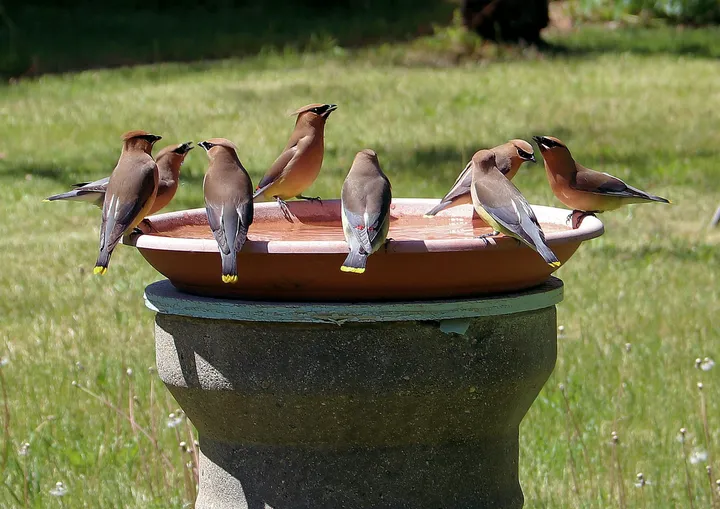
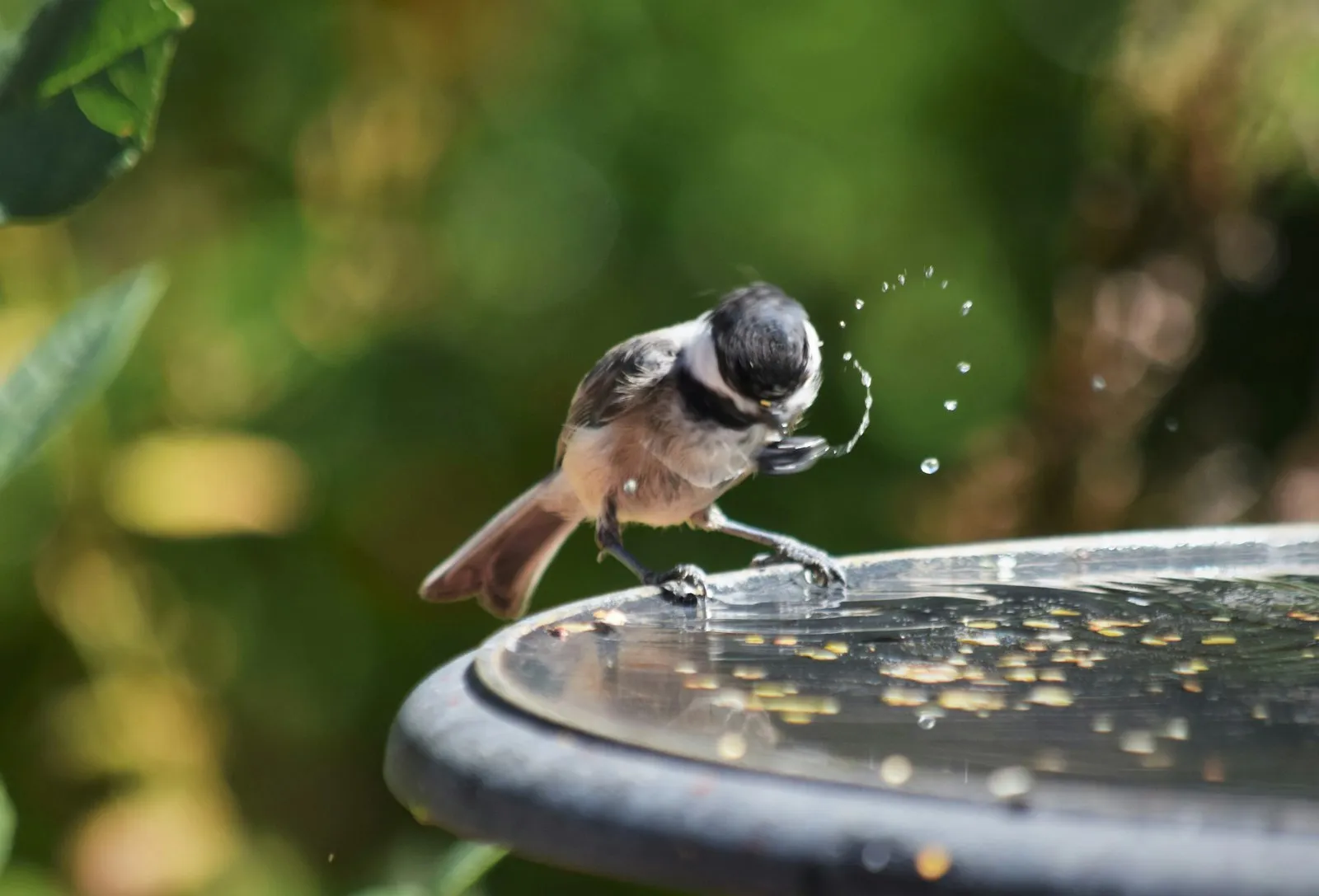
A bird bath concentrates traffic the way a well-run feeder station does: many birds, one small surface, all day. That is exactly how grime becomes a problem. Audubon’s framing is blunt: a fresh bath keeps birds “hydrated, clean, and disease-free,” while a neglected one turns into the swampy puddle birds avoid.
Three specific risks build up in dirty water. First, disease: droppings accumulate in and around a shared basin, and Project FeederWatch documents how shared feeding stations spread illness between birds when they aren’t kept clean; the same crowding logic applies to a shared basin. Second, mosquitoes: stagnant water is a breeding site, and Audubon notes mosquitoes are at their worst in summer, with fall an especially high-risk season for disease as migrating birds crowd together. Third, algae: a green-filmed basin loses its appeal fast, for you and for the birds.
The good news is that the fix costs a brush, a jug of vinegar, and about five minutes a week. The same welfare logic behind our guide to cleaning a hummingbird feeder applies to the whole water station.
How often to clean a bird bath
| Task | How often |
|---|---|
| Change the water | Every 2 to 3 days (daily in summer heat) |
| Scrub with 9:1 water-to-vinegar | Weekly |
| Deep clean (9:1 water-to-bleach, rinse thoroughly) | Algae bloom, heavy soiling, or after a sick bird |
| Immediate clean, off-schedule | Any time you see algae film, built-up droppings, or dead insects |
The water change is the habit that matters most. Two or three days is roughly how long standing water stays ahead of algae and mosquito activity in warm weather; in a heat wave, make it daily. The weekly scrub keeps film from ever establishing, which is far easier than removing a bloom later.
How to clean a bird bath, step by step
You need a stiff brush (a dedicated scrub brush or an old dish brush), white vinegar, and a watering can or hose.
- Dump the old water. Tip it into a flower bed, away from the area under the bath where birds stand.
- Mix the solution: nine parts water to one part white vinegar. This is the ratio Audubon recommends for routine cleaning.
- Scrub the whole basin. Work the brush over the bowl, the rim where birds perch, and any pedestal lip. Pay extra attention to the waterline, where algae film starts.
- Rinse thoroughly. Flush the basin until you can’t smell vinegar. Birds drink this water; nothing should linger.
- Refill with fresh water. Keep it 2 inches deep or less; our bird bath setup guide covers the depth, placement, and water-movement details that make a bath actually get used.
The whole routine takes about five minutes. If the basin has a true algae bloom or a sick-looking bird has been using it, step up to a 9:1 water-to-bleach solution, rinse extremely well, and let the basin air-dry completely before refilling.
Cleaning by material
- Concrete and stone: the most forgiving. Scrub as hard as you like, but rinse generously; porous surfaces hold cleaning solution longer than glazed ones.
- Glazed ceramic: cleans easily but chips. Use the brush, skip abrasive pads, and check for cracks where grime and bacteria collect.
- Plastic and resin: never use abrasive scouring pads; scratches in plastic become permanent footholds for algae and bacteria, the same reason scratched plastic feeders get retired. If a plastic basin is heavily scratched and stains return within days, replace it.
- Copper: copper surfaces are mildly unfriendly to algae, but a copper bath still needs the same water changes and scrubbing. Treat the metal as a small assist, not a cleaning plan.
How to keep algae down naturally
Algae control is mostly about denying algae what it needs: warm, still, sunlit water that sits for days.
- Placement: morning sun and afternoon shade. Full summer sun turns a basin into an algae incubator (and overheats the water birds want).
- Fresh water: the every-2-to-3-day change means algae never gets the multi-day window it needs to establish.
- Movement: a $20 dripper or water wiggler slows algae and deters mosquito egg-laying; moving water is also the single best attractant, as the setup guide covers.
- The weekly scrub: five minutes with the vinegar mix beats an hour fighting an established bloom.
What not to do: add anything to the water itself. Algaecides, “bird bath cleaner” additives, and home remedies all end up inside birds, because every bird that visits drinks. Robins, the heaviest bath users in most yards (see what robins eat for why they rely on yards so much), will be drinking whatever you dosed.
Cleaning and care in winter
Winter water matters as much as summer water, but the maintenance changes. In mild-winter climates, keep up the same schedule with warm-water refills on frosty mornings. In freezing climates you have three options: refill with warm (never hot) water once or twice a day, float a tennis ball that moves with the wind and keeps a patch of water open in light freezes, or use a purpose-made bath heater. The heater is the honest solution for sustained cold; our setup guide’s winter section covers the options.
Two hard rules for cold weather. Never add salt, glycerin, or antifreeze to bird bath water; all are dangerous to birds, and antifreeze is lethal. And keep up the cleaning even when it’s cold: winter birds concentrate heavily on the few open water sources, which makes hygiene more important, not less.
What to skip
- Dish soap and synthetic cleansers as your default. Audubon’s warning: residue can strip the essential oils off bird feathers. Vinegar does the job without the risk.
- Pennies. Post-1982 pennies are mostly zinc, toxic to birds at higher exposures, and even copper ones barely move the needle on algae. Clean rocks for footing, yes; coins, no.
- Algaecides and water additives. Birds drink the bath. Nothing goes in the water but water.
- Abrasive pads on plastic. Scratches become algae and bacteria habitat.
- Pressure-washing a concrete bath with chemical cleaners. Overkill that drives cleaner into the porous surface; the brush-and-vinegar method is gentler and works.
- Letting bread or seed land in the water. Soggy food fouls a basin in hours; it’s one more reason bread doesn’t belong in the yard routine.
FAQ
What is the best thing to clean a bird bath with? A stiff brush and a solution of nine parts water to one part white vinegar, the ratio Audubon recommends. The vinegar cuts algae film and grime without leaving chemical residue in water that birds drink and bathe in. For stubborn algae blooms or after a sick bird has visited, a 9:1 water-to-bleach solution works, but only with a thorough rinse and full air-dry afterward. For routine weekly cleaning, vinegar is the safer default.
Can I use Dawn to clean a bird bath? It is best avoided. Audubon advises skipping synthetic soaps and cleansers on bird baths because residue can strip the essential oils off bird feathers. Those oils are what keep feathers waterproof and insulating. A brush plus the 9:1 water-to-vinegar solution cleans just as well without the residue risk. If you ever use a drop of dish soap on heavy grime, rinse the basin several times until no trace remains.
Do pennies keep a bird bath clean? No, skip the pennies. The folk theory is that copper suppresses algae, but pennies minted after 1982 are mostly zinc, not copper, and zinc is toxic to birds at higher exposures. Even older copper pennies make little measurable difference in an open basin. Clean rocks are fine (they give small birds footing), but the reliable algae controls are shade, frequent water changes, and a weekly vinegar scrub.
Why put tennis balls in a bird bath? It is a winter trick. A floating tennis ball moves with the wind and keeps a small area of water from icing over in light freezes, and you can also lift the ball to break a thin ice skin. It only helps in marginal cold, not hard freezes, and it is no substitute for refreshing the water. In freezing climates, warm-water refills or a purpose-made bath heater are the dependable options.
How often should you clean a bird bath? Change the water every 2 to 3 days (daily in summer heat), and scrub the basin weekly with the 9:1 water-to-vinegar solution. Clean immediately, regardless of schedule, if you see algae film, droppings building up, or a sick bird has visited. Stagnant water breeds mosquitoes within days in warm weather, so the every-2-to-3-day water change is the single most important habit.
How do you keep a bird bath clean of algae naturally? Four levers, no chemicals: place the bath in morning sun and afternoon shade (full summer sun is an algae incubator), change the water every 2 to 3 days so algae never establishes, add water movement with a dripper or wiggler (moving water slows algae and resists mosquitoes), and scrub weekly with the 9:1 vinegar solution before any film takes hold. Never add algaecides or additives to water birds drink.
What to do today
Dump the bath, mix nine parts water to one part white vinegar, scrub the basin and rim, rinse until the smell is gone, and refill. Put the brush somewhere you’ll see it, because the schedule is the real method: fresh water every 2 to 3 days, a five-minute scrub once a week, and an immediate clean whenever the water looks off. Do that and the bath stays the busiest spot in your yard instead of a green puddle birds detour around. If the bath is clean but still empty of visitors, the fix is usually placement or depth, and our bird bath setup guide walks through both.
Sources
- Audubon: Why You Should Keep Your Birdbath Clean (the 9:1 water-to-vinegar ratio; skip synthetic soaps, which can strip feather oils; mosquito and disease seasonality)
- Project FeederWatch: Sick Birds and Bird Diseases (how shared feeders spread disease and why hygiene prevents it)
- Audubon: How to Make a Birdbath (safe basin design: shallow depth, pebbles for footing, siting)