How to clean a hummingbird feeder comes down to three things: do it often enough, scrub every surface the nectar touches, and skip the dish soap. Sugar water ferments fast and grows mold, and a dirty feeder does not just turn hummingbirds away, it can make them sick. This guide gives you the Audubon-backed method, exactly how often to clean by temperature, and how to deal with mold, all in a few minutes per cleaning.
TL;DR
- How often: every day or two in hot weather, every 3 days in temperate weather, twice a week when cool, and immediately if you see mold (Audubon).
- What with: hot water and a bottle brush for routine cleaning; hydrogen peroxide or a weak white-vinegar solution (about 1:4) for a deeper clean.
- Skip the dish soap. It can leave a harmful residue.
- Scrub the ports. That is where mold hides and where most people cut corners.
- Rinse thoroughly and air dry before refilling with fresh 4:1 nectar.
Why cleaning matters (it is a welfare issue, not a chore)
Sugar water is a perfect medium for mold and bacteria, and it ferments quickly in warm weather. A feeder left dirty grows black mold around the ports and a cloudy film inside the reservoir. That is not just unappealing: moldy, fermented nectar can grow fungus and bacteria that can sicken hummingbirds, which is why cleaning frequency is a genuine welfare rule rather than a matter of tidiness.
Project FeederWatch makes the same point for feeders generally: dirty feeders spread disease, and the fix is regular cleaning. With hummingbirds the stakes are higher because the food itself spoils so fast. If you are not willing to keep a feeder clean, the honest move is to take it down, because a neglected nectar feeder does more harm than no feeder at all. The same hygiene logic applies to your water station; our guide on how to clean a bird bath covers that side with the same welfare-first method.
How often to clean a hummingbird feeder (by temperature)
Cleaning frequency tracks the temperature, because heat speeds up fermentation. Audubon’s guidance:
| Weather | Clean and refill every |
|---|---|
| Hot | 1 to 2 days |
| Temperate | 3 days |
| Cool | Twice a week |
| Any sign of mold, a sick bird, or insects | Immediately |
If your hummingbirds drain the feeder faster than this, clean it each time it empties. The single most common mistake is topping off old nectar instead of emptying, cleaning, and refilling, which just seeds the new batch with mold. For the timing of when to put feeders out and take them down each season, see our when to put out hummingbird feeders guide.
How to clean a hummingbird feeder, step by step
What you need
- Hot tap water
- A bottle brush, plus a small port brush or pipe cleaner for the feeding holes
- White vinegar or hydrogen peroxide (for a deeper clean)
- A drying rack or clean towel
That small port brush is the one tool worth buying. The decorative feeding ports are exactly where mold collects and exactly where a regular sponge cannot reach.
The 5-step cleaning routine
- Empty and disassemble. Pour out any old nectar (never reuse it) and take the feeder fully apart: base, reservoir, ports, perches, and any gaskets or flowers.
- Rinse with hot water. Flush every part under hot tap water to clear the bulk of the residue.
- Scrub every surface. Use the bottle brush inside the reservoir and the port brush in each feeding hole. For routine cleaning, hot water and scrubbing are enough; for buildup, soak the parts first (next section).
- Rinse thoroughly. Rinse every part several times with plain water until there is no smell or film. This step matters most if you used anything other than water.
- Air dry, then refill. Let the parts dry on a rack, reassemble, and refill with fresh nectar.
The whole routine takes about five minutes once the feeder is apart.
What to clean it with (vinegar, hydrogen peroxide, and the soap question)
For routine cleaning, hot water and a brush do the job. For a deeper clean or to knock back mold, Audubon recommends hot water with hydrogen peroxide, or a weak vinegar solution. In practice a weak vinegar mix is about 1 part white vinegar to 4 parts water: enough to cut residue and discourage mold, dilute enough to rinse away cleanly.
The question people ask most (and the one the search results argue about) is dish soap. Audubon’s answer is to avoid it: dish soaps can leave a harmful residue in the feeder. Soap residue can also deter hummingbirds, who are sensitive to off tastes. If you ever use a drop of soap on a badly soiled feeder, rinse it five to ten times until no trace remains. For everyday cleaning, hot water, vinegar, or hydrogen peroxide are the safer choices.
A note on bleach: a dilute bleach solution is sometimes used to disinfect feeders after a sick bird has visited, always rinsed very thoroughly and air dried. For routine cleaning, though, it is unnecessary; the Audubon method (hot water plus vinegar or hydrogen peroxide, no soap) is the everyday standard.
How to clean a moldy hummingbird feeder
Mold means clean now, not at the next scheduled cleaning. Take the feeder completely apart and soak the moldy parts in a weak vinegar solution (about 1 part vinegar to 4 parts water) for up to an hour to loosen the growth. Then scrub: the bottle brush for the reservoir, the port brush or a pipe cleaner for each feeding hole, and an old toothbrush for crevices around the base. Hydrogen peroxide works in place of vinegar. Rinse thoroughly, air dry, and refill.
If a feeder is so mold-stained or scratched inside that you cannot get it clean, replace it. Cheap plastic feeders develop scratches that harbor mold; this is one reason our best hummingbird feeder guide favors simple saucer-style feeders that come apart completely and have no narrow necks to trap grime.
How to reach the small ports and decorative parts
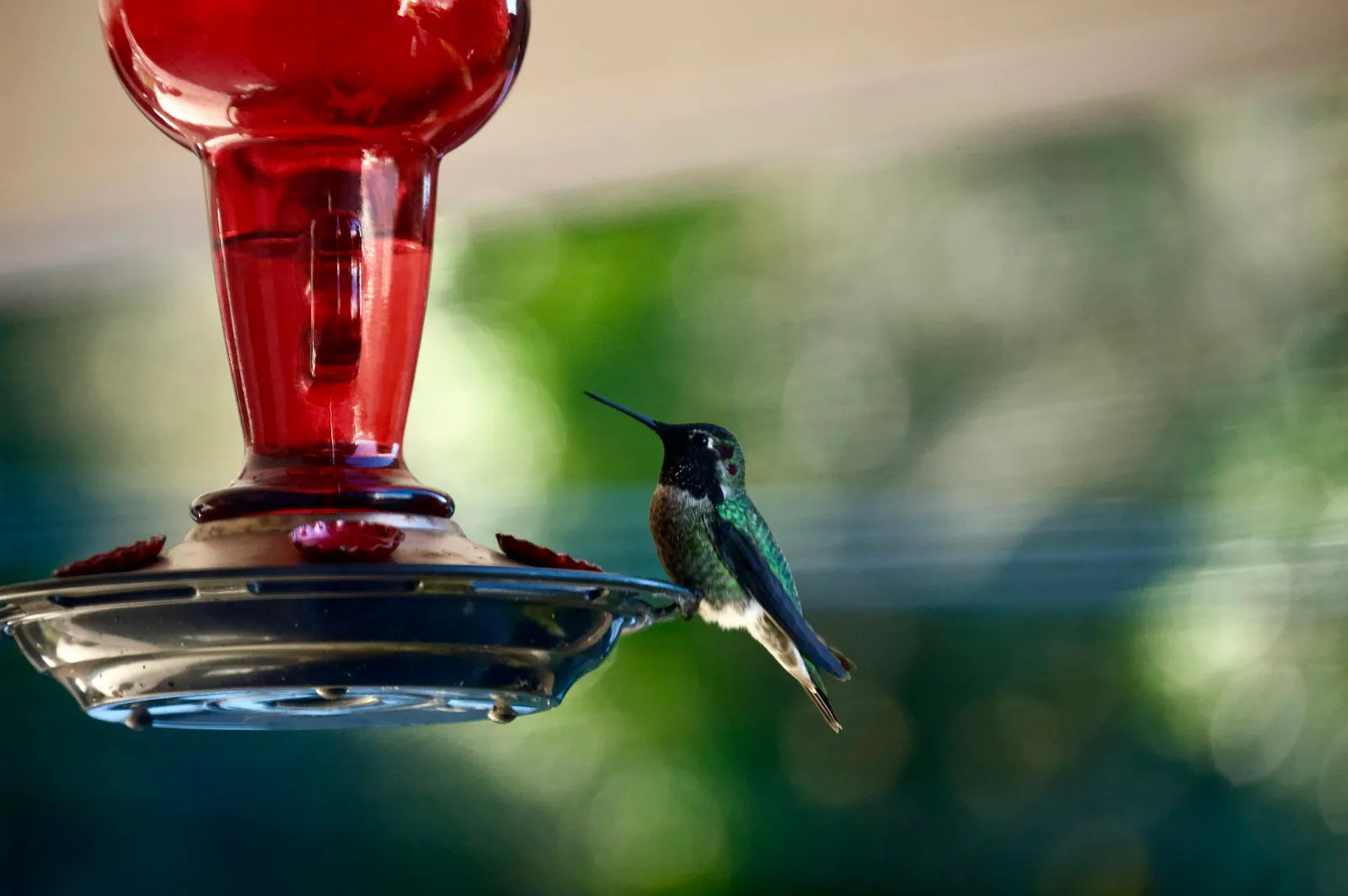
The feeding ports are the hardest and most important part to clean, because they sit right where the bird’s bill and tongue go. A small port brush, a pipe cleaner, or even a cotton swab gets into each hole. Bottle-style feeders with long necks and fake-flower ports are the worst for this; saucer-style feeders that pop fully apart are far easier to keep clean, which matters more than any other feature when you are choosing a feeder. Keeping the ports clean also cuts down on the ants and bees a sticky feeder attracts, covered in our guide to keeping ants and bees out of a hummingbird feeder.
What to skip
- Dish soap as your default cleaner. Residue risk; Audubon advises against it. Use hot water, vinegar, or hydrogen peroxide.
- Bleach for routine cleaning. Reserve a dilute, well-rinsed bleach solution for disinfecting after a sick bird, not for every wash.
- Topping off old nectar. Always empty, clean, and refill. Adding fresh nectar to old seeds the batch with mold.
- Skipping the ports. A spotless reservoir with moldy ports is still a dirty feeder.
- Scented or harsh cleaners. Anything with a strong residue or smell can deter hummingbirds.
- Leaving the feeder wet and sealed. Air dry before reassembling so you are not trapping moisture.
FAQ
How often should you clean a hummingbird feeder? It depends on temperature. Audubon recommends emptying and cleaning the feeder every day or every other day in hot weather, every three days in temperate weather, and twice a week in cool weather. If hummingbirds drain it faster than that, clean it each time it empties, and clean it right away the moment you see any mold, a sick bird, or insects in it. The hotter it is, the faster sugar water ferments, so summer needs the most frequent cleaning.
What is the best thing to clean a hummingbird feeder with? Hot tap water plus a bottle brush handles most routine cleaning. For a deeper clean, Audubon recommends hot water with hydrogen peroxide, or a weak vinegar solution; in practice that is about 1 part white vinegar to 4 parts water. The key is to scrub every surface the nectar touches, especially the feeding ports, and rinse thoroughly. Avoid dish soap, which can leave a residue.
Can I use Dawn dish soap to clean a hummingbird feeder? It is best avoided. Audubon advises against dish soaps because they can leave a harmful residue in the feeder that is hard to fully rinse away. Hot water with a brush, a weak vinegar solution, or hydrogen peroxide all clean effectively without that risk. If you ever do use a drop of soap, rinse five to ten times until no trace remains.
How much vinegar do I use to clean a hummingbird feeder? Audubon recommends a weak vinegar solution for cleaning; in practice that is roughly 1 part white vinegar to 4 parts water. The dilute mix is enough to break down residue and discourage mold without leaving a strong smell. Soak the parts for an hour or so if there is buildup, scrub the ports, then rinse thoroughly with plain water before refilling.
How do you clean mold out of a hummingbird feeder? Take the feeder fully apart, soak the moldy parts in a weak vinegar solution (about 1 part vinegar to 4 parts water) for up to an hour, then scrub every surface, especially the ports, with a bottle brush and a small port or pipe-cleaner brush. Hot water and hydrogen peroxide also work. Rinse thoroughly and air dry before refilling. Audubon advises cleaning immediately at the first sign of mold, since moldy nectar can sicken hummingbirds.
Do I need to clean a brand-new hummingbird feeder before first use? Yes. New feeders are not sterile and often carry manufacturing dust or residue, so rinse and clean a new feeder with hot water before the first fill. After that, follow the normal temperature-based cleaning schedule.
What to do today
Take your feeder down, empty it, and run it through the five steps: disassemble, rinse, scrub (ports included), rinse again, air dry. If you see mold, soak it in a weak vinegar solution first. Refill with fresh 4:1 nectar, and set a reminder that matches your weather: every day or two in summer heat, every few days otherwise. A clean feeder is the single biggest thing you control for hummingbird health, and it is also what keeps them coming back. If you are still dialing in your setup, our guides on attracting hummingbirds and what hummingbirds eat cover the rest.
Sources
- Audubon: Hummingbird Feeding FAQs (cleaning frequency by temperature; hot water plus hydrogen peroxide or a weak vinegar solution; avoid dish soap; clean immediately at the first sign of mold)
- Project FeederWatch: Sick Birds and Bird Diseases (why feeder cleanliness matters for disease prevention)