If you put up a feeder and assume sugar water is the whole story, you are feeding a hummingbird about half of what it needs. Nectar is the fuel that runs the engine, but the protein, fat, and minerals that build muscle and grow feathers come from somewhere else entirely: small insects and spiders. This guide covers the full hummingbird diet, what they eat in the wild and at your feeder, backed by Cornell Lab research, plus how to actually support all of it in your yard.
TL;DR
- Hummingbirds eat two main things: flower nectar (and feeder sugar water) for energy, and small insects and spiders for protein and fat.
- Insects and spiders are not a snack. University of Delaware entomologist Doug Tallamy estimates they make up roughly 80 percent of a hummingbird’s diet.
- They also drink tree sap, pick up pollen incidentally, sip juice from broken-open fruit, and take tiny amounts of grit.
- A feeder with only sugar water is a supplement, not a complete diet. A pesticide-free, insect-rich yard matters as much as the feeder.
- Never offer honey, brown sugar, red dye, or peanut butter. Plain white sugar at a 4:1 water-to-sugar ratio is the only safe nectar.
What hummingbirds eat in the wild
A wild hummingbird’s day is split between two food sources that do two different jobs. Understanding the split is the key to everything else on this page.
Flower nectar (the fuel, not the whole story)
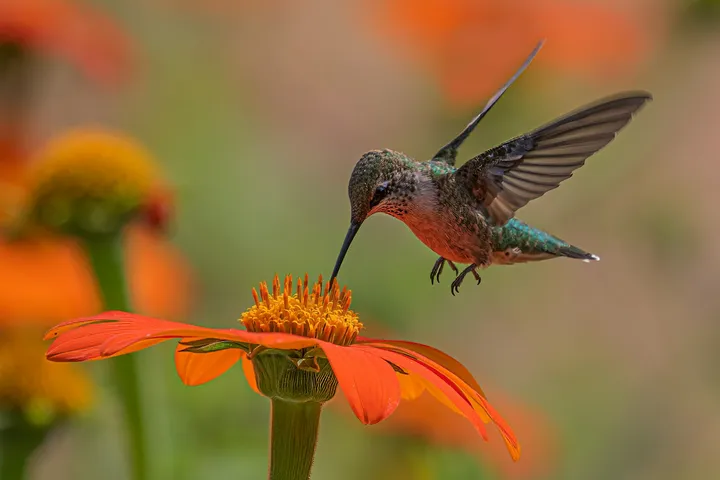
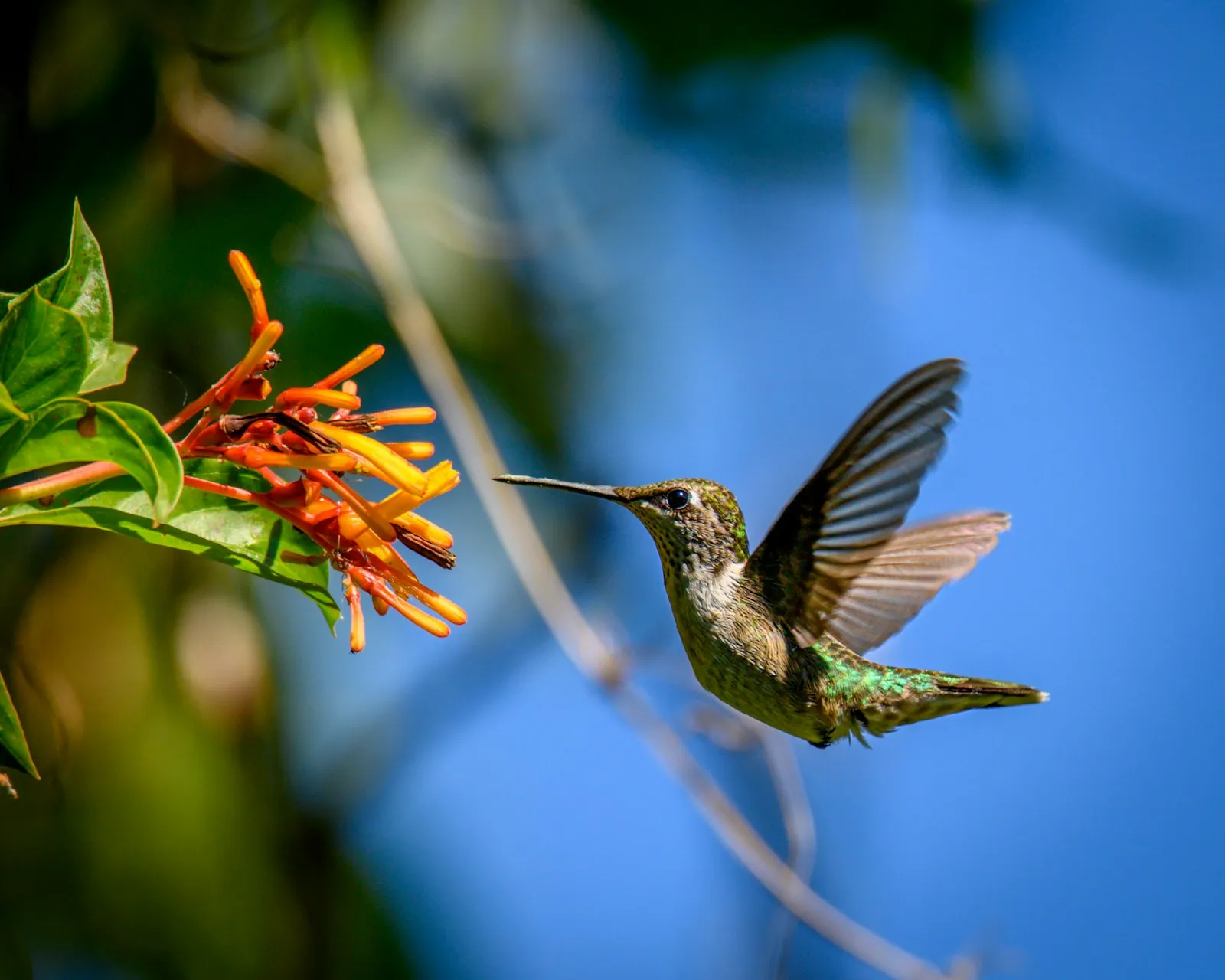
Nectar is almost pure sugar dissolved in water, and it is the fastest energy a hummingbird can get. They burn through it fast: a hovering hummingbird has one of the highest metabolic rates of any animal, and it visits hundreds of flowers a day to keep up.
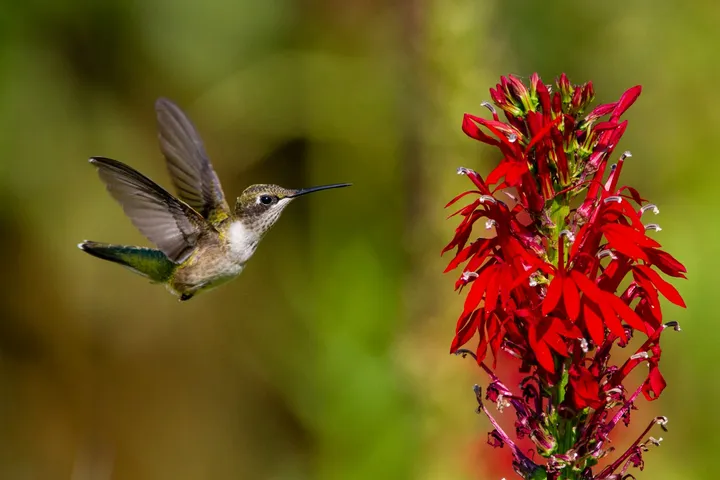
According to the Cornell Lab of Ornithology, Ruby-throated Hummingbirds feed on the nectar of red or orange tubular flowers such as trumpet creeper, cardinal flower, honeysuckle, jewelweed, bee-balm, red buckeye, and red morning glory. The tubular shape matters: it fits their long bill and tongue and keeps the nectar out of reach of most other birds. The color matters too, which is why hummingbirds investigate anything red in your yard, including your feeder.
Insects and spiders (the part everyone misses)
Here is the fact that almost every short article skips. Hummingbirds are not just nectar-sippers; they are active insect hunters. As Tallamy puts it, “hummingbirds like and need nectar but 80 percent of their diet is insects and spiders.” Cornell Lab’s field research corroborates the insect-heavy reality, even if the exact percentage varies by season and species.
Cornell describes Ruby-throated Hummingbirds catching insects in midair or pulling them out of spider webs. Their main insect prey includes mosquitoes, gnats, fruit flies, and small bees, plus spiders themselves. They also take insects attracted to sap wells and pick small caterpillars and aphids off of leaves.
The how is impressive. A hummingbird will hawk tiny flying insects out of the air on the wing, hover to glean aphids and spider mites from the undersides of leaves, and raid spider webs both for the trapped insects and for the spiders. Those insects deliver the protein, fat, and amino acids that nectar simply does not contain.
Tree sap
Before flowers bloom in early spring, and especially during northward migration, nectar can be scarce. Hummingbirds bridge the gap with tree sap. They are well documented following Yellow-bellied Sapsuckers and drinking from the rows of small holes (sap wells) those woodpeckers drill into trees. The sap is sugary, like a natural nectar, and the wells also attract small insects the hummingbird can eat at the same stop.
Pollen, fruit juice, and the occasional odd food
A few foods round out the diet in small amounts:
- Pollen sticks to a hummingbird’s bill and face while it feeds and is swallowed incidentally. It is a minor protein source, not a target food.
- Fruit juice, but not fruit flesh. Hummingbirds cannot bite or tear fruit, so they only sip juice from fruit that something else has already opened. Overripe fruit is more useful to them as a fruit-fly magnet than as food itself.
- Tree and insect sugars such as the sweet honeydew that aphids excrete onto leaves.
Why nectar alone is not enough
Think of nectar as gasoline and insects as the parts that build the car. Nectar is carbohydrate energy and nothing else: no protein, no fat, no amino acids, no minerals. A hummingbird running only on sugar water could fly for a while, but it could not build flight muscle, grow new feathers, recover from migration, or produce eggs and raise young.
That is why the insect side of the diet is not optional, and why it has a direct consequence for how you feed them. Your feeder handles the easy half (energy). The hard half (protein) depends on whether your yard actually has insects, which depends on native plants and on not spraying pesticides. A spotless, sprayed yard with a full feeder is a gas station with no grocery store.
If you want the practical version of this, our guide on how to attract hummingbirds to a feeder covers the plant-and-habitat side that makes a feeder actually work.
What baby hummingbirds eat
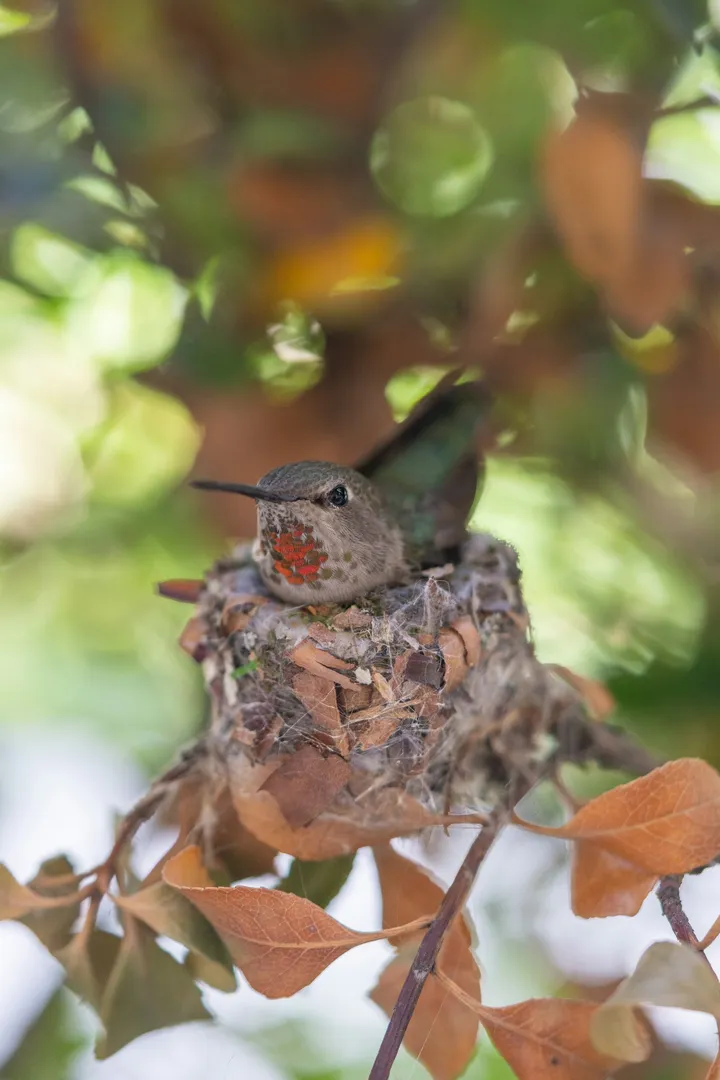
Nestling hummingbirds eat almost pure protein, which surprises people who assume baby hummingbirds drink nectar. The female (males do not help raise young in our common species) gathers small insects and spiders, mixes them with a little nectar, and feeds the resulting slurry to the chicks by inserting her bill deep into their throats and regurgitating.
The reason is simple growth math. Chicks have to go from jellybean-sized hatchlings to fully feathered fliers in about three weeks, and that kind of growth runs on protein and fat, not sugar. It is also the clearest argument for a pesticide-free yard: a nesting female may need to catch hundreds of insects a day, and she will nest where those insects are. If you are curious about that side of their life, see our guide to the hummingbird nest.
What hummingbirds eat by season
Diet shifts through the year, and so does what you can do to help.
- Spring migration (roughly March to May): Sap and early insects carry them north before most flowers open. Sapsucker wells and the first warm-weather gnats matter more than your feeder at this point, though an early feeder helps exhausted migrants. Timing your feeder to your region is worth getting right; see when to put out hummingbird feeders.
- Breeding (late spring to mid-summer): Insect demand peaks because females are feeding insect slurry to nestlings. This is the season your no-pesticide yard pays off most.
- Late summer and fall: Birds fatten up for the trip south, eating heavily from both nectar and insects. Leave feeders up until you have gone a couple of weeks with no visitors. Our hummingbird migration guide covers the regional timing.
- Winter: Most North American hummingbirds are gone. In the Pacific Northwest and parts of the West, Anna’s Hummingbirds overwinter and lean on insects, sap, and unfrozen feeders.
How to feed hummingbirds the right way
You feed a hummingbird well by covering both halves of its diet: supply clean energy at the feeder, and let the yard supply the insects.
The correct nectar recipe
The only safe feeder nectar is plain white table sugar dissolved in water at a 4:1 ratio (4 parts water to 1 part sugar). No red dye, no honey, no substitutes. Audubon’s hummingbird nectar guidance backs the same simple recipe. We walk through it step by step, including how often to change it, in our hummingbird nectar recipe.
Cleanliness is a welfare issue, not a preference. Sugar water ferments and grows mold fast, and moldy nectar can kill hummingbirds. Change it every 3 to 5 days, and every 2 days in hot weather. The right feeder makes this easier; our best hummingbird feeder guide tiers them by how simple they are to clean.
Support the insect half of the diet
This is the part competitors leave out, and it is the part that actually feeds the protein side:
- Plant native, insect-friendly plants. Native trees, shrubs, and perennials host the small insects hummingbirds hunt. A native oak or a patch of native flowers feeds far more insects than ornamental exotics.
- Stop spraying. Broad insecticides remove the exact food a nesting hummingbird needs. If you spray, you are starving the protein half of their diet.
- Leave some leaf litter and spider webs alone. Spiders are food, and their webs double as the hummingbird’s grocery shelf for trapped insects.
- Skip the pest war at the feeder, but stay clean. Ants and bees are nuisances, not the real threat; the real threat is a dirty feeder. See keeping ants and bees out of a hummingbird feeder for the welfare-first approach.
What not to feed hummingbirds
A few common “helpful” ideas actively harm hummingbirds. Skip all of these:
- Red dye. Hummingbirds find feeders by the red of the feeder itself, not the nectar. Dye is an unnecessary chemical with no benefit.
- Honey. It ferments quickly and grows a mold that is dangerous to hummingbirds. Never use it, even diluted.
- Brown sugar, raw sugar, molasses, or “natural” sugars. These contain more iron and other compounds than is safe for hummingbirds. Plain white sugar only.
- Artificial sweeteners. They give a hummingbird the taste of food with none of the calories it is burning, which is the opposite of what it needs.
- Peanut butter or any solid or sticky food. It can foul the feathers around the bill and face. Hummingbirds eat liquids and tiny insects, nothing you spread.
- Old nectar. Letting sugar water sit past its window turns your feeder into a mold source. When in doubt, dump it and refill.
FAQ
What is a hummingbird’s favorite food? Hummingbirds have two staples, not one. Flower nectar (and the sugar water in feeders) is their fuel, but small insects and spiders are what they actively hunt for protein and fat. Entomologist Doug Tallamy estimates insects and spiders make up about 80 percent of a hummingbird’s diet, while Cornell Lab documents them taking nectar from red and orange tubular flowers. In a backyard, the closest thing to a single favorite is a red or orange tubular flower with small insects nearby.
Do hummingbirds eat fruit? Not whole fruit. Their bill and tongue are built for liquids, so they cannot bite or tear fruit flesh. They will sometimes sip juice from fruit that another animal has already broken open, and they are drawn to the tiny fruit flies and gnats that gather on overripe or rotting fruit. The fruit flies, not the fruit, are usually the real attraction.
What do baby hummingbirds eat? Almost entirely insects and spiders. The female feeds nestlings a protein-rich slurry of regurgitated small insects and spiders mixed with a little nectar, delivered by inserting her bill into their throats. Pure sugar water cannot grow a hummingbird, which is why a nesting female needs an insect-rich, pesticide-free yard, not just a feeder.
Do hummingbirds like peanut butter? No, and you should never offer it. Hummingbirds cannot eat solid or sticky foods, and peanut butter can coat the feathers around their bill and face, which damages the feathers they rely on to fly. Stick to a proper 4:1 sugar-water nectar and a yard full of small insects.
What do hummingbirds eat in winter? Most hummingbirds in North America migrate south for winter, so the question rarely comes up in the East. In the Pacific Northwest and parts of the West, Anna’s Hummingbirds stay year-round and rely on overwintering insects, tree sap, and feeders kept from freezing. If you host winter hummingbirds, the insect side of their diet matters even more, since cold-weather nectar sources are scarce.
Is sugar water alone enough for hummingbirds? No. Sugar water (and flower nectar) supplies energy but no protein, fat, or amino acids. A hummingbird that drank only nectar could not build muscle, grow feathers, or raise young. Your feeder is a supplement to the insects and spiders they catch, not a replacement for them, which is why a yard with native plants and no pesticides matters as much as the feeder itself.
What to do this week
If you want to feed hummingbirds the way they actually eat, do two things, not one. First, get a clean feeder up with proper 4:1 nectar and commit to changing it on schedule. Second, take one step on the insect side: skip the next pesticide spray, or plant one native flowering plant where you can see it. The feeder brings them in for the energy; the bugs are why they stay, nest, and come back. Feed both halves and you are not just running a sugar station, you are supporting the whole bird.
Sources
- Cornell Lab of Ornithology: Ruby-throated Hummingbird Life History (diet, insect prey, sap wells, nesting)
- Doug Tallamy on the insect-heavy hummingbird diet, via Choose Natives: How to Feed a Hummingbird, Part I
- Audubon: How to Make Hummingbird Nectar (4:1 recipe, no dye, no honey)