On Vortex Diamondback vs Viper, the cheaper binocular wins the two specs that matter most for backyard birding: the Diamondback HD focuses a foot closer and weighs less than the Viper HD. The Viper is genuinely better glass, and for some birders that is worth the roughly $400 difference. This comparison uses Vortex’s own published specifications for all four configurations (we do not test optics in hand), so you can see exactly what the extra money buys and where it costs you something.
The short answer
For most birders, the Vortex Diamondback HD is the better buy. It focuses a foot closer (5 feet versus 6), weighs about 3 ounces less, and costs less than half as much. Both binoculars share the same HD optical system, dielectric prisms, phase correction, and lifetime warranty.
The Viper HD earns its price if you bird in low light, wear glasses, or want a clear step up in glass without reaching Vortex’s Razor tier. Its XR Plus coatings, slightly wider field of view, and extra eye relief are real, and Vortex positions them to pay off most at dawn and dusk.
And if you are buying your very first binocular, know that neither of these is required. A solid pair in the $130 to $180 range is enough to enjoy backyard birds for years, and we would rather you start there than stretch for glass you do not yet need.
A note on how we did this: we do not test optics in hand. What follows is a specification and value comparison built from Vortex’s published data.
Price: what the jump actually is
Vortex lists the Diamondback HD 8x42 at $319.99 and the Viper HD 8x42 at $719.99. That is a $400 difference, or roughly 2.25 times the price, for the same magnification and objective size. These are Vortex’s list prices; retailers price independently, so check current pricing before you buy.
For context in birding terms: the $400 difference is more than the entire cost of a very good beginner binocular. That framing matters, because the question is not “is the Viper better” (it is) but “is it $400 better for the way you actually watch birds.”
Vortex Diamondback vs Viper: side-by-side specs (all four configurations)
Every number below comes from Vortex’s product pages.
| Spec | Diamondback HD 8x42 | Viper HD 8x42 | Diamondback HD 10x42 | Viper HD 10x42 |
|---|---|---|---|---|
| Magnification | 8x | 8x | 10x | 10x |
| Objective lens | 42mm | 42mm | 42mm | 42mm |
| Field of view | 7.5 degrees | 7.8 degrees | 6.3 degrees | 6.5 degrees |
| Eye relief | 17.0mm | 18.0mm | 15.0mm | 17.0mm |
| Close focus | 5.0 feet | 6.0 feet | 5.0 feet | 6.0 feet |
| Weight | 21.8 oz | 24.5 oz | 21.3 oz | 24.9 oz |
The pattern is consistent across both magnifications: the Viper gives you a little more view and a little more eye relief, and the Diamondback gives you closer focus and less weight.
What the extra money buys
XR Plus lens coatings (the real upgrade)
This is the substantive difference. Both binoculars use what Vortex calls an HD optical system, and both get dielectric prism coatings and phase correction. The Viper adds XR Plus lens coatings, which Vortex describes as “ultimate anti-reflective coatings on all air-to-glass surfaces” providing “maximum light transmission for peak clarity and the pinnacle of low-light performance.” The Diamondback’s coatings are described in the same place as providing “increased light transmission for greater clarity and low-light performance.”
Read those two descriptions carefully and you have the honest summary: same architecture, higher-tier coatings. Better coatings mean more of the available light reaches your eye instead of scattering, which shows up as a brighter, higher-contrast image, most noticeably in the low light of early morning and late evening when birds are most active.
A slightly wider view and more eye relief
The Viper HD 8x42 gives 7.8 degrees of field of view against the Diamondback’s 7.5, and 18mm of eye relief against 17mm. Neither gap is dramatic, but eye relief matters more than it sounds if you wear eyeglasses: more eye relief means you can see the full field without pressing your glasses into the eyecups. If you bird in glasses, the Viper’s extra millimeter (and its 17mm in the 10x42, against the Diamondback 10x42’s 15mm) is a real consideration.
What the Diamondback HD does better
Here is the part the hunting-focused comparisons miss entirely, because it barely matters when you are glassing a ridgeline half a mile away.
Close focus: 5 feet vs 6 feet
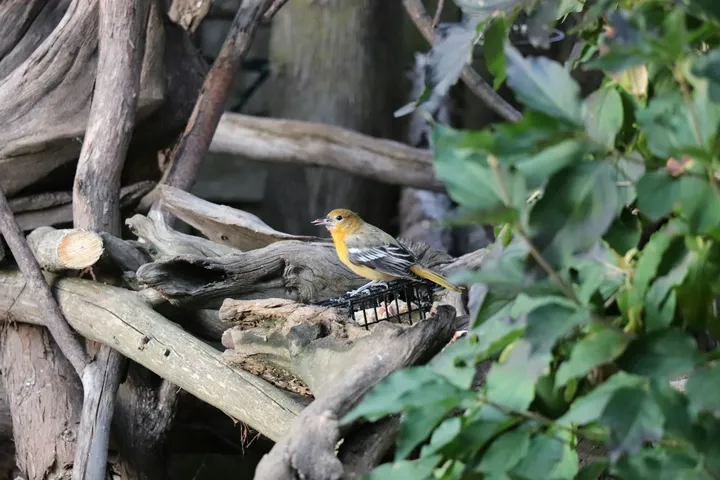
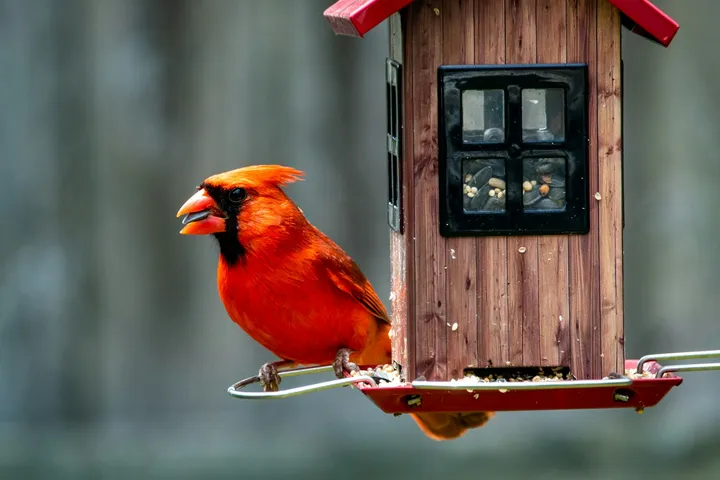
The Diamondback HD focuses down to 5 feet; the Viper HD needs 6 feet. For birding, close focus is a genuinely important and widely underrated spec. A warbler working the shrub outside your window, a chickadee at a feeder ten feet away, a butterfly or dragonfly you want a closer look at: these are the moments where a binocular that will not focus that near just shows you a blur. If you watch birds mostly in a backyard, a garden, or dense woods, that extra foot of close focus is worth more day to day than a marginally brighter image.
Weight: about 3 ounces lighter
The Diamondback HD 8x42 weighs 21.8 ounces against the Viper HD 8x42’s 24.5, a difference of 2.7 ounces (in 10x42 it is 3.6). Under three ounces sounds trivial on paper, and over a short session it is. Over a long morning walk, or an afternoon with the binocular hanging from your neck, weight is what decides how often you actually raise it. Lighter binoculars get used more, and a binocular you actually lift is worth more than a better one you leave on the shelf.
Which one should you buy?
- Backyard birding, feeders, gardens, general use: Diamondback HD. The close focus and lighter weight suit exactly this, and the savings are substantial.
- You are buying your first serious binocular: Diamondback HD. It is more than good enough to enjoy birds for years, and most birders never feel limited by it.
- You bird at dawn and dusk, or in heavy shade: Viper HD. Low light is where Vortex’s XR Plus coatings are meant to pay off, and the one place the coating difference is most likely to be visible.
- You wear eyeglasses: lean Viper HD for the extra eye relief, particularly in 10x42 (17mm versus 15mm).
- You want a clear optical step up without reaching Vortex’s Razor tier or premium-European prices: Viper HD.
- Budget is tight: neither, at first. A $130 to $180 binocular is genuinely enough to enjoy backyard birds, and we would rather see you spend the difference on a good feeder setup and a field guide. Move up to the Diamondback HD when you know you want to.
If you are still deciding what magnification you need before you pick a model, Audubon’s guide to binoculars is a useful second opinion; it notes that most birders prefer 7- or 8-power for their brightness and wide field of view. And a binocular is only as good as what you point it at: a bird bath brings birds into the open at close range, which is exactly where the Diamondback’s close focus earns its keep.
Which configuration of each model?
Both models come in both configurations, so choose the model first and the magnification second. Our full guide to 8x42 vs 10x42 binoculars works through that decision in detail, with the Cornell Lab and Audubon guidance behind it. The short version for these two: whichever magnification you pick, the close-focus and weight differences above stay the same.
Warranty: both are covered for life
Both the Diamondback HD and the Viper HD carry Vortex’s VIP unlimited lifetime warranty. Vortex applies it regardless of who owns the binocular or how the damage happened. At either price point that is a meaningful part of what you are buying, and it is one reason Vortex comes up so often when birders ask what to buy first.
FAQ
These answers are also marked up as FAQ structured data on the page.
Is the Vortex Viper worth the extra money over the Diamondback? For most birders, no. You pay about $400 more for better coatings, slightly more field of view, and 1mm more eye relief, while giving up a foot of close focus and gaining 3 ounces. It is worth it for low-light birding and glasses wearers.
What is the difference between Vortex Diamondback HD and Viper HD? Both share the HD optical system, dielectric prisms, phase correction, ArmorTek, and the lifetime warranty. The Viper adds XR Plus coatings, a bit more field of view and eye relief; the Diamondback focuses closer and weighs less.
Which Vortex binocular is best for bird watching? The Diamondback HD 8x42 for most people, thanks to its 5-foot close focus, 21.8-ounce weight, and price. The Viper HD 8x42 if you want brighter glass or wear glasses.
Do Vortex binoculars have a lifetime warranty? Yes, both carry the VIP unlimited lifetime warranty, regardless of owner or cause of damage.
Does the Vortex Diamondback focus closer than the Viper? Yes. Vortex lists the Diamondback HD at 5 feet and the Viper HD at 6, in both magnifications. For close backyard birds, the cheaper binocular is the more capable one.
Sources
- Vortex Optics: Diamondback HD 8x42 and Diamondback HD 10x42 (specifications, coatings, warranty, list price)
- Vortex Optics: Viper HD 8x42 and Viper HD 10x42 (specifications, XR Plus coatings, warranty, list price)
- Perch & Feed: 8x42 vs 10x42 Binoculars (the magnification decision, with Cornell Lab and Audubon guidance)